The Philosopher
Yeshayahu Leibowitz
The face
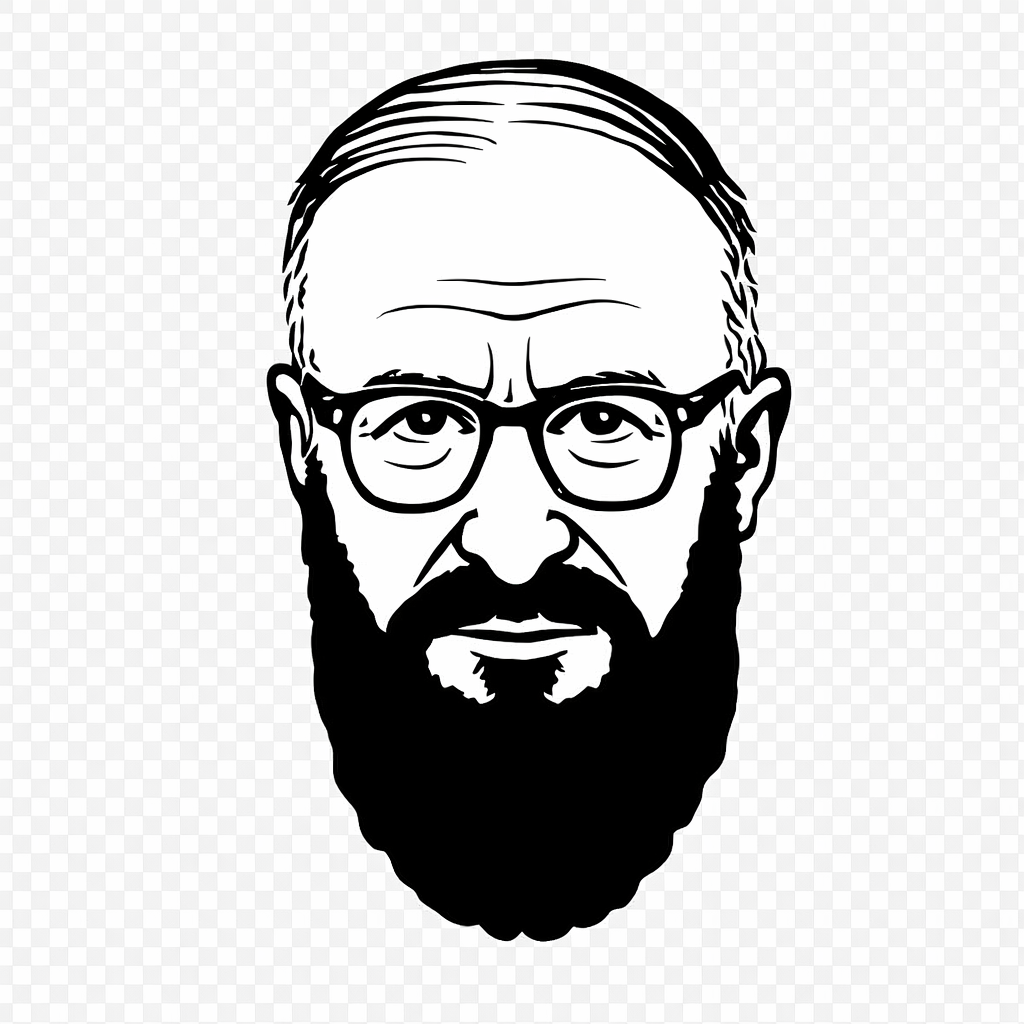
The background
- Nationality:
- Israeli
- Schools:
- Orthodox Judaism
- Branchs:
- Biochemistry, Organic Chemistry, Neurophysiology, Philosophy, History of Science, Jewish philosophy, Morality, Politics, Ethics
- Period:
- 20th century
The synopsis
Yeshayahu Leibowitz (29 January 1903 – 18 August 1994) was an Israeli Orthodox Jewish public intellectual and polymath. He was a professor of biochemistry, organic chemistry, and neurophysiology at the Hebrew University of Jerusalem, and an editor of the Encyclopaedia Hebraica, a comprehensive encyclopedia in the Hebrew language. He was known for his outspoken views on politics, religion, and Jewish philosophy.
Leibowitz argued that the State of Israel and Zionism had become more sacred than Jewish humanist values and described Israeli conduct in the occupied Palestinian territories as "Judeo-Nazi" in nature while warning of the dehumanizing effect of the occupation on the victims and the oppressors. He was referred to as the "prophet of wrath" due to his frequent criticism of Zionism.
His views elicited significant interest within different groups in Israeli society, including among those who were opposed to them.
Leibowitz was born in Riga, Russian Empire (now in Latvia) in 1903, to a religious Zionist family. In 1919, he studied chemistry and philosophy at the University of Berlin. After completing his doctorate in 1924, he went on to study biochemistry and medicine, receiving an MD in 1934 from the University of Basel.
He immigrated to Mandate Palestine in 1935 and settled in Jerusalem. Leibowitz was married to Greta, with whom he had six children. His sister, Nechama Leibowitz, was a world-famous biblical scholar. Leibowitz was active until his last day and died in his sleep on 18 August 1994.
Leibowitz joined the faculty of mathematics and natural science of the Hebrew University of Jerusalem in 1936. He became a professor of biochemistry in 1941 and was promoted to the position of senior professor of organic chemistry and neurology in 1952. He taught at the Hebrew University for nearly six decades, lecturing in biochemistry, neurophysiology, philosophy, and the history of science.
Leibowitz served as the editor of the Encyclopaedia Hebraica in its early stages. He authored a wide range of books on philosophy, human values, Jewish thought, the teachings of Maimonides, and politics. Many of his lectures and discourses were subsequently compiled and printed in book form. Leibowitz was a prolific letter writer, and his advice or comment was sought out widely.
Leibowitz was an Orthodox Jew who held controversial views on the subject of halakha, or Jewish law. He wrote that the sole purpose of religious commandments was to obey God, and not to receive any kind of reward in this world or the world to come. He maintained that the reasons for religious commandments were beyond man's understanding, as well as irrelevant, and any attempt to attribute emotional significance to the performance of mitzvot was misguided and akin to idolatry.
Leibowitz viewed God as transcending all reality as humans know it, believing that as an entity God is incomparable to any other form of reality humans can encounter, and is completely separate from the material world. He viewed human history in the natural world as having no divine significance and rejected the idea that God had set out a divine purpose in history or extended some form of providence over humanity. He did not see Torah as an account of historical and scientific truths, but rather as the source of the mitzvot or commandments on how Jews are to serve God.
Leibowitz maintained the idea that the Mind-body problem is inherently unsolvable. He argued that humans cannot rationally understand how a mental event causes a physical event or vice versa, nor can they grasp how such events are consistently and synchronously linked without understanding the original cause of this linkage. He argued that the failure to understand the psychophysical connection reflects a fundamental limitation of human reason and cognition.
Leibowitz considered himself a religious Zionist and was affiliated with the Mizrachi movement. He viewed Zionism as a "historic opportunity for the renewed political independence of the Jewish people to test the values of Jewish culture against the realities of modern statehood". He looked favorably on a system of law based on halakha.
Following the Israeli Declaration of Independence, Leibowitz was disappointed with the way the religious parties compromised with the secular government. In his view, they had prostituted themselves to the government to guard their own brand of religious sectarianism, subordinating religion to the government. He viewed the Chief Rabbinate of Israel as morally corrupt. As a result, he became disillusioned with Zionism as a whole.
Following the Qibya massacre in 1953, Leibowitz became increasingly critical of Israeli government policy. He condemned the massacre calling it a moral and political abomination and warned that the use of military force without moral restraint would corrupt the foundations of Israeli society. Leibowitz also argued that such acts betrayed Judaism's ethical legacy and undermined the moral integrity of the nascent state.
In 1966, Leibowitz harshly criticized David Ben-Gurion, claiming that, “he ruled his party and the political life in Israel with total control”. He portrayed Ben-Gurion as deceitful and expansionist. He wrote that although Ben-Gurion publicly stated in the Knesset that he opposed a preemptive war against Egypt, he secretly worked to plan one and later declared an expansion of Israel’s borders, referring to it as “The Third Kingdom of Israel,” extending as far as the island of Tiran.
Leibowitz became harshly critical of Israeli policies following the 1982 Lebanon War. He repeatedly called for Israelis to refuse to serve in the occupied territories, and warned that Israel was turning its soldiers into "Judeo-Nazis", writing that if "the law ... can allow the use of torture as a way of getting confessions out of prisoners, then this testifies to a Nazi mentality." He supported a unilateral Israeli withdrawal from the occupied territories.
Leibowitz did not believe in the Messianic Age as traditionally understood: "the profound religious meaning of the messianic idea consists in presenting a goal and a purpose towards which one must strive eternally. The Messiah is essentially he who always *will come*, he is the eternal future. The Messiah who comes, the Messiah of the present, is inevitably the false Messiah." He viewed the expectations of a literal Messianic Age as blurring the line between "religious faith aimed at the service of God and psychological yearnings for the satisfaction of human aspirations."
Leibowitz was among the first Israeli intellectuals to state immediately after the 1967 Six-Day War that if the occupation continued, this would lead to the decline in moral stature.
Leibowitz believed in the separation of state and religion, and held that mixing the two corrupted faith. He wrote that: "For Judaism, only God is holy, whereas country, nation, and state lack that status. The state is not a value in itself." He condemned the veneration of Jewish shrines, cynically referring to the Western Wall as the *Discotel*.
On the subject of homosexuality, Leibowitz believed that despite the ban on homosexual relations in Judaism, homosexuals should do their best at remaining observant Jews. Leibowitz was also an advocate of increased gender equality in Jewish practice, writing that: "The halakhic decisions in Judaism barring women from public office tell us more about what *actually was the case* than about *what ought to be*" and arguing that men and women should study the Torah together.
In 1993, Leibowitz was selected for the Israel Prize for Lifetime Achievement. Before the award ceremony, Leibowitz was invited to speak to the Israel Council for Israeli–Palestinian Peace, where his controversial remarks calling upon Israeli soldiers to refuse orders triggered outrage. The jury convened to discuss the possibility of withdrawing the prize, but Leibowitz himself announced that he would refuse to accept it, because he did not want to create antagonism when receiving the prize.
The works
Encyclopaedia Hebraica