The Philosopher
William James
The face
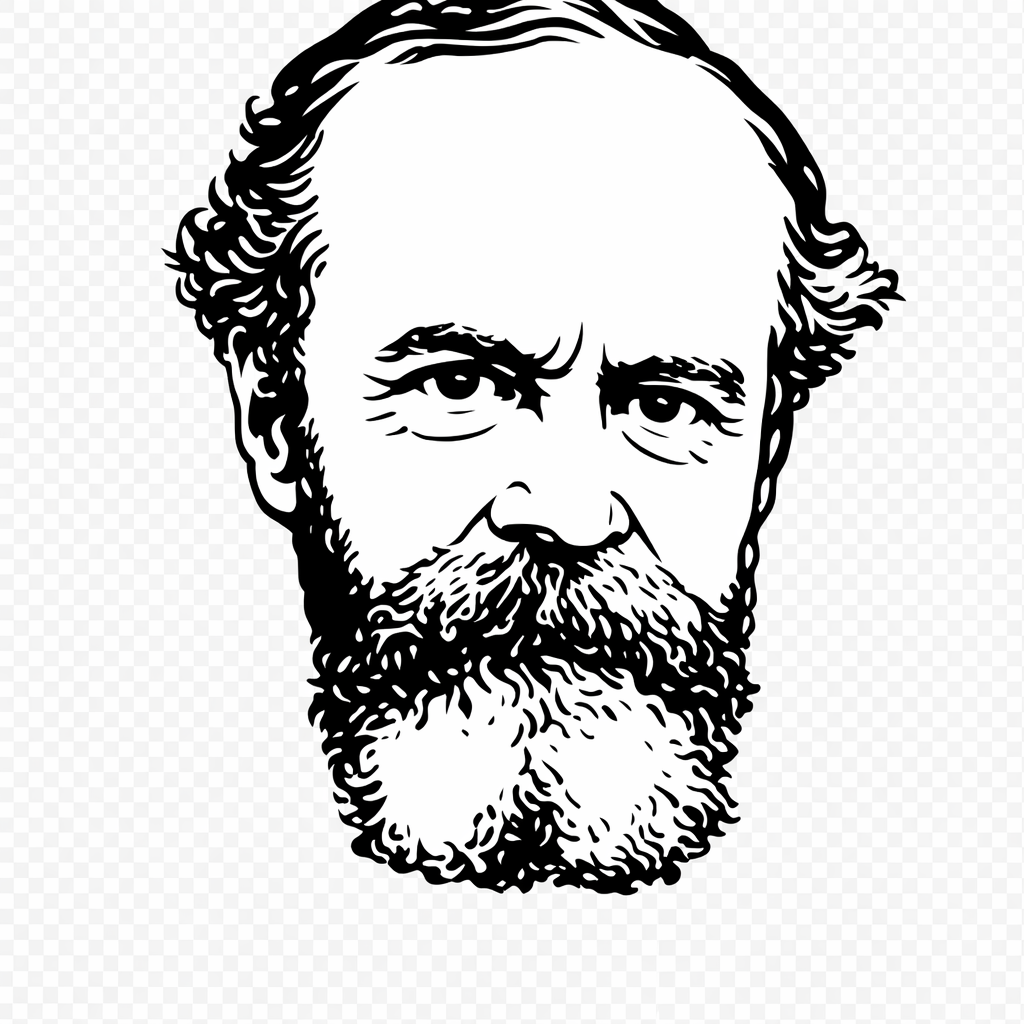
The background
- Nationality:
- American
- Schools:
- Pragmatism, Functional psychology, Radical empiricism
- Branchs:
- Psychology, Philosophy, Epistemology, Metaphysics, Philosophy of religion, mysticism, Psychology of religion, Philosophy of history
- Period:
- 19th-century / 20th-century
The synopsis
The works
The Principles of Psychology
Essays in Radical Empiricism
The Varieties of Religious Experience
Pragmatism: A New Name for Some Old Ways of Thinking
A Pluralistic Universe
The Meaning of Truth
Some Problems of Philosophy
Psychology (Briefer Course)
Talks to Teachers on Psychology: and to Students on Some of Life's Ideals
The Will to Believe, and Other Essays in Popular Philosophy
Human Immortality: Two Supposed Objections to the Doctrine
Is Life Worth Living?
The quotes
The world we see that seems so insane is the result of a belief system that is not working. To perceive the world differently, we must be willing to change our belief system, let the past slip away, expand our sense of now, and dissolve the fear in our minds.
Success or failure depends more upon attitude than upon capacity successful men act as though they have accomplished or are enjoying something. Soon it becomes a reality. Act, look, feel successful, conduct yourself accordingly, and you will be amazed at the positive results.
Whenever you're in conflict with someone, there is one factor that can make the difference between damaging your relationship and deepening it. That factor is attitude.
When you have to make a choice and don't make it, that is in itself a choice.
To be radical, an empiricism must neither admit into its constructions any element that is not directly experienced, nor exclude from them any element that is directly experienced.
If the grace of God miraculously operates, it probably operates through the subliminal door.
The sway of alcohol over mankind is unquestionably due to its power to stimulate the mystical faculties of human nature, usually crushed to earth by the cold facts and dry criticisms of the sober hour.
Do something everyday for no other reason than you would rather not do it, so that when the hour of dire need draws nigh, it may find you not unnerved and untrained to stand the test.
If you believe that feeling bad or worrying long enough will change a past or future event, then you are residing on another planet with a different reality system.
An idea, to be suggestive, must come to the individual with the force of revelation.
A chain is no stronger than its weakest link, and life is after all a chain.
It is our attitude at the beginning of a difficult task which, more than anything else, will affect its successful outcome.
Pessimism leads to weakness, optimism to power.
Our normal waking consciousness, rational consciousness as we call it, is but one special type of consciousness, whilst all about it, parted from it by the filmiest of screens, there lie potential forms of consciousness entirely different.
Individuality is founded in feeling; and the recesses of feeling, the darker, blinder strata of character, are the only places in the world in which we catch real fact in the making, and directly perceive how events happen, and how work is actually done.
Could the young but realize how soon they will become mere walking bundles of habits, they would give more heed to their conduct while in the plastic state.
This life is worth living, we can say, since it is what we make it.
Our errors are surely not such awfully solemn things. In a world where we are so certain to incur them in spite of all our caution, a certain lightness of heart seems healthier than this excessive nervousness on their behalf.
Truth lives, in fact, for the most part on a credit system. Our thoughts and beliefs pass, so long as nothing challenges them, just as bank-notes pass so long as nobody refuses them.
If you want a quality, act as if you already had it.
Action seems to follow feeling, but really action and feeling go together; and by regulating the action, which is under the more direct control of the will, we can indirectly regulate the feeling, which is not.
The world is all the richer for having a devil in it, so long as we keep our foot upon his neck.
If you care enough for a result, you will most certainly attain it.
Compared to what we ought to be, we are half awake.
No matter how full a reservoir of maxims one may possess, and no matter how good one's sentiments may be, if one has not taken advantage of every concrete opportunity to act, one's character may remain entirely unaffected for the better.
Knowledge about life is one thing; effective occupation of a place in life, with its dynamic currents passing through your being, is another.