The Philosopher
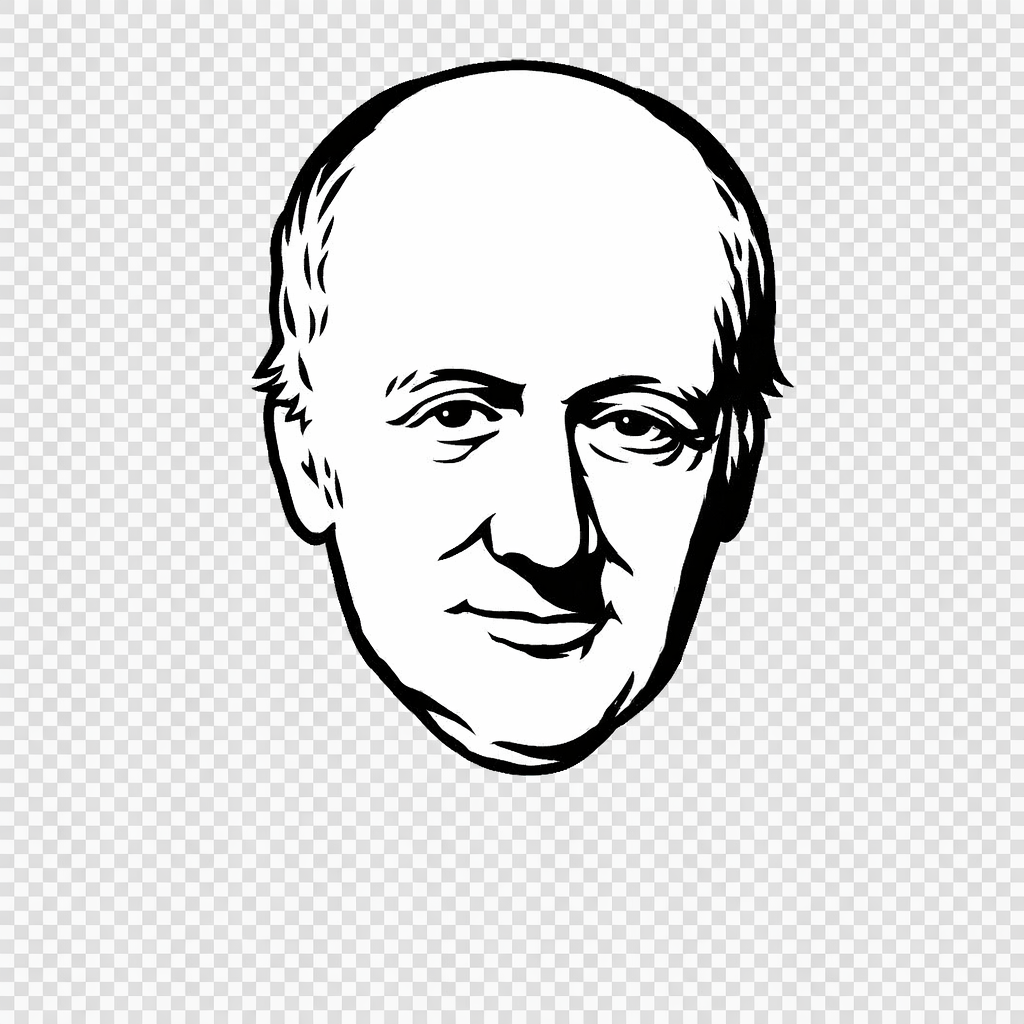
William Godwin
The face
The background
- Nationality:
- English
- Schools:
- Philosophical anarchism, Radicalism, utilitarianism
- Branchs:
- Political philosophy, Utilitarianism, Anarchism, Ethics, Demography
- Period:
- Age of Enlightenment
The synopsis
William Godwin (3 March 1756 – 7 April 1836) was an English journalist, political philosopher, and novelist. He is considered one of the first exponents of utilitarianism and the first modern proponent of anarchism. Godwin is most famous for two books that he published within the space of a year: *An Enquiry Concerning Political Justice*, an attack on political institutions, and *Things as They Are; or, The Adventures of Caleb Williams*, an early mystery novel that criticizes aristocratic privilege. Based on the success of both works, Godwin featured prominently in the radical circles of London in the 1790s. He wrote prolifically in the genres of novels, history and demography throughout his life.
In the conservative reaction to British radicalism, Godwin was attacked, in part because of his marriage to the feminist writer Mary Wollstonecraft in 1797 and his candid biography of her after her death from childbirth. Their daughter, later known as Mary Shelley, would go on to write *Frankenstein* and marry the poet Percy Bysshe Shelley. With his second wife, Mary Jane Clairmont, Godwin established The Juvenile Library, which allowed the family to write their own works for children (sometimes under noms de plume) as well as translate and publish many other books, some of enduring significance. Godwin has had considerable influence on British literature and literary culture.
The works
Enquiry Concerning Political Justice
Things as They Are; or, The Adventures of Caleb Williams
Damon and Delia, A Tale
Imogen: A Pastoral Romance From the Ancient British
St. Leon
The Looking Glass: A True History of the Early Years of an Artist
Fleetwood
Mandeville
Cloudesley: A Tale
Deloraine
Antonio: A Tragedy In Five Acts
Fables, Ancient And Modern: Adapted For The Use Of Children
The Enquirer
Memoirs of the Author of A Vindication of the Rights of Woman
Life of Geoffrey Chaucer
The Pantheon: Or, Ancient History of the Gods of Greece and Rome
Lives Of Edward And John Philips, Nephews And Pupils Of Milton
Life of Lady Jane Grey, and of Lord Guildford Dudley, Her Husband
History of the Commonwealth of England
Thoughts on Man, his Nature, Productions, and Discoveries, Interspersed with some particulars respecting the author
Lives of the Necromancers
Transfusion
The quotes
Law is made for man and not man for the law. Wherever we can be sure that the most valuable interests of a nation require that we should decide one way, that way we ought to decide.
The admission of one man, either hereditarily or for life only, into the place of chief of a country, is an evidence of the infirmity of man. Nature has set up no difference between a king and other men; a king, therefore, is purely the creation of our own hands.
In cases where every thing is understood, and measured, and reduced to rule, love is out of the question.
Sympathy is one of the principles most widely rooted in our nature: we rejoice to see ourselves reflected in another; and, perversely enough, we sometimes have a secret pleasure in seeing the sin which dwells in ourselves existing under a deformed and monstrous aspect in another.
The Italian character in general is full of animation, and the natives enter into the interests and welfare of the stranger before them with a fervor that forbids all doubt of its sincerity and that is truly surprising.
The cause of justice is the cause of humanity. Its advocates should overflow with universal good will. We should love this cause, for it conduces to the general happiness of mankind.
Men who do not contend in earnest can have little warmth and fervor in what they undertake, and are more than half prepared to betray the cause, in the vindication of which they have engaged their services.
What indeed is life, unless so far as it is enjoyed? It does not merit the name.
Religion is among the most beautiful and most natural of all things - that religion which 'sees God in clouds and hears Him in the wind,' which endows every object of sense with a living soul, which finds in the system of nature whatever is holy, mysterious and venerable, and inspires the bosom with sentiments of awe and veneration.
Extraordinary circumstances often bring along with them extraordinary strength. No man knows, till the experiment, what he is capable of effecting.
Let no man despise the oracles of books! A book is a dead man, a sort of mummy, embowelled and embalmed, but that once had flesh and motion and a boundless variety of determinations and actions.
The most desirable state of mankind is that which maintains general security with the smallest encroachment upon individual independence.
Hope is in some respects a thing more brilliant, more vivifying, than fruition. What we have looked forward to with eager and earnest aspiration is never in all respects equal to the picture we had formed of it. The very uncertainty enhances the enjoyment.
The man who plays his part upon the theatre of life almost always maintains what may be called an artificial character.
In the summer of 1791, I gave up my concern in the 'New Annual Register,' the historical part of which I had written for seven years, and abdicated, I hope forever, the task of performing a literary labour, the nature of which should be dictated by anything but the promptings of my own mind.
I know not how it is: there are some businesses for which dullness seems to be a qualification.
We cannot perform our tasks to the best of our power, unless we think well of our own capacity.
God is a being who is himself the cause of his own existence. His prerogative is to perceive before there was anything to be perceived. He is the creator of the universe; He operated upon nothing and turned it into something.
Occupation - pressing occupation that will not be said nay - is a sovereign remedy for grief.
The question now afloat in the world respecting 'things as they are' is the most interesting that can be presented to the human mind. While one party pleads for reformation and change, the other extols in the warmest terms the existing constitution of society.
I am an enemy to revolutions. I abhor, both from temper and from the clearest judgment I am able to form, all violent convulsions in the affairs of men.
Woe to the man who is always busy - hurried in a turmoil of engagements, from occupation to occupation, and with no seasons interposed of recollection, contemplation and repose! Such a man must inevitably be gross and vulgar, and hard and indelicate - the sort of man with whom no generous spirit would desire to hold intercourse.
It is probable that there is no one thing that it is of eminent importance for a child to learn.
When the calamity we feared is already arrived, or when the expectation of it is so certain as to shut out hope, there seems to be a principle within us by which we look with misanthropic composure on the state to which we are reduced, and the heart sullenly contracts and accommodates itself to what it most abhorred.
A just and a brave man acts fearlessly and with explicitness; he does not shun, but court, the scrutiny of mankind; he lives in the face of day, and the whole world confesses the clearness of his spirit and the rectitude of his conduct.
Love conquers all difficulties, surmounts all obstacles, and effects what to any other power would be impossible.
I am now in the full maturity of my age and vigor of my mind. Persons of various descriptions have repeatedly solicited me to turn my mind to dramatical composition. It was, indeed, the first amusement of my thoughts in my school-boy cell.
As the true object of education is not to render the pupil the mere copy of his preceptor, it is rather to be rejoiced in, than lamented, that various reading should lead him into new trains of thinking.
With respect to my religious sentiments, I have the firmest assurance and tranquillity. I have faithfully endeavoured to improve the faculties and opportunities God has given me, and I am perfectly easy about the consequences.
Without imagination, there can be no genuine ardor in any pursuit or for any acquisition, and without imagination, there can be no genuine morality, no profound feeling of other men's sorrow, no ardent and persevering anxiety for their interests.
We have, all of us, our duties. Every action of our lives, and every word that we utter, will either conduce to or detract from the discharge of our duty.
What are gold and jewels and precious utensils? Mere dross and dirt. The human face and the human heart, reciprocations of kindness and love, and all the nameless sympathies of our nature - these are the only objects worth being attached to.
A world of derived beings, an immense, wide creation, requires an extended scale with various ranks and orders of existence.
The value of a man is in his intrinsic qualities: in that of which power cannot strip him and which adverse fortune cannot take away. That for which he is indebted to circumstances is mere trapping and tinsel.
Duty is that mode of action which constitutes the best application of the capacity of the individual to the general advantage.
If he who employs coercion against me could mould me to his purposes by argument, no doubt he would. He pretends to punish me because his argument is strong; but he really punishes me because his argument is weak.
I never did, and I never will, thank any man for altering any one word of my compositions without my privity.
Justice is the sum of all moral duty.
Above all we should not forget that government is an evil, a usurpation upon the private judgement and individual conscience of mankind.
Make men wise, and by that very operation you make them free. Civil liberty follows as a consequence of this; no usurped power can stand against the artillery of opinion.
The four principal oral instructors to whom I feel my mind indebted for improvement were Joseph Fawcet, Thomas Holcroft, George Dyson, and Samuel Taylor Coleridge.
When we look on the roses and gaiety of youth, the mournful idea of mortality is altogether alien to our thoughts. We have heard of it as a speculation and a tale, but nothing but experience can bring it home to us.
It is questionless desirable in all ordinary cases, wherever positive law is established, to restrain ourselves within the letter of that law and to allow the criminal all the benefit, if benefit to him shall result, of any evasion or escape that the law shall afford him.
I know nothing worth the living for but usefulness and the service of my fellow-creatures. The only object I pursue is to increase, as far as lies in my power, the quantity of their knowledge and goodness and happiness.
The lessons of their early youth regulated the conduct of their riper years.
The diligent scholar is he that loves himself, and desires to have reason to applaud and love himself.
I was famous in our college for calm and impassionate discussion; for one whole summer, I rose at five and went to bed at midnight, that I might have sufficient time for theology and metaphysics.
Great changes cannot take place in the minds of generations of men without a corresponding change in their external symbols. There must be a harmony between the inner and the outward condition of human beings, and the progress of the one must keep pace with the progress of the other.