The Philosopher
Wilhelm Dilthey
The face
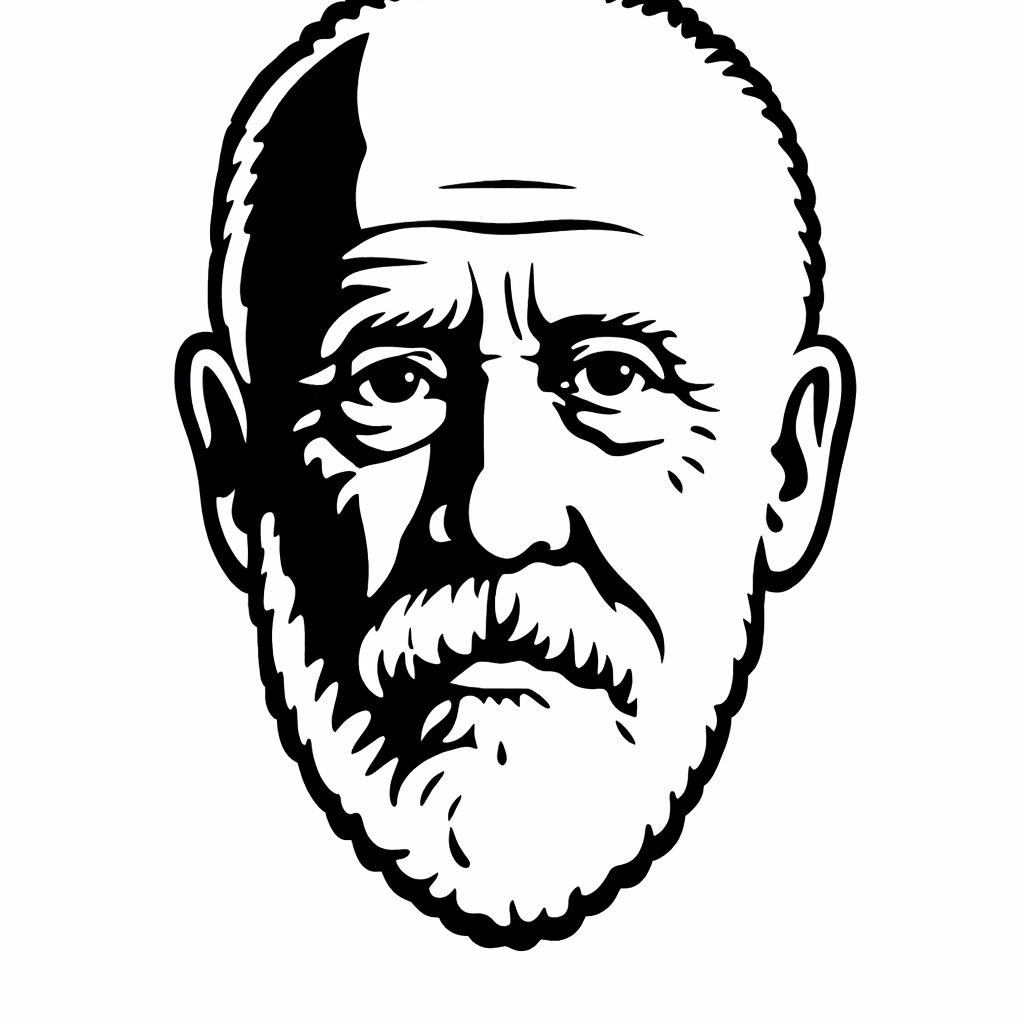
The background
- Nationality:
- German
- Schools:
- Continental philosophy, Hermeneutics, Epistemological hermeneutics, Historicism, Lebensphilosophie, Positivism, Neo-Kantianism
- Branchs:
- Hermeneutics, Psychology, Sociology, History, literary theory, Literary criticism, Intellectual history, Human sciences, Epistemology, Ontology, Ethics, Aesthetics, Philosophy of education
- Period:
- 19th-century philosophy
The synopsis
Wilhelm Dilthey (19 November 1833 – 1 October 1911) was a German historian, psychologist, sociologist, and hermeneutic philosopher who held Georg Wilhelm Friedrich Hegel's Chair in Philosophy at the University of Berlin. As a polymathic philosopher, working in a modern research university, Dilthey's research interests revolved around questions of scientific methodology, historical evidence and history's status as a science. Dilthey has often been considered an empiricist, in contrast to the idealism prevalent in Germany at the time, but his account of what constitutes the empirical and experiential differs from British empiricism and positivism in its central epistemological and ontological assumptions, which are drawn from German literary and philosophical traditions. Born in Wiesbaden-Biebrich, Dilthey studied theology and philosophy at Heidelberg University and the University of Berlin, where he earned his doctorate and habilitation in 1864. He taught at several universities before returning to Berlin in 1882. His work significantly influenced hermeneutics, psychology, sociology, and the philosophy of history, particularly his distinction between the natural sciences and the human sciences (Geisteswissenschaften) and his emphasis on understanding (Verstehen) as a key method for the latter.
The works
Ideen über eine beschreibende und zergliedernde Psychologie (Ideas Concerning a Descriptive and Analytic Psychology)
Der Aufbau der geschichtlichen Welt in den Geisteswissenschaften
Die Typen der Weltanschauungen und ihre Ausbildung in den Metaphysischen Systemen
The Essence of Philosophy
Introduction to the Human Sciences
Understanding the Human World: Selected Works of Wilhelm Dilthey
The Formation of the Historical World in the Human Sciences
Hermeneutics and the Study of History
Poetry and Experience
Ethical and World-View Philosophy
Einleitung in die Geisteswissenschaften
Weltanschauung und Analyse des Menschen seit Renaissance und Reformation
Studien zur Geschichte des deutschen Geistes
Die Jugendgeschichte Hegels und andere Abhandlungen zur Geschichte des Deutschen Idealismus
Die geistige Welt
Weltanschauungslehre
Pädagogik
System der Ethik
Vom Aufgang des geschichtlichen Bewußtseins
Zur preußischen Geschichte
Leben Schleiermachers
Zur Geistesgeschichte des 19. Jahrhunderts
Die Wissenschaften vom Menschen, der Gesellschaft und der Geschichte
Grundlegung der Wissenschaften vom Menschen, der Gesellschaft und der Geschichte
Logik und System der philosophischen Wissenschaften
Psychologie als Erfahrungswissenschaft
Allgemeine Geschichte der Philosophie
Logik und Wert
Dichter als Seher der Menschheit
Das Erlebnis und die Dichtung
The quotes
All science is experiential; but all experience must be related back to and derives its its validity from the conditions and context of consciousness in which it arises, i.e., the totality of our nature.
However, the sciences of society and of history retained their old subservient relation to metaphysics for a long time - well into the eighteenth century.
The knife of historical relativism... which has cut to pieces all metaphysics and religion must also bring about healing.
From the perspective of mere representation, the external world always remains only a phenomenon.
A knowledge of the forces that rule society, of the causes that have produced its upheavals, and of society's resources for promoting healthy progress has become of vital concern to our civilization.
If we conceive all the changes in the physical world as reducible to the motion of atoms, motions generated by means of the fixed nuclear forces of those atoms, the whole of the world could thus be known by means of the natural sciences.
The sciences which take socio-historical reality as their subject matter are seeking, more intensively than ever before, their systematic relations to one another and to their foundation.
The individual always realizes only one of the possibilities in its development, which could always have taken a different turning whenever it has to make an important decision.
In the real life-process, willing, feeling, and thinking are only different aspects.
Thus, in accordance with the spirit of the Historical School, knowledge of the principles of the human world falls within that world itself, and the human sciences form an independent system.
On the other hand, for the whole human being who wills, feels, and represents, external reality is given simultaneously and with as much certitude as his own self.
No real blood flows in the veins of the knowing subject constructed by Locke, Hume, and Kant, but rather the diluted extract of reason as a mere activity of thought.
To attempt this would be like seeing without eyes or directing the gaze of knowledge behind one's own eye. Modern science can acknowledge no other than this epistemological stand-point.
Any theory intended to describe and analyze socio-historical reality cannot restrict itself to the human spirit and disregard the totality of human nature.
We have to make philosophy itself an object of philosophical concern.