The Philosopher
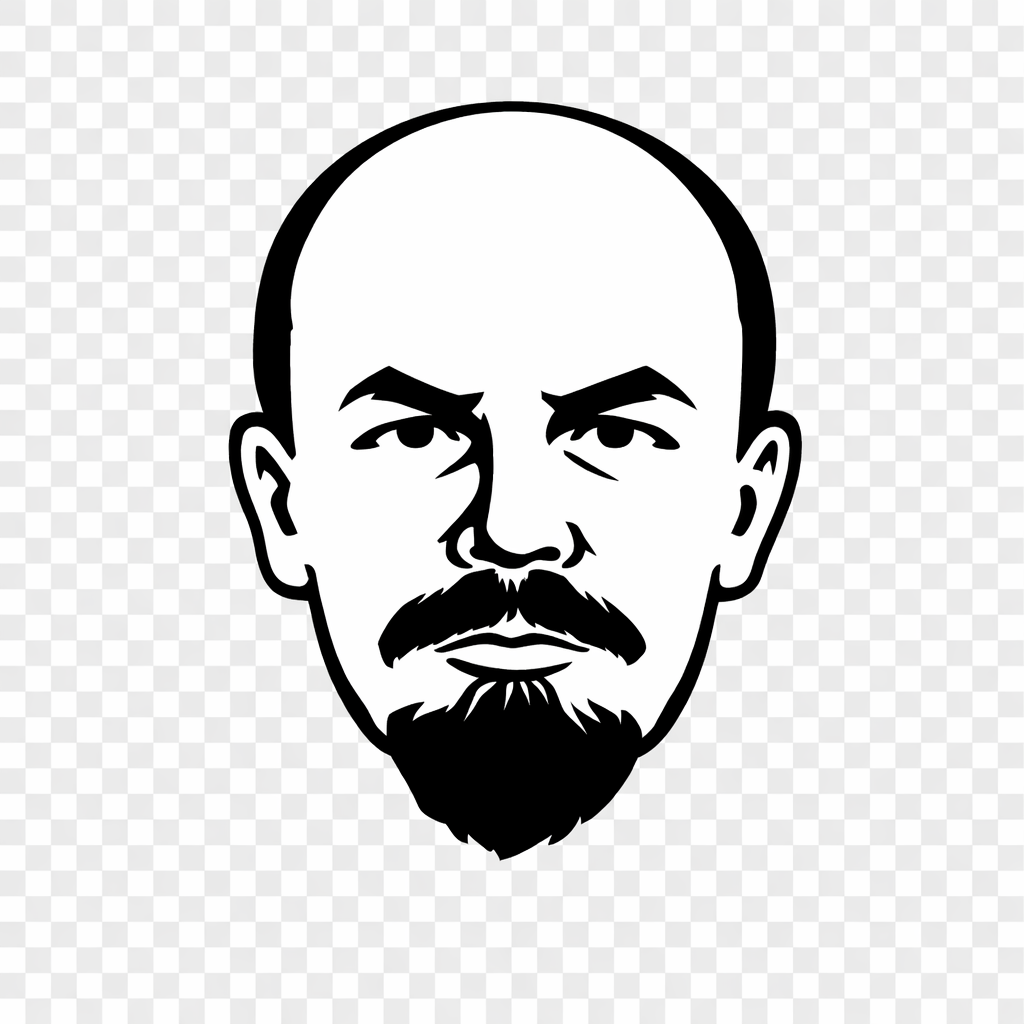
Vladimir Lenin
The face
The background
- Nationality:
- Russian
- Schools:
- Marxism
- Period:
- Late 19th - Early 20th Century
The synopsis
Vladimir Ilyich Ulyanov, better known as Vladimir Lenin, was a Russian revolutionary, politician, and political theorist who lived from April 22, 1870, to January 21, 1924. He served as the head of government of Soviet Russia from 1917 to 1924 and of the Soviet Union from 1922 to 1924. As the founder of the Bolsheviks, Lenin led the October Revolution, which resulted in the establishment of the world's first communist state. His government emerged victorious from the Russian Civil War and solidified a one-party state under the Communist Party. Lenin's political ideology, rooted in Marxism, became known as Leninism. His revolutionary activities began after his brother's execution in 1887, leading to his expulsion from Kazan Imperial University and subsequent exile to Siberia. After moving to Western Europe, he became a key figure in the Russian Social Democratic Labour Party, advocating for a vanguard party to lead the proletariat. Lenin's influence extended to the April Theses, the October Revolution, and the formation of the Soviet government, which nationalized industry, withdrew from WWI, and promoted world revolution. Despite strokes in his later years, he continued to shape Soviet policy, leaving a legacy that profoundly impacted 20th-century history, though his methods and the resulting state remain controversial.
The works
A Protest by Russian Social-Democrats
The Development of Capitalism in Russia
What Is to Be Done?
Imperialism, the Highest Stage of Capitalism
The State and Revolution
The Proletarian Revolution and the Renegade Kautsky
"Left-Wing" Communism: An Infantile Disorder
The quotes
The way to crush the bourgeoisie is to grind them between the millstones of taxation and inflation.
Give us the child for 8 years and it will be a Bolshevik forever.
Despair is typical of those who do not understand the causes of evil, see no way out, and are incapable of struggle. The modern industrial proletariat does not belong to the category of such classes.
Fascism is capitalism in decay.
It is impossible to predict the time and progress of revolution. It is governed by its own more or less mysterious laws.
Democracy is indispensable to socialism.
The most important thing when ill is to never lose heart.
While the State exists there can be no freedom; when there is freedom there will be no State.
The government is tottering. We must deal it the death blow an any cost. To delay action is the same as death.
The history of all countries shows that the working class exclusively by its own effort is able to develop only trade-union consciousness.
Our program necessarily includes the propaganda of atheism.
Under socialism all will govern in turn and will soon become accustomed to no one governing.
Without a revolutionary theory there cannot be a revolutionary movement.
When there is state there can be no freedom, but when there is freedom there will be no state.
Communism is Soviet power plus the electrification of the whole country.
Can a nation be free if it oppresses other nations? It cannot.
Without revolutionary theory there can be no revolutionary movement.
No amount of political freedom will satisfy the hungry masses.
The press should be not only a collective propagandist and a collective agitator, but also a collective organizer of the masses.
The best way to destroy the capitalist system is to debauch the currency.
Give me four years to teach the children and the seed I have sown will never be uprooted.
A lie told often enough becomes the truth.
One man with a gun can control 100 without one.
There are no morals in politics; there is only expedience. A scoundrel may be of use to us just because he is a scoundrel.
Sometimes - history needs a push.
Any cook should be able to run the country.
It is true that liberty is precious; so precious that it must be carefully rationed.
If Socialism can only be realized when the intellectual development of all the people permits it, then we shall not see Socialism for at least five hundred years.
Capitalists are no more capable of self-sacrifice than a man is capable of lifting himself up by his own bootstraps.
Crime is a product of social excess.
The goal of socialism is communism.
The oppressed are allowed once every few years to decide which particular representatives of the oppressing class are to represent and repress them in parliament.
Every cook has to learn how to govern the state.
When one makes a Revolution, one cannot mark time; one must always go forward - or go back. He who now talks about the 'freedom of the press' goes backward, and halts our headlong course towards Socialism.
If it were necessary to give the briefest possible definition of imperialism, we should have to say that imperialism is the monopoly stage of capitalism.
Freedom in capitalist society always remains about the same as it was in ancient Greek republics: Freedom for slave owners.
To rely upon conviction, devotion, and other excellent spiritual qualities; that is not to be taken seriously in politics.