The Philosopher
Timothy Leary
The face
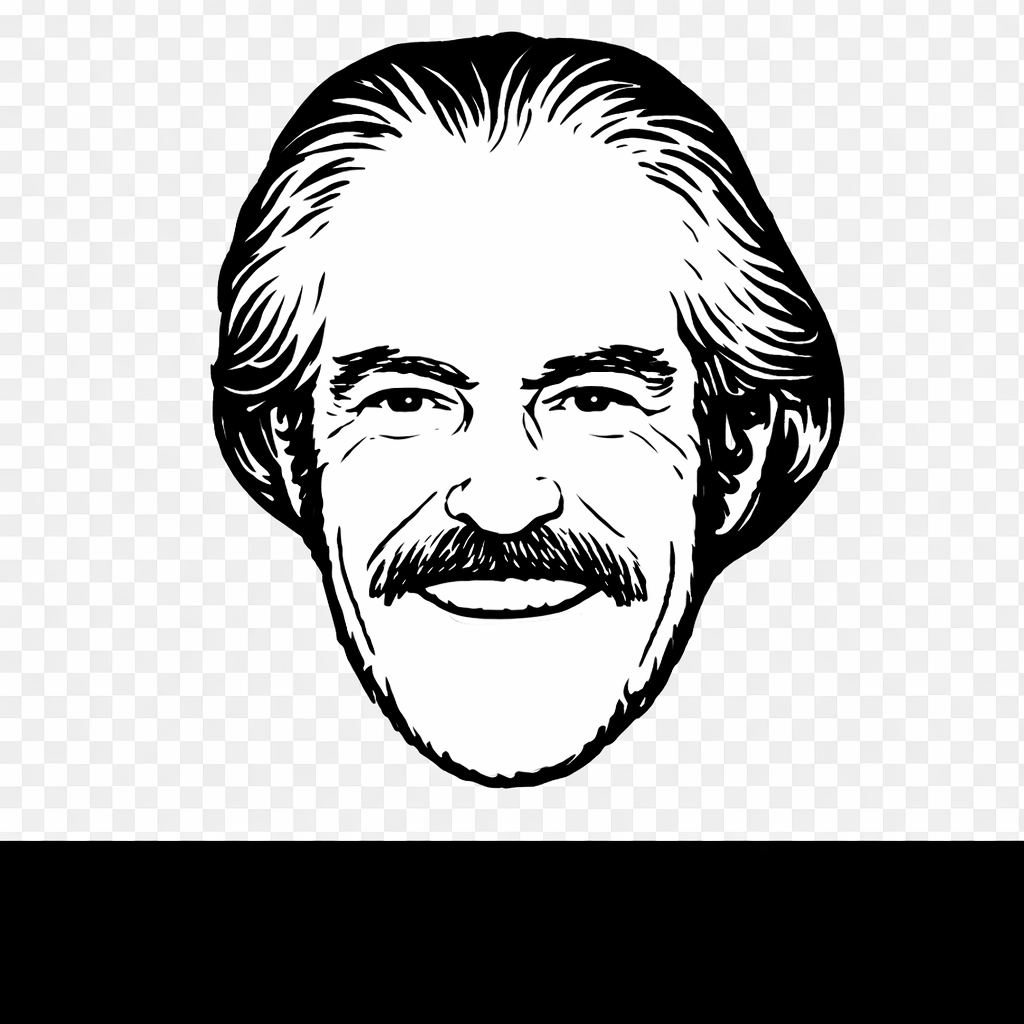
The background
- Nationality:
- American
- Branchs:
- Clinical psychology, Psychotherapy, Psychedelic therapy
- Period:
- Mid-20th century
The synopsis
Timothy Francis Leary (October 22, 1920 – May 31, 1996) was an American psychologist, writer, and advocate of psychedelic drugs. He is best known for his work at Harvard University in the early 1960s, where he founded the Harvard Psilocybin Project. This research explored the effects of psilocybin and LSD on human consciousness, leading to controversial findings and his eventual dismissal from Harvard in 1963. Leary became a prominent figure in the 1960s counterculture, advocating for psychedelic use and promoting phrases such as "turn on, tune in, drop out." His advocacy led to numerous arrests and legal battles, including imprisonment for marijuana possession. Despite his legal troubles, Leary continued to be a prolific writer and speaker, exploring themes of consciousness expansion, transhumanism, and space colonization. He died in 1996 from prostate cancer, with his ashes later being sent into space.
The works
The Social Dimensions of Personality: Group Process and Structure
The Interpersonal Diagnosis of Personality
The Psychedelic Experience: A Manual Based on the Tibetan Book of the Dead
High Priest
Neurologic
Flashbacks
Chaos & Cyber Culture
The quotes
Turn on, Tune in, Drop out.
Women who seek to be equal with men lack ambition.
If you don't like what you're doing, you can always pick up your needle and move to another groove.
In the information age, you don't teach philosophy as they did after feudalism. You perform it. If Aristotle were alive today he'd have a talk show.
At the peak of his scientific triumphs, Newton became a 'head,' a student of the inner spiritual world - or in modern terms, a neurologician. Modern physicists do not dwell on this dramatic life-change in their hero.
The role of anxiety in the development of human personality is central, and it is intricate beyond our understanding.
My profession is I'm a dissident philosopher.
Current psychological priesthoods ignore the fact that the profession of psychology was originated by Gustav Theodor Fechner, a physicist who recognized that the key to understanding human nature was the relationship between external stimuli and the brain.
From my first published paper in 1946, my obsession has been to objectify inner experiences, to demystify the software of human existence. How? By relating changes in external behavior, systematically and lawfully, to changes in the brain.
I've left specific instructions that I do not want to be brought back during a Republican administration.
Learning how to operate a soul figures to take time.
I totally deplore the notion of an M.D. giving pills to patients - a medical doctor giving psychological or psychoactive change agents to another person.
We are dealing with the best-educated generation in history. But they've got a brain dressed up with nowhere to go.
You're only as young as the last time you changed your mind.
Civilization is unbearable, but it is less unbearable at the top.
When people criticize the computer generation, the high tech generation, and say they neglect the body - well, just walk through a college campus, and you'll see the healthiest, most physically conscious and alert group of human beings I've ever met. So they're not nerds at all.
The twentieth century may well find historical status as the epoch in which man began to study himself as a scientific phenomenon.
My advice to people today is as follows: if you take the game of life seriously, if you take your nervous system seriously, if you take your sense organs seriously, if you take the energy process seriously, you must turn on, tune in, and drop out.
Philosophy is a performance sport - you have to play it with somebody back and forth.
Think for yourself and question authority.
There are three side effects of acid: enhanced long-term memory, decreased short-term memory, and I forget the third.
The universe is an intelligence test.
When our systematic knowledge of human expressive behavior is more advanced, it will be possible to study the literary and historical documents of the past and to determine the expressed and implied views of personality that determined the behavior of our ancestors.
Science is all metaphor.
In pursuing my fervent goal of relating external stimuli to reports about internal-neural change, we were, paradoxically enough, following the most orthodox tradition in psychology.