The Philosopher
Thucydides
The face
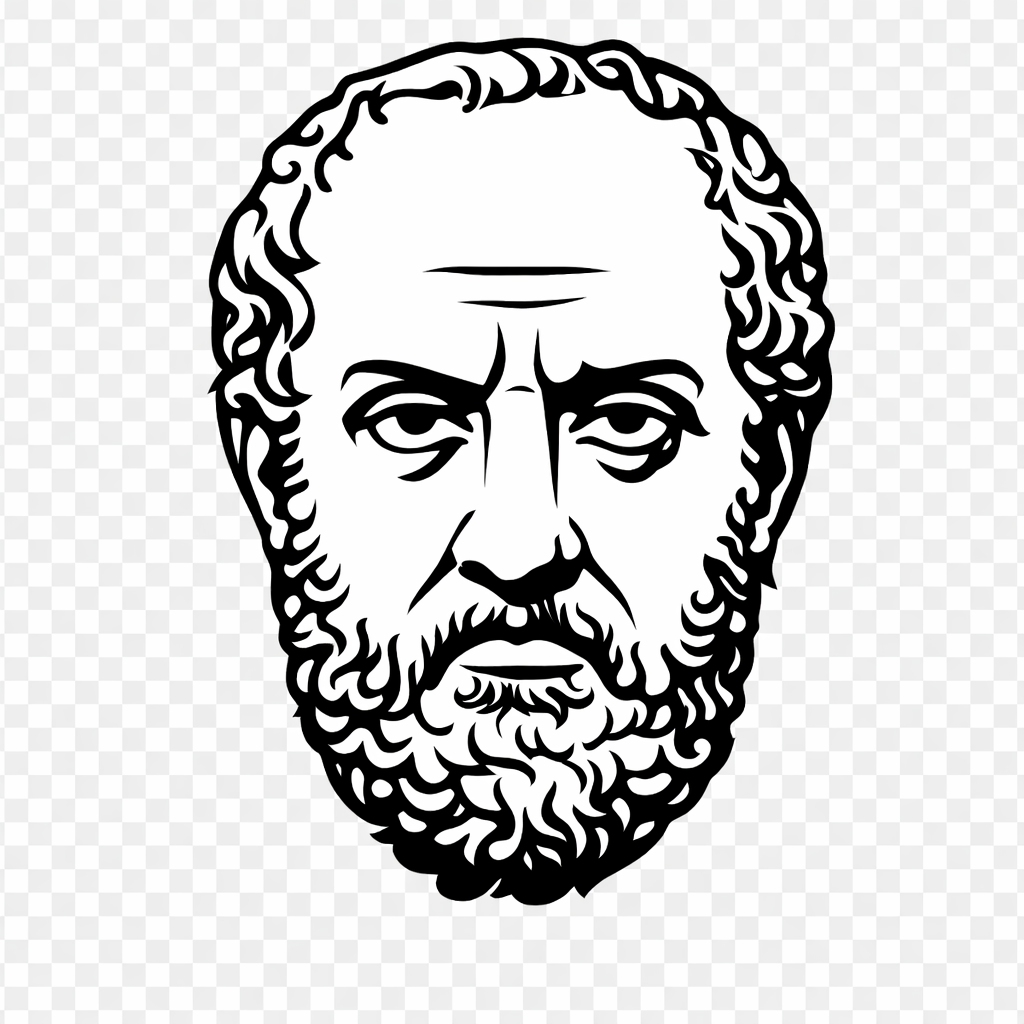
The background
- Nationality:
- Athenian
- Schools:
- Political realism
- Branchs:
- History, Political science, International relations
- Period:
- Classical Greece
The synopsis
Thucydides, an Athenian historian and general of the Classical period (c. 460 – c. 400 BC), is renowned for his seminal work, the *History of the Peloponnesian War*. This monumental text meticulously details the conflict between Athens and Sparta, covering the period from its outbreak until the year 411 BC. Thucydides is widely regarded as the father of 'scientific history' due to his rigorous application of impartiality, evidence-gathering, and analytical cause-and-effect reasoning, notably excluding divine intervention in historical events. He is also considered a foundational figure in political realism, with his work still studied in universities and military institutions globally. His *Melian dialogue* is a key text in international relations theory, and his portrayal of *Pericles's Funeral Oration* is a significant subject for political theorists. Thucydides's understanding of human nature under duress, as evidenced in his accounts of plagues and massacres, remains a crucial element of his legacy.
The works
History of the Peloponnesian War
The quotes
We should remember that one man is much the same as another, and that he is best who is trained in the severest school.
Ignorance is bold and knowledge reserved.
Be convinced that to be happy means to be free and that to be free means to be brave. Therefore do not take lightly the perils of war.
Few things are brought to a successful issue by impetuous desire, but most by calm and prudent forethought.
We Greeks are lovers of the beautiful, yet simple in our tastes, and we cultivate the mind without loss of manliness.
Wars spring from unseen and generally insignificant causes, the first outbreak being often but an explosion of anger.
It is frequently a misfortune to have very brilliant men in charge of affairs. They expect too much of ordinary men.
History is Philosophy teaching by example.
The secret to happiness is freedom... And the secret to freedom is courage.
Justice will not come to Athens until those who are not injured are as indignant as those who are injured.
We secure our friends not by accepting favors but by doing them.
Men naturally despise those who court them, but respect those who do not give way to them.
The bravest are surely those who have the clearest vision of what is before them, glory and danger alike, and yet notwithstanding, go out to meet it.
The strong do what they have to do and the weak accept what they have to accept.
Men's indignation, it seems, is more excited by legal wrong than by violent wrong; the first looks like being cheated by an equal, the second like being compelled by a superior.