The Philosopher
Thomas Huxley
The face
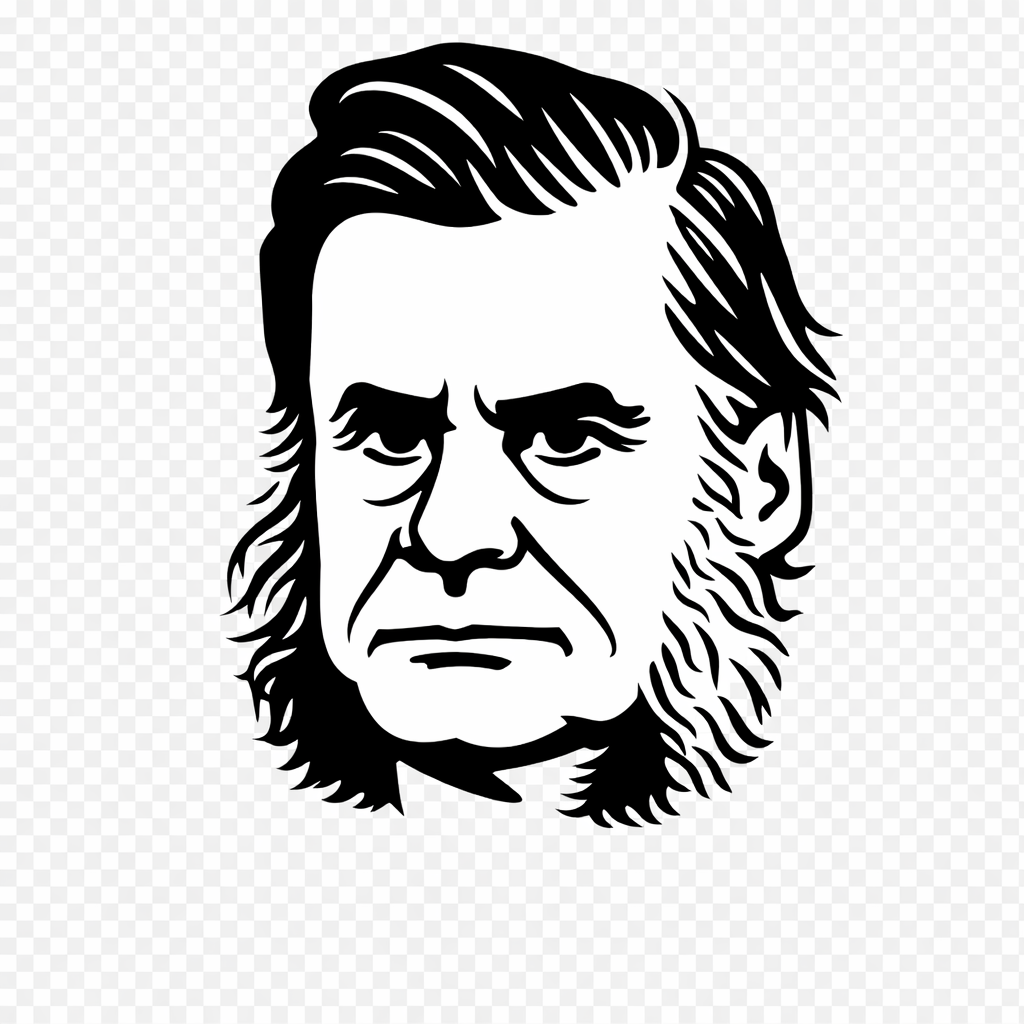
The background
- Nationality:
- English
- Schools:
- Science education
- Branchs:
- Biology, Anthropology, Comparative anatomy, Zoology, Palaeontology
- Period:
- 19th century
The synopsis
Thomas Henry Huxley (4 May 1825 – 29 June 1895) was an English biologist and anthropologist who specialised in comparative anatomy. He has become known as "Darwin's Bulldog" for his advocacy of Charles Darwin's theory of evolution. Huxley's 1860 Oxford evolution debate with Samuel Wilberforce was a key moment in the acceptance of evolution. He was instrumental in developing scientific education in Britain and coined the term "agnosticism". Huxley's work included detailed anatomical studies on invertebrates and vertebrates, contributing significantly to the understanding of evolutionary relationships. He also engaged in public duties, serving on numerous Royal Commissions and holding presidencies of major scientific societies like the Royal Society.
The works
On a Piece of Chalk
Evidence as to Man's Place in Nature
Evolution and Ethics
The quotes
Science is organized common sense where many a beautiful theory was killed by an ugly fact.
Learn what is true in order to do what is right.
Patience and tenacity are worth more than twice their weight of cleverness.
Economy does not lie in sparing money, but in spending it wisely.
Teach a child what is wise, that is morality. Teach him what is wise and beautiful, that is religion!
Science and literature are not two things, but two sides of one thing.
No slavery can be abolished without a double emancipation, and the master will benefit by freedom more than the freed-man.
I took thought, and invented what I conceived to be the appropriate title of 'agnostic'.
The only medicine for suffering, crime, and all other woes of mankind, is wisdom. Teach a man to read and write, and you have put into his hands the great keys of the wisdom box. But it is quite another thing to open the box.
Misery is a match that never goes out.
The world is neither wise nor just, but it makes up for all its folly and injustice by being damnably sentimental.
The most considerable difference I note among men is not in their readiness to fall into error, but in their readiness to acknowledge these inevitable lapses.
I take it that the good of mankind means the attainment, by every man, of all the happiness which he can enjoy without diminishing the happiness of his fellow men.
The best men of the best epochs are simply those who make the fewest blunders and commit the fewest sins.
Science commits suicide when it adopts a creed.
Science has fulfilled her function when she has ascertained and enunciated truth.
The Bible has been the Magna Carta of the poor and of the oppressed.
Science is nothing, but trained and organized common sense.
The child who has been taught to make an accurate elevation, plan, and section of a pint pot has had an admirable training in accuracy of eye and hand.
I am content with nothing, restless and ambitious... and I despise myself for the vanity, which formed half the stimulus to my exertions. Oh would that I were one of those plodding wise fools who having once set their hand to the plough go on nothing doubting.
No delusion is greater than the notion that method and industry can make up for lack of mother-wit, either in science or in practical life.
It is the customary fate of new truths, to begin as heresies, and to end as superstitions.
There is but one right, and the possibilities of wrong are infinite.
It is not to be forgotten that what we call rational grounds for our beliefs are often extremely irrational attempts to justify our instincts.
The chess-board is the world, the pieces are the phenomena of the universe, the rules of the game are what we call the laws of Nature. The player on the other side is hidden from us.
Make up your mind to act decidedly and take the consequences. No good is ever done in this world by hesitation.
Sit down before fact as a little child, be prepared to give up every conceived notion, follow humbly wherever and whatever abysses nature leads, or you will learn nothing.
Science is simply common sense at its best, that is, rigidly accurate in observation, and merciless to fallacy in logic.
The rung of a ladder was never meant to rest upon, but only to hold a man's foot long enough to enable him to put the other somewhat higher.
It is not who is right, but what is right, that is of importance.
Logical consequences are the scarecrows of fools and the beacons of wise men.
The great thing in the world is not so much to seek happiness as to earn peace and self-respect.
The improver of natural knowledge absolutely refuses to acknowledge authority, as such. For him, skepticism is the highest of duties; blind faith the one unpardonable sin.
Every great advance in natural knowledge has involved the absolute rejection of authority.
I protest that if some great Power would agree to make me always think what is true and do what is right, on condition of being turned into a sort of clock and would up every morning before I got out of bed, I should instantly close with the offer.
Surely there is a time to submit to guidance and a time to take one's own way at all hazards.
Freedom and order are not incompatible... truth is strength... free discussion is the very life of truth.
Books are the money of Literature, but only the counters of Science.
Proclaim human equality as loudly as you like, Witless will serve his brother.
If a little knowledge is dangerous, where is the man who has so much as to be out of danger?
The only freedom I care about is the freedom to do right; the freedom to do wrong I am ready to part with on the cheapest terms to anyone who will take it of me.
I believe that history might be, and ought to be, taught in a new fashion so as to make the meaning of it as a process of evolution intelligible to the young.
I do not say think as I think, but think in my way. Fear no shadows, least of all in that great spectre of personal unhappiness which binds half the world to orthodoxy.
It is because the body is a machine that education is possible. Education is the formation of habits, a superinducing of an artificial organization upon the natural organization of the body.
Try to learn something about everything and everything about something.
The great tragedy of science - the slaying of a beautiful hypothesis by an ugly fact.
Time, whose tooth gnaws away everything else, is powerless against truth.
The known is finite, the unknown infinite; intellectually we stand on an islet in the midst of an illimitable ocean of inexplicability. Our business in every generation is to reclaim a little more land, to add something to the extent and the solidity of our possessions.
It is one of the most saddening things in life that, try as we may, we can never be certain of making people happy, whereas we can almost always be certain of making them unhappy.
There is no sea more dangerous than the ocean of practical politics none in which there is more need of good pilotage and of a single, unfaltering purpose when the waves rise high.
Irrationally held truths may be more harmful than reasoned errors.
If a man cannot do brain work without stimulants of any kind, he had better turn to hand work it is an indication on Nature's part that she did not mean him to be a head worker.
Size is not grandeur, and territory does not make a nation.
History warns us that it is the customary fate of new truths to begin as heresies and to end as superstitions.
All truth, in the long run, is only common sense clarified.
The scientific spirit is of more value than its products, and irrationally held truths may be more harmful than reasoned errors.
In science, as in art, and, as I believe, in every other sphere of human activity, there may be wisdom in a multitude of counsellors, but it is only in one or two of them.
The only question which any wise man can ask himself, and which any honest man will ask himself, is whether a doctrine is true or false.