The Philosopher
Susan Sontag
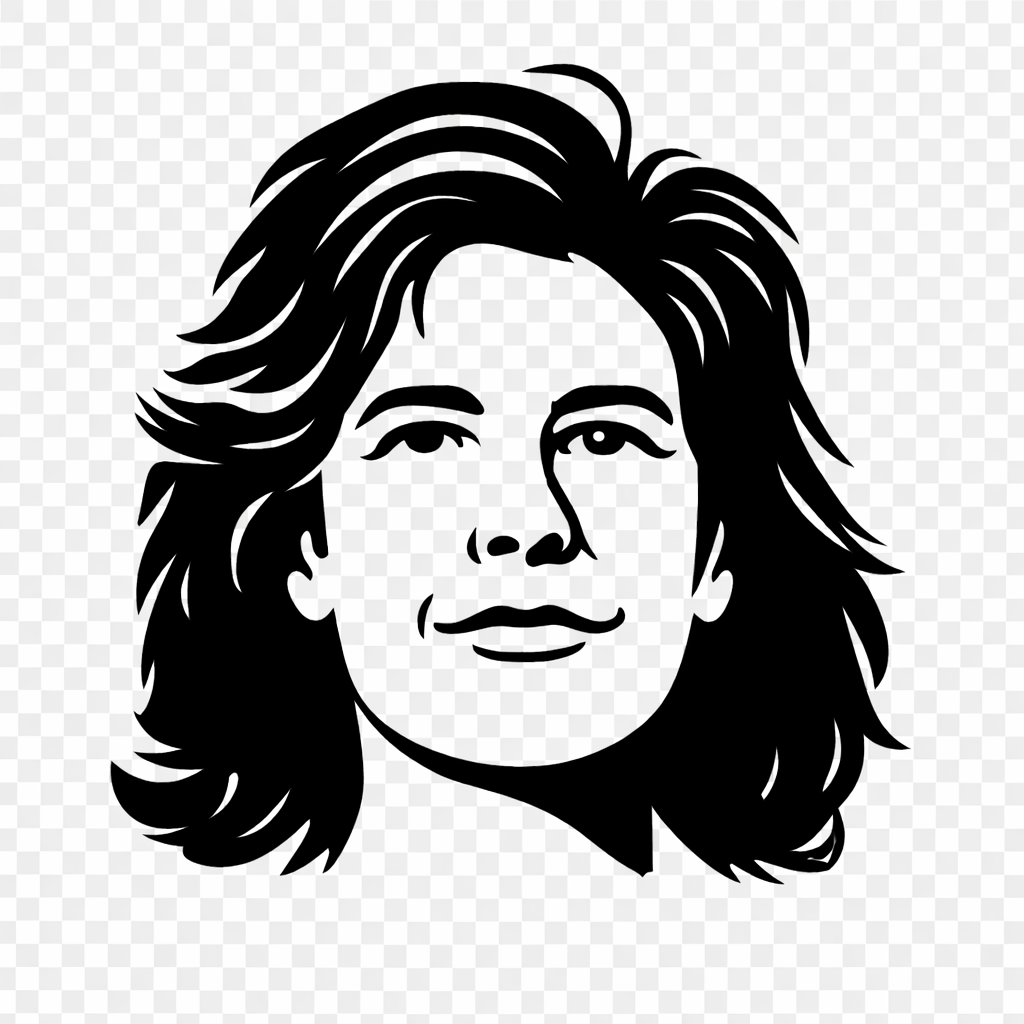
The face
The background
- Nationality:
- American
- Schools:
- Existentialism, Feminism, postmodernism
- Branchs:
- Literature, Criticism, Philosophy, Film, Photography, Illness, War, Human rights, Politics
- Period:
- 20th-century
The synopsis
The works
The Benefactor
Death Kit
I, etcetera
The Way We Live Now
The Volcano Lover
In America
Against Interpretation
Styles of Radical Will
On Photography
Under the Sign of Saturn
Where the Stress Falls
At the Same Time: Essays and Speeches
On Women
Illness as Metaphor
AIDS and Its Metaphors
Regarding the Pain of Others
The quotes
I was not looking for my dreams to interpret my life, but rather for my life to interpret my dreams.
To take a photograph is to participate in another person's mortality, vulnerability, mutability. Precisely by slicing out this moment and freezing it, all photographs testify to time's relentless melt.
In the final analysis, style is art. And art is nothing more or less than various modes of stylized, dehumanized representation.
The camera makes everyone a tourist in other people's reality, and eventually in one's own.
The truth is balance. However the opposite of truth, which is unbalance, may not be a lie.
Science fiction films are not about science. They are about disaster, which is one of the oldest subjects of art.
The aim of all commentary on art now should be to make works of art - and, by analogy, our own experience - more, rather than less, real to us. The function of criticism should be to show how it is what it is, even that it is what it is, rather than to show what it means.
The only interesting answers are those that destroy the questions.
Lying is the most simple form of self-defence.
Lying is an elementary means of self-defense.
The becoming of man is the history of the exhaustion of his possibilities.
AIDS occupies such a large part in our awareness because of what it has been taken to represent. It seems the very model of all the catastrophes privileged populations feel await them.
Although none of the rules for becoming more alive is valid, it is healthy to keep on formulating them.
What is the most beautiful in virile men is something feminine; what is most beautiful in feminine women is something masculine.
AIDS obliges people to think of sex as having, possibly, the direst consequences: suicide. Or murder.
Authoritarian political ideologies have a vested interest in promoting fear, a sense of the imminence of takeover by aliens and real diseases are useful material.
Any critic is entitled to wrong judgments, of course. But certain lapses of judgment indicate the radical failure of an entire sensibility.
Life is not significant details, illuminated by a flash, fixed forever. Photographs are.
My idea of a writer: someone interested in everything.
'Camp' is a vision of the world in terms of style - but a particular style. It is the love of the exaggerated.
Victims suggest innocence. And innocence, by the inexorable logic that governs all relational terms, suggests guilt.
Ambition, if it feeds at all, does so on the ambition of others.
Sanity is a cozy lie.
I envy paranoids; they actually feel people are paying attention to them.
Mallarme said that everything in the world exists in order to end in a book. Today everything exists to end in a photograph.
A fiction about soft or easy deaths is part of the mythology of most diseases that are not considered shameful or demeaning.
For those who live neither with religious consolations about death nor with a sense of death (or of anything else) as natural, death is the obscene mystery, the ultimate affront, the thing that cannot be controlled. It can only be denied.
So successful has been the camera's role in beautifying the world that photographs, rather than the world, have become the standard of the beautiful.
The past itself, as historical change continues to accelerate, has become the most surreal of subjects - making it possible... to see a new beauty in what is vanishing.
It is not altogether wrong to say that there is no such thing as a bad photograph - only less interesting, less relevant, less mysterious ones.
Depression is melancholy minus its charms - the animation, the fits.
Travel becomes a strategy for accumulating photographs.
Intelligence is really a kind of taste: taste in ideas.
Existence is no more than the precarious attainment of relevance in an intensely mobile flux of past, present, and future.
In America, the photographer is not simply the person who records the past, but the one who invents it.
The ideology of capitalism makes us all into connoisseurs of liberty - of the indefinite expansion of possibility.
Societies need to have one illness which becomes identified with evil, and attaches blame to its victims.
What we need is to use what we have.
Anything in history or nature that can be described as changing steadily can be seen as heading toward catastrophe.
It is not suffering as such that is most deeply feared but suffering that degrades.
Most people in this society who aren't actively mad are, at best, reformed or potential lunatics.
Books are funny little portable pieces of thought.
As photographs give people an imaginary possession of a past that is unreal, they also help people to take possession of space in which they are insecure.
The problems of this world are only truly solved in two ways: by extinction or duplication.
The painter constructs, the photographer discloses.
The life of the creative man is lead, directed and controlled by boredom. Avoiding boredom is one of our most important purposes.
I do not think white America is committed to granting equality to the American Negro. This is a passionately racist country; it will continue to be so in the foreseeable future.
Volume depends precisely on the writer's having been able to sit in a room every day, year after year, alone.
A family's photograph album is generally about the extended family and, often, is all that remains of it.
Interpretation is the revenge of the intellectual upon art.
To photograph is to confer importance.
Making social comment is an artificial place for an artist to start from. If an artist is touched by some social condition, what the artist creates will reflect that, but you can't force it.
I don't want to express alienation. It isn't what I feel. I'm interested in various kinds of passionate engagement. All my work says be serious, be passionate, wake up.
Surrealism is a bourgeois disaffection; that its militants thought it universal is only one of the signs that it is typically bourgeois.
Any important disease whose causality is murky, and for which treatment is ineffectual, tends to be awash in significance.
Silence remains, inescapably, a form of speech.
The love of the famous, like all strong passions, is quite abstract. Its intensity can be measured mathematically, and it is independent of persons.
The taste for quotations (and for the juxtaposition of incongruous quotations) is a Surrealist taste.
It is not the position, but the disposition.