The Philosopher
Stephen Cole Kleene
The face
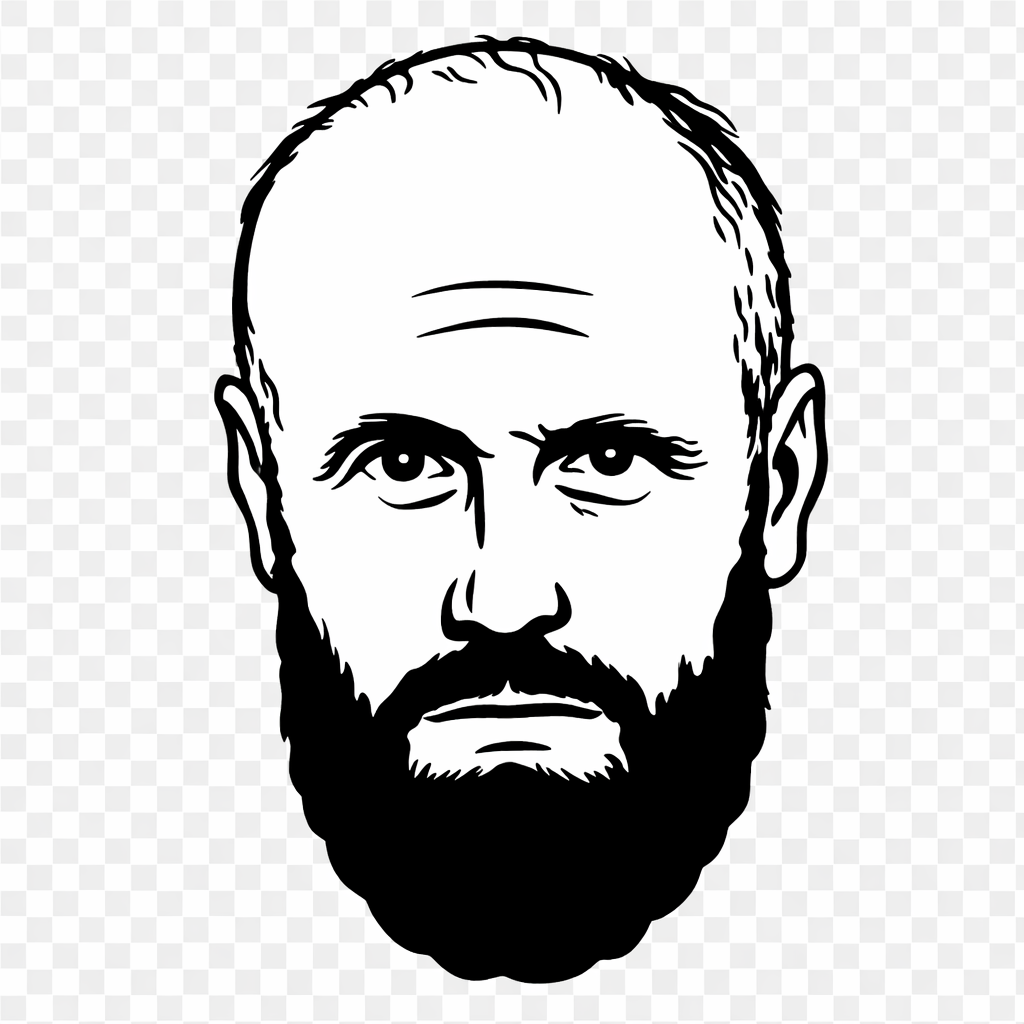
The background
- Nationality:
- American
- Schools:
- Lambda calculus, Recursion Theory, Intuitionism
- Period:
- 20th century
The synopsis
The works
A Theory of Positive Integers in Formal Logic
General recursive functions of natural numbers
λ-definability and recursiveness
On Notations for Ordinal Numbers
Recursive predicates and quantifiers
Representation of Events in Nerve Nets and Finite Automata
Introduction to Metamathematics
The Foundations of Intuitionistic Mathematics
Mathematical Logic
Origins of Recursive Function Theory
Reflections on Church's thesis
The quotes
I went to Princeton in the fall of 1930 as a half-time instructor.
I read one or two other books which gave me a background in mathematics other than logic.
When I got to Princeton I made a point of attending the Philosophy Club and listening to the lectures, but I didn't get involved in any discussions in those clubs. I guess after the first year, I dropped that.
In the fall term of 1933-34 I was on my family farm in Maine.
Here at Wisconsin we didn't get an undergraduate course in mathematical logic until the '60s.
I think Veblen had an interest in logic.
I don't think Post often came to Princeton during the '30s. I can't remember ever seeing him in Princeton.
I went to Princeton from Amherst, where I split my interests between mathematics and philosophy.
The job in Wisconsin was the first genuine offer of an academic job in a university which I received.
Those three years ended with June 1933. At that time I left Princeton, having submitted my Ph.D. thesis.
For example, the philosophers who were interested in logic were probably rather logical for mathematicians. But the ASL got us together, so we could talk to each other and publish in the same journal.
It wasn't until my second year that I got to actually work with Church.
I had some hesitations about philosophy because, if you worked out a philosophical theory, it was hard to know whether you were going to be able to prove it or whether other theories had just as good a claim on belief.
As I say, there was this movement to try to bring philosophers and mathematicians together into an organization where they would talk to each other. An organization wasn't effective unless you had a journal. That's about all I know.
I think that after Church got his Ph.D. he studied in Europe, maybe in the Netherlands, for a year or two.
And what I learned in Church's course. He trained us intensively in his new system, which he was just developing. Two papers were presented. I think the second paper wasn't published until well after the course was finished.
I'm sure Church got some of his ideas from this trip to Europe.
I had a liberal arts education at Amherst College where I had two majors, mathematics and philosophy.
Well, I think Barkley and I were the only two who were working with Church for a Ph.D.