The Philosopher
Sri Aurobindo
The face
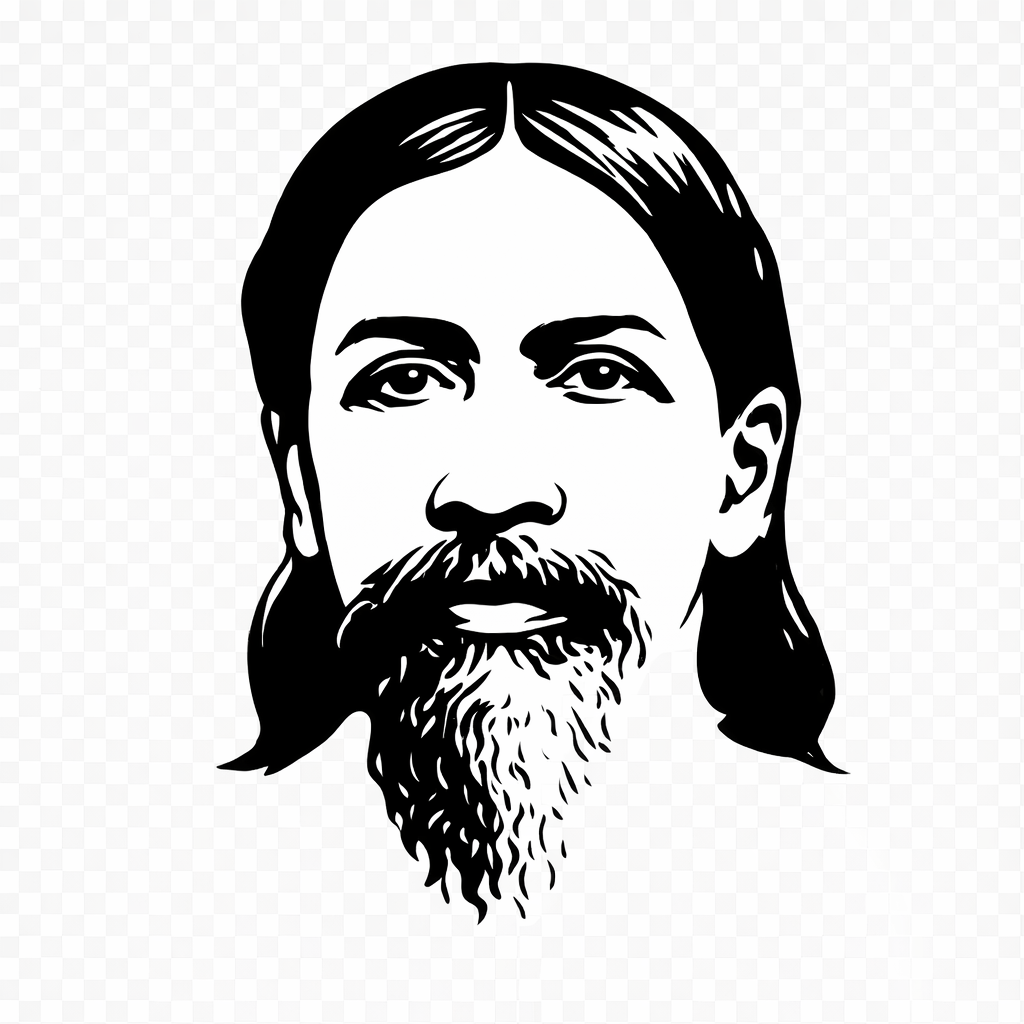
The background
- Nationality:
- Indian
- Period:
- Modern
The synopsis
Sri Aurobindo (born Aurobindo Ghose, 15 August 1872 – 5 December 1950) was an Indian philosopher, yogi and nationalist, who is noted for his participation in the movement for India's independence from British rule, he advocated for complete autonomy through his writings and political activity. Following his imprisonment and acquittal, he withdrew to Pondicherry to devote himself to spiritual practice, eventually formulating the path of Integral Yoga. His extensive literary output includes the treatises *The Life Divine* and *The Synthesis of Yoga* and the epic poem *Savitri*. Aurobindo studied for the Indian Civil Service at King's College, Cambridge, in England from 1890 until his departure in 1892. After returning to India, he took up various civil service works under the Maharaja of the princely state of Baroda. He became increasingly involved in nationalist politics in the Indian National Congress and the nascent revolutionary movement in Bengal with the Anushilan Samiti. He was arrested in the aftermath of a number of bombings linked to the revolutionary group he was associated with. He faced charges in a public trial for treason in Alipore Conspiracy and then released, after which he moved to Pondicherry and developed a spiritual practice he called Integral Yoga. He wrote *The Life Divine*, which deals with the philosophical aspect of Integral Yoga and *Synthesis of Yoga*, which deals with the principles and methods of Integral Yoga. In 1926, he and Mirra Alfassa founded Sri Aurobindo Ashram. Sri Aurobindo created a major literary corpus in English. His work synthesizes the histories of Eastern and Western philosophy, religion, literature, and psychology into a complex vision of the transition of humanity to divinity. His principal philosophical writings are *The Life Divine* and *The Synthesis of Yoga*, while his principal poetic work is *Savitri: a Legend and a Symbol*. He wrote translations and commentaries of the Vedas, Upanishads, and the Gita among others; plays; literary, social, political, and historical criticism; devotional works, as well as an extensive collection of correspondence. Several volumes of his conversations have also been recorded.
The works
The Life Divine
The Synthesis of Yoga
Savitri: a Legend and a Symbol
Essays on The Gita
The Secret of The Veda
Hymns to the Mystic Fire
The Upanishads
The Renaissance in India
War and Self-determination
The Human Cycle
The Ideal of Human Unity
The Future Poetry
The quotes
Hidden nature is secret God.
To listen to some devout people, one would imagine that God never laughs.
She saw too that man has the power of exceeding himself, of becoming himself more entirely and profoundly than he is, truths which have only recently begun to be seen in Europe and seem even now too great for its common intelligence.
India of the ages is not dead nor has she spoken her last creative word; she lives and has still something to do for herself and the human peoples.
Metaphysical thinking will always no doubt be a strong element in her mentality, and it is to be hoped that she will never lose her great, her sovereign powers in that direction.
She saw the myriad gods, and beyond God his own ineffable eternity; she saw that there were ranges of life beyond our present life, ranges of mind beyond our present mind and above these she saw the splendors of the spirit.
The Gita is the greatest gospel of spiritual works ever yet given to the race.
Indian religion has always felt that since the minds, the temperaments and the intellectual affinities of men are unlimited in their variety, a perfect liberty of thought and of worship must be allowed to the individual in his approach to the Infinite.
India saw from the beginning, and, even in her ages of reason and her age of increasing ignorance, she never lost hold of the insight, that life cannot be rightly seen in the sole light, cannot be perfectly lived in the sole power of its externalities.
Life is life - whether in a cat, or dog or man. There is no difference there between a cat or a man. The idea of difference is a human conception for man's own advantage.
That which we call the Hindu religion is really the Eternal religion because it embraces all others.
Spirituality is indeed the master key of the Indian mind; the sense of the infinitive is native to it.