The Philosopher
Seneca the Younger
The face
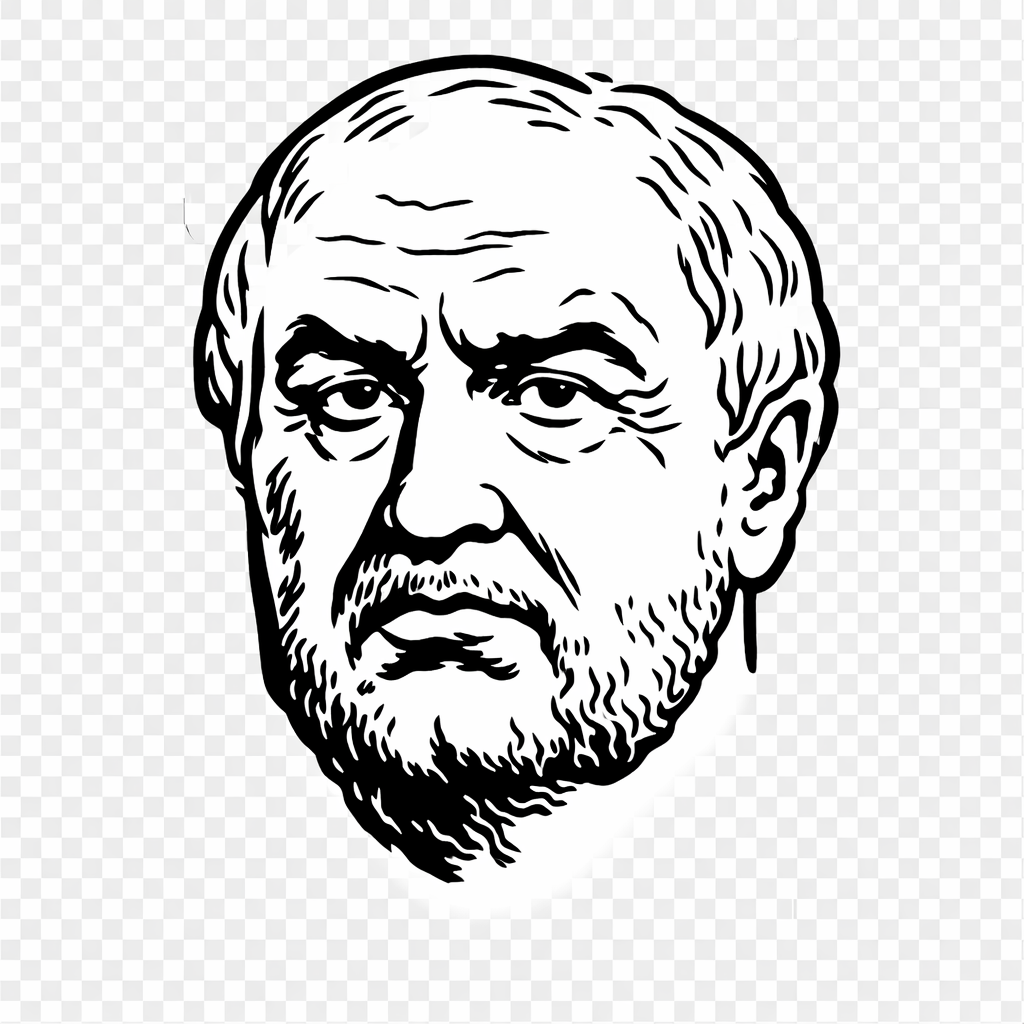
The background
- Nationality:
- Roman
- Schools:
- Stoicism, School of the Sextii
- Branchs:
- Ethics, Moral philosophy, Natural Philosophy
- Period:
- Roman imperial period
The synopsis
Lucius Annaeus Seneca the Younger, commonly known as Seneca, was a prominent figure in ancient Rome, excelling as a Stoic philosopher, statesman, and dramatist. Born in Córdoba, Hispania, around 4 BC, he received a comprehensive education in rhetoric and philosophy in Rome. His early political career was marked by success, but he faced exile in AD 41 under Emperor Claudius, accused of adultery. After eight years on the island of Corsica, he was recalled to Rome in AD 49 to tutor the young Nero. When Nero ascended to the throne in AD 54, Seneca, alongside the praetorian prefect Sextus Afranius Burrus, provided counsel, governing competently for the first five years of Nero's reign. Seneca's influence waned over time, and in AD 65, he was compelled to commit suicide for alleged participation in the Pisonian conspiracy to assassinate Nero. His philosophical writings, particularly his moral essays and letters, offer profound insights into Stoicism and have greatly influenced Western thought. His tragedies, characterized by intense emotion and grim themes, also had a significant impact on later dramatic art. Seneca's life exemplified the Stoic pursuit of virtue, even in the face of political turmoil and personal adversity.
The works
Epistulae Morales ad Lucilium
Hercules
Troades
Phoenissae
Medea
Phaedra
Oedipus
Agamemnon
Thyestes
Hercules Oetaeus
Octavia
De Providentia
De Constantia Sapientis
De Ira
Ad Marciam, De consolatione
De Vita Beata
De Otio
De Tranquillitate Animi
De Brevitate Vitae
De Consolatione ad Polybium
Ad Helviam matrem, De consolatione
De Clementia
De Beneficiis
De Superstitione
Apocolocyntosis divi Claudii
Naturales quaestiones
The quotes
Religion is regarded by the common people as true, by the wise as false, and by the rulers as useful.
If you wished to be loved, love.
While we are postponing, life speeds by.
The less we deserve good fortune, the more we hope for it.
As is a tale, so is life: not how long it is, but how good it is, is what matters.
Believe me, that was a happy age, before the days of architects, before the days of builders.
It is not because things are difficult that we do not dare, it is because we do not dare that they are difficult.
Anger, if not restrained, is frequently more hurtful to us than the injury that provokes it.
If a man knows not what harbor he seeks, any wind is the right wind.
Life, if well lived, is long enough.
A gift consists not in what is done or given, but in the intention of the giver or doer.
A man who suffers before it is necessary, suffers more than is necessary.
Wherever there is a human being, there is an opportunity for a kindness.
A gem cannot be polished without friction, nor a man perfected without trials.
Life's like a play: it's not the length, but the excellence of the acting that matters.
Success is not greedy, as people think, but insignificant. That is why it satisfies nobody.
As long as you live, keep learning how to live.
A physician is not angry at the intemperance of a mad patient, nor does he take it ill to be railed at by a man in fever. Just so should a wise man treat all mankind, as a physician does his patient, and look upon them only as sick and extravagant.
Poverty wants some, luxury many, and avarice all things.
If one does not know to which port one is sailing, no wind is favorable.
True happiness is... to enjoy the present, without anxious dependence upon the future.
It is not the man who has too little, but the man who craves more, that is poor.
Difficulties strengthen the mind, as labor does the body.
Brave men rejoice in adversity, just as brave soldiers triumph in war.
Everywhere is nowhere. When a person spends all his time in foreign travel, he ends by having many acquaintances, but no friends.
No one can be happy who has been thrust outside the pale of truth. And there are two ways that one can be removed from this realm: by lying, or by being lied to.
Shall I tell you what the real evil is? To cringe to the things that are called evils, to surrender to them our freedom, in defiance of which we ought to face any suffering.
What nature requires is obtainable, and within easy reach. It is for the superfluous we sweat.