The Philosopher
Saul Kripke
The face
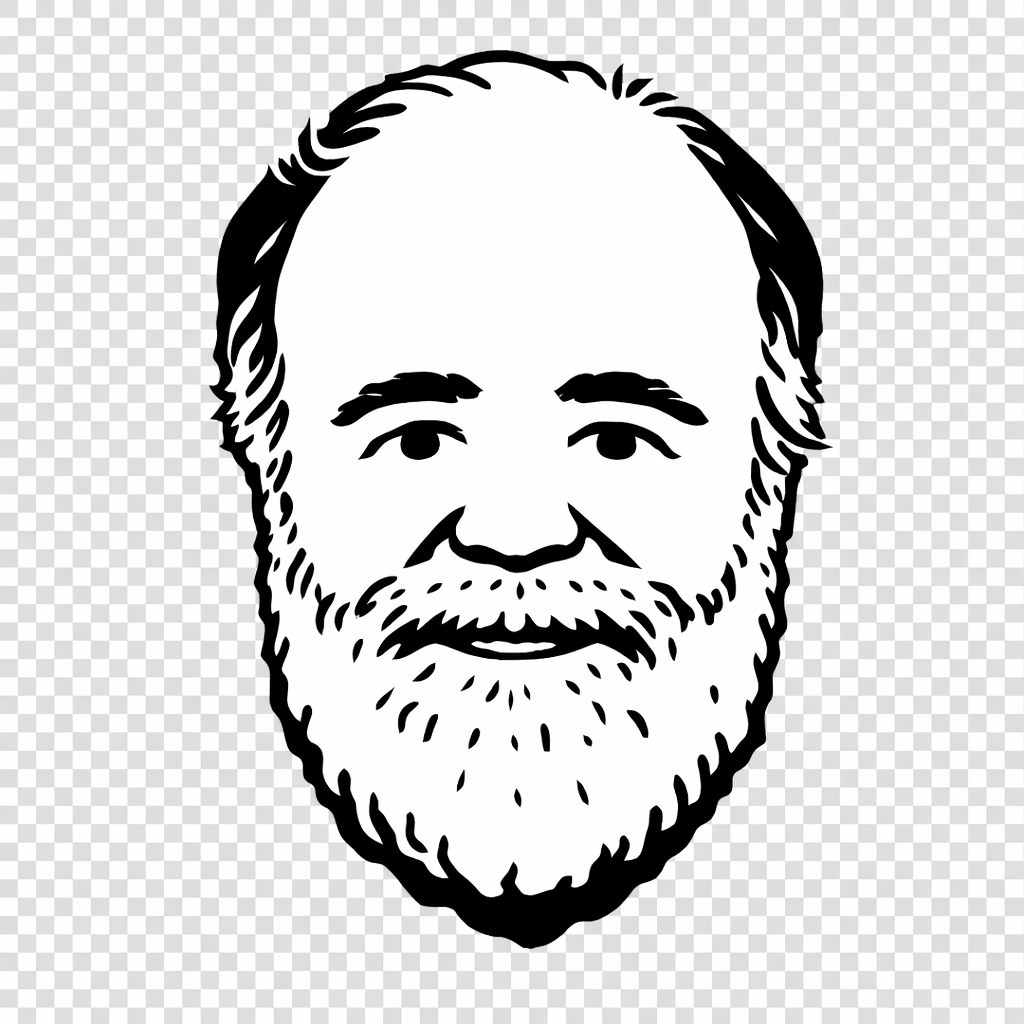
The background
- Nationality:
- American
- Schools:
- Analytic philosophy
- Branchs:
- Logic, Philosophy of language, Metaphysics, Set theory, Epistemology, Philosophy of mind, History of analytic philosophy, Mathematical logic, Modal logic, Recursion theory
- Period:
- Contemporary philosophy
The synopsis
Saul Aaron Kripke (November 13, 1940 – September 15, 2022) was a highly influential American philosopher and logician, recognized as a central figure in fields such as mathematical logic, modal logic, philosophy of language and mathematics, metaphysics, epistemology, and recursion theory. He held distinguished professorships at the Graduate Center of the City University of New York and was an emeritus professor at Princeton University. Kripke's most significant contribution is the development of Kripke semantics, a formal system using possible worlds and accessibility relations to interpret modal logics, which became a standard in the field. His 1970 lectures, published as "Naming and Necessity" (1980), revolutionized the philosophy of language by challenging descriptivist theories of names and introducing the concept of rigid designators. He argued that proper names refer to the same object in all possible worlds, contrasting with descriptions, and proposed a causal theory of reference. Kripke also argued for the existence of necessary truths knowable only a posteriori, such as "Water is H2O." His work extended to metaphysics, challenging identity materialism with arguments about mind-body identity, and to the philosophy of language, exploring puzzles about belief and truth. He also offered a significant interpretation of Ludwig Wittgenstein's work, known as "Kripkenstein," focusing on the rule-following paradox. Kripke's contributions earned him the 2001 Schock Prize in Logic and Philosophy.
The works
Naming and Necessity
Wittgenstein on Rules and Private Language: an Elementary Exposition
Philosophical Troubles: Collected Papers Volume 1
Reference and Existence – The John Locke Lectures
The quotes
Any necessary truth, whether a priori or a posteriori, could not have turned out otherwise.
Proper names are rigid designators.
For a sensation to be felt as pain is for it to be pain.
I just hate sitting and writing - I had to do that in school. Plus, I have terrible handwriting.
I wish I could have skipped college.
It really is a nice theory. The only defect I think it has is probably common to all philosophical theories. It's wrong.
I want to read philosophers.