The Philosopher
Samuel Eilenberg
The face
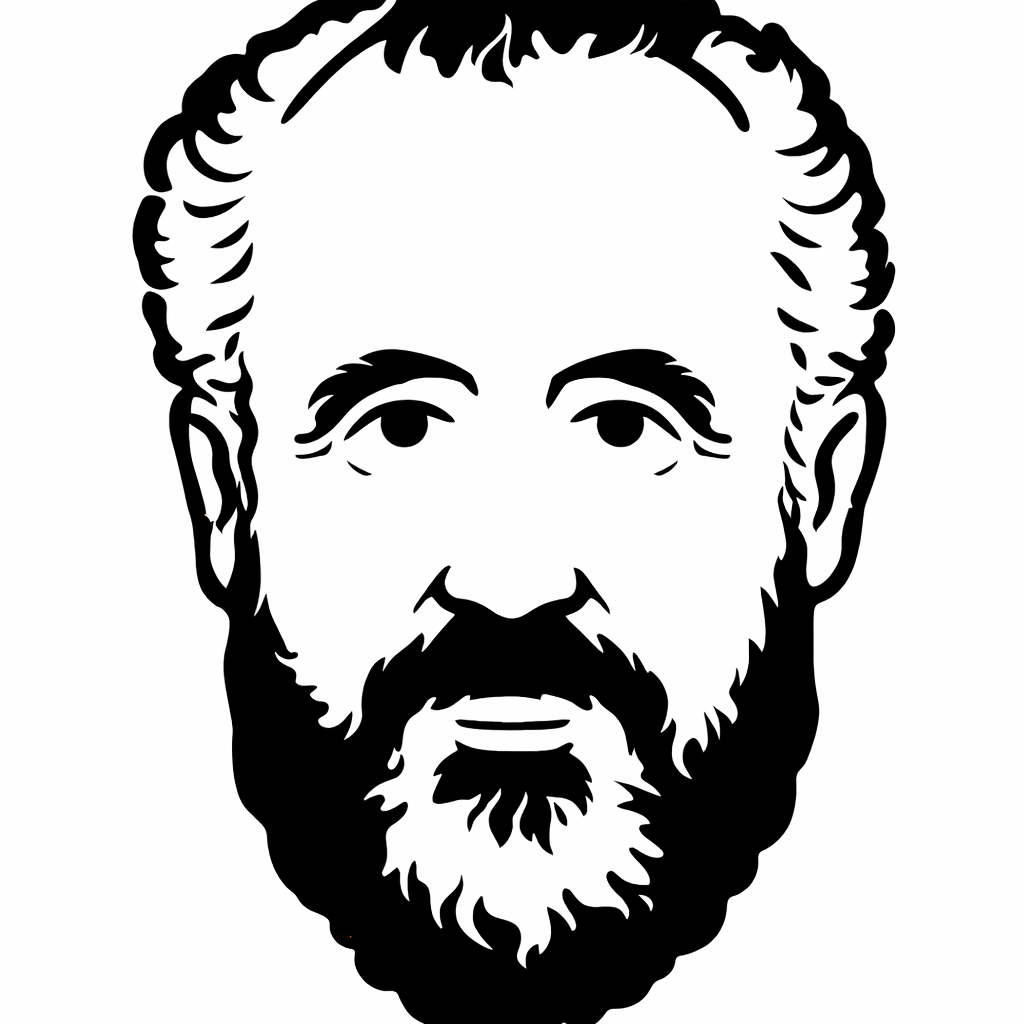
The background
- Nationality:
- Russian, Polish, American
- Schools:
- Warsaw school of mathematics
- Period:
- 20th century
The synopsis
Samuel Eilenberg (September 30, 1913 – January 30, 1998) was a Polish-American mathematician who co-founded category theory (with Saunders Mac Lane) and homological algebra. He was born in Warsaw, Poland, to a Jewish family. Eilenberg earned his Ph.D. from the University of Warsaw in 1936, with his thesis titled "On the Topological Applications of Maps onto a Circle." His doctoral advisors were Kazimierz Kuratowski and Karol Borsuk. He spent a significant part of his career as a professor at Columbia University, and also held positions at the University of Michigan and Indiana University. Eilenberg's primary contributions were in algebraic topology, where he worked on the axiomatic treatment of homology theory with Norman Steenrod, leading to the Eilenberg–Steenrod axioms. His work with Saunders Mac Lane on homological algebra led to the development of category theory. He was also a member of Bourbaki. Later in his career, he focused on pure category theory and contributed to automata theory, introducing the X-machine model and establishing Eilenberg's theorem regarding varieties of regular languages and pseudovarieties of finite monoids. Beyond mathematics, Eilenberg was a prominent collector of Asian art, with his collection primarily featuring sculptures and artifacts from various Asian countries. An exhibition of over 400 items he donated to the Metropolitan Museum of Art was held in 1991–1992. He died in New York City in January 1998 at the age of 84.
The works
Automata, Languages and Machines, Volume A
Automata, Languages and Machines, Volume B
On the Lusternik-Schnirelmann category of abstract groups
Relations between homology and homotopy groups of spaces
Relations between homology and homotopy groups of spaces. II
Limits and spectral sequences
The "fundamental theorem of algebra" for quaternions
Axiomatic approach to homology theory
Foundations of Algebraic Topology