The Philosopher
Rudolf Otto
The face
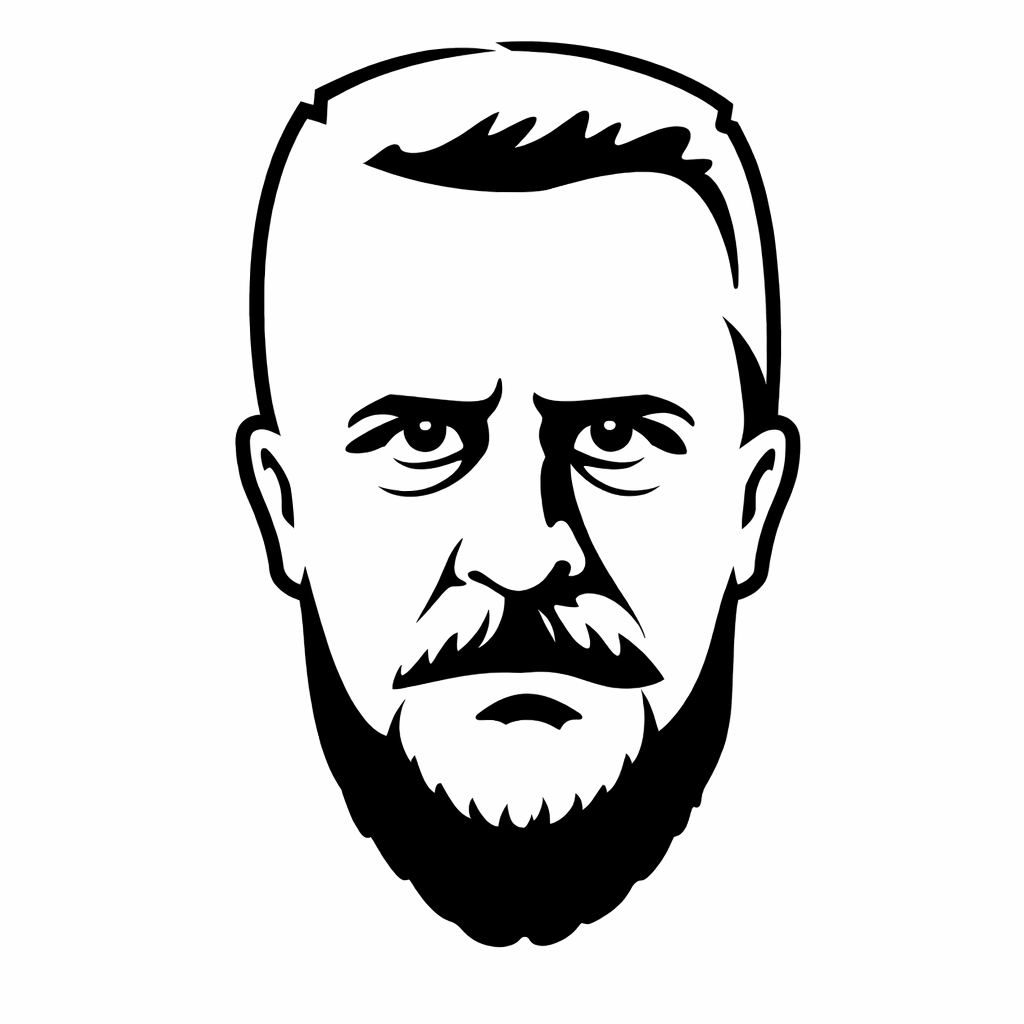
The background
- Nationality:
- German
- Branchs:
- Theology, Philosophy, Comparative religion, Religious studies, Philosophy of religion, History of religion, Psychology of religion
- Period:
- early 20th century
The synopsis
Rudolf Otto was a German Lutheran theologian, philosopher, and comparative religionist. He is recognized as a highly influential scholar of religion in the early 20th century, primarily for his concept of the numinous, which he described as a profound emotional experience central to world religions. Otto's academic career began in liberal Christian theology, but his work maintained an apologetic focus, defending religion against naturalist challenges, which positioned him as a more conservative figure. He conceptualized his work within a science of religion encompassing philosophy, history, and psychology of religion. Otto's early academic life included studies at Erlangen and Göttingen, with a dissertation on Martin Luther and a habilitation on Kant. His travels in 1911-1912, including visits to North Africa, Palestine, British India, China, Japan, and the United States, significantly broadened his perspective on non-Christian religions. A visit to a Moroccan synagogue in 1911 was a key inspiration for his development of the concept of the Holy. Otto also engaged in politics, serving in the Prussian parliament and the post-war constituent assembly. He held professorships at the University of Breslau and later at the University of Marburg, where he remained until his retirement in 1929. Otto died in 1937 from pneumonia, following injuries sustained from a fall in October 1936. His most famous work, 'The Idea of the Holy,' introduced the concept of the numinous, a non-rational, non-sensory experience of the 'wholly other.' His later work, 'Mysticism East and West,' compared Christian and Hindu mysticism. Otto's influence extended across Christian theology, non-Christian spirituality, religious studies, psychology, and philosophy, impacting scholars like Karl Barth, C.S. Lewis, Mircea Eliade, and Carl Jung.
The works
Die Anschauung von heiligen Geiste bei Luther: Eine historisch-dogmatische Untersuchung
Naturalistische und religiöse Weltansicht
Naturalism and Religion
The Philosophy of Religion Based on Kant and Fries
The Idea of the Holy
Mysticism East and West
The Sacred and the Profane
The Problem of Pain
Time and Eternity
Die Sehnsucht nach dem ganz Anderen
The quotes
Down below the broad, roaring waves of the sea break against the deep foundation of the rock. But high above the mountain, the sea, and the peaks of rock the eternal ornamentation blooms silently from the dark depths of the universe.
A child does not notice the greatness and the beauty of nature and the splendor of God in his works.
To see this place would truly be worth a trip to India in itself, and from the spirit of the religion that lived here one can learn more in an hour of viewing than from all the books ever written.
Heavy pillars, carved from the rock, bear the roof. Slowly, one's eyes become accustomed to the dim light; then they can make out marvelous representations from Indian mythology carved on the walls.
But aesthetics is not religion, and the origins of religion lie somewhere completely different. They lie anyway, these roses smell too sweet and the deep roar of the breaking waves is too splendid, to do justice to such weighty matters now.