The Philosopher
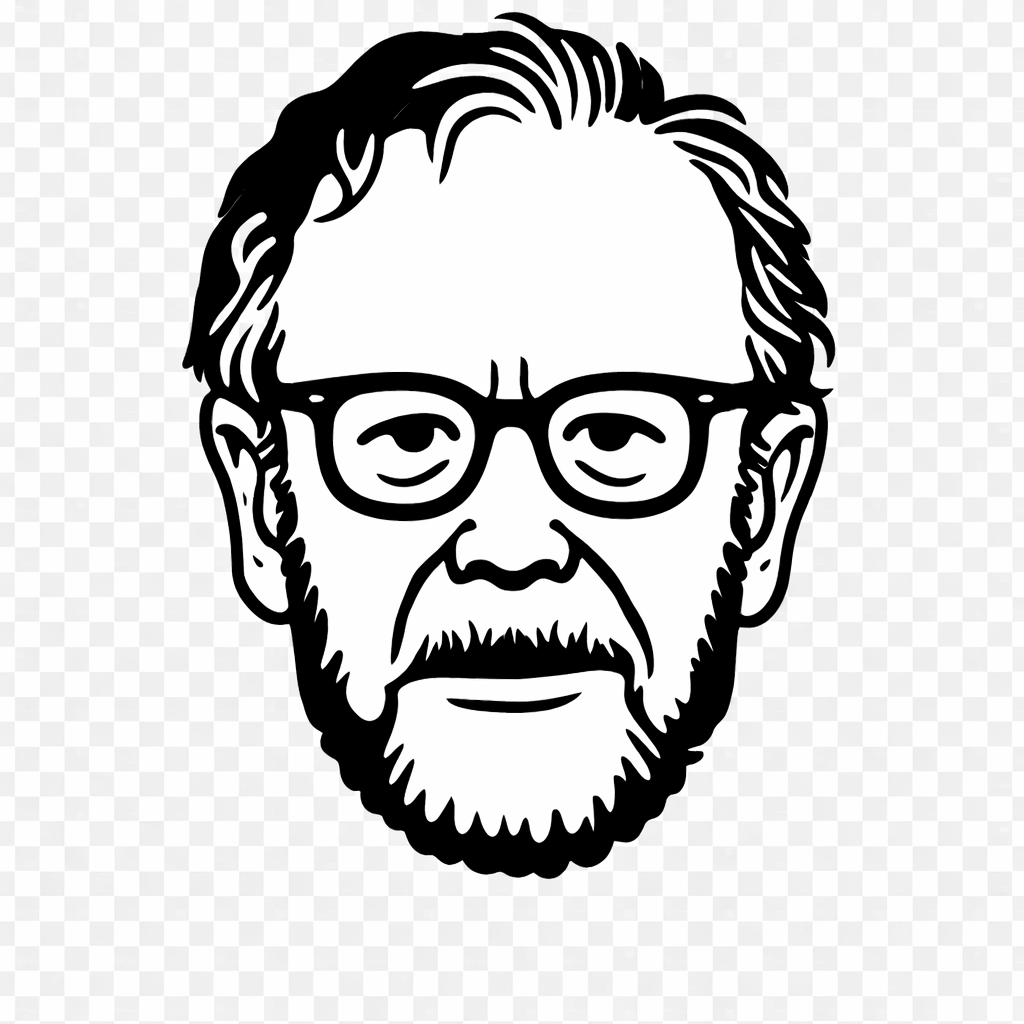
Rollo May
The face
The background
- Nationality:
- American
- Schools:
- Existentialism
- Period:
- 20th century
The synopsis
Rollo Reece May (April 21, 1909 – October 22, 1994) was an American existential psychologist and author of the influential book *Love and Will* (1969). He is often associated with humanistic psychology and existentialist philosophy, and alongside Viktor Frankl, was a major proponent of existential psychotherapy. The philosopher and theologian Paul Tillich was a close friend who had a significant influence on his work.
May's other works include *The Meaning of Anxiety* (1950, revised 1977) and *The Courage to Create* (1975), named after Tillich's *The Courage to Be*.
Early life
Rollo May was born in Ada, Ohio, on April 21, 1909. His childhood was described as difficult due to his parents' divorce and his sister's mental health struggles. He attended Michigan State University and Oberlin College, where he majored in English. He taught in Greece for three years and studied with Alfred Adler. After being ordained as a minister, he pursued a degree in psychology. He was diagnosed with tuberculosis in 1942 and spent 18 months in a sanatorium. He later earned degrees from Union Theological Seminary and Teachers College, Columbia University.
Writings
May's early writings focused on counseling and personality theory. His 1950 book, *The Meaning of Anxiety*, explored the role of anxiety in personal growth. *Man's Search for Himself* (1953) discussed themes of loneliness and emptiness. His 1967 book, *Psychology and the Human Dilemma*, reflected on his ideas and those of other thinkers. *Love and Will* (1969) is considered one of his most influential works, exploring concepts of love, the Daimonic, depression, and creativity. *Power and Innocence* (1972) examined the sources of violence, while *The Courage to Create* (1975) encouraged individuals to face their fears. Other works include *Freedom and Destiny* (1981), *The Discovery of Being* (1983), *My Quest for Beauty* (1985), *The Cry for Myth* (1991), and *The Psychology of Existence* (1995).
Accomplishments
May received numerous awards for his work, including the Ralph Waldo Emerson Award for *Love and Will*, the American Psychological Association's Distinguished Contribution to Science and Profession of Clinical Psychology award, the Dr. Martin Luther King, Jr., Award, and the American Psychological Foundation Gold Medal Award for Lifetime Contributions to Professional Psychology.
Influences and psychological background
May was influenced by North American humanism and existentialist philosophy. He considered Otto Rank a significant precursor to existential therapy. He also found common ground with the ideas of Abraham Maslow and Erich Fromm regarding self-expression and free will. Irvin D. Yalom was a patient of May's.
Stages of development
May proposed four stages of development: Innocence, Rebellion, Ordinary, and Creative. These stages represent a sequence of major issues in an individual's life, focusing on the development of will, responsibility, conformity, and self-actualization.
Aspects of the world
May identified three aspects of the world that influence our perception: Umwelt (the world around us, biological influences), Mitwelt (the world, social relationships), and Eigenwelt (our own world, psychological realm of self-exploration).
Perspectives
May's theories on anxiety, love, and guilt are central to his work. He viewed anxiety as a dizziness of freedom, essential for individual growth. He distinguished five types of love: Libido, Eros, Philia, Agape, and Manic. May also described three forms of ontological guilt related to Umwelt, Mitwelt, and Eigenwelt.
Criticism of modern psychotherapy
May criticized modern psychotherapy for its fragmentation and focus on 'gimmicks' rather than deeper existential issues. He advocated for existential therapy as a more holistic approach.
Unconstructive and constructive trends in existential psychology
May identified five unconstructive trends in existential psychology, including its tendency towards specialization, anti-scientific attitudes, and "wild eclecticism." He also highlighted five constructive trends, such as the new scientific approach to studying humans, the central role of decision-making, and the acceptance of normal anxiety and guilt.
The works
The Art of Counseling
The Springs of Creative Living: A Study of Human Nature and God
The Meaning of Anxiety
Man’s Search for Himself
Existence
Psychology and the Human Dilemma
Love and Will
Power and Innocence: A Search for the Sources of Violence
Paulus: Reminiscence of a Friendship
The Courage to Create
Freedom and Destiny
The Discovery of Being: Writings in Existential Psychology
My Quest for Beauty
The Cry for Myth
The Psychology of Existence
The quotes
Human freedom involves our capacity to pause, to choose the one response toward which we wish to throw our weight.
Communication leads to community, that is, to understanding, intimacy and mutual valuing.
Freedom is man's capacity to take a hand in his own development. It is our capacity to mold ourselves.
Depression is the inability to construct a future.
If you do not express your own original ideas, if you do not listen to your own being, you will have betrayed yourself.
Care is a state in which something does matter; it is the source of human tenderness.
Our particular problem in America at this point in history is the widespread loss of the sense of individual significance, a loss which is sensed inwardly as impotence.
A myth is a way of making sense in a senseless world. Myths are narrative patterns that give significance to our existence.
Freedom is the possibility of development, of enhancement of one's life - or the possibility of withdrawing, shutting oneself up, denying and stultifying one's growth.
Political freedom is to be cherished indeed. But there is no political freedom that is not indissolubly bound to the inner personal freedom of the individuals who make up that nation: no liberty of a nation of conformists, no free nation made up of robots.
Loneliness is such an omnipotent and painful threat to many persons that they have little conception of the positive values of solitude and even, at times, are frightened at the prospect of being alone.
It is an obvious fact that when an age is torn loose from its moorings and everyone is to some degree thrown on his own, most people can take steps to find and realize themselves.
If we are to achieve freedom, we must do so with a daring and a profundity that refuse to flinch at engaging our destiny.
Memory depends mainly upon myth. Some even occurs in our minds, in actuality or in fantasy; we form it in memory, molding it like clay day after day - and soon we have made out of that event a myth. We then keep the myth in memory as a guide to future similar situations.
In the utopian aim of removing all power and aggression from human behavior, we run the risk of removing self-assertion, self-affirmation, and even the power to be.
While one might laugh at the meaningless boredom of people a decade or two ago, the emptiness has for many now moved from the state of boredom to a state of futility and despair, which holds promise of dangers.
Freedom always deals with 'the possible'; this gives freedom its great flexibility, its fascination, and its dangers.
I make no apologies in admitting that I take very seriously the dehumanizing dangers in our tendency in modern science to make man over into the image of the machine, into the image of the techniques by which we study him.
It may sound surprising when I say, on the basis of my own clinical practice as well as that of my psychological and psychiatric colleagues, that the chief problem of people in the middle decade of the twentieth century is emptiness.
Psychoanalysis - and any good therapy - is a method of increasing one's awareness of destiny in order to increase one's experience of freedom.
Myths give us our sense of personal identity, answering the question, 'Who am I?'
The opposite of courage in our society is not cowardice, it is conformity.
It requires greater courage to preserve inner freedom, to move on in one's inward journey into new realms, than to stand defiantly for outer freedom. It is often easier to play the martyr, as it is to be rash in battle.
Social acceptance, 'being liked,' has so much power because it holds the feelings of loneliness at bay.
I believe that the therapist's function should be to help people become free to be aware of and to experience their possibilities.
Joy, rather than happiness, is the goal of life, for joy is the emotion which accompanies our fulfilling our natures as human beings. It is based on the experience of one's identity as a being of worth and dignity.
Human dignity is based upon freedom, and freedom upon human dignity. The one presupposes the other.
The problems of a period are the existential crises of what can be but hasn't yet been resolved; and regardless of how seriously we take that word 'resolved,' if there were not some new possibility, there would be no crisis - there would be only despair.
The compelling drive to get at the truth is what improves us all as psychologists and is part and parcel of intellectual integrity. But I do urge that we not let the drive for honesty put blinders on us and cut off our range of vision so that we miss the very thing we set out the understand - namely, the living human being.
We are anxious because we do not know what roles to pursue, what principles for action to believe in. Our individual anxiety, somewhat like that of the nation, is a basic confusion and bewilderment about where we are going.
The emergence of the Atomic Age brought the previously inchoate and 'free-floating' anxiety of many people into sharp focus.
Every being has the need not only to be but to affirm his own being. This is especially significant for the human organism, for it is gifted with, or condemned to, self-consciousness.
Life comes from physical survival; but the good life comes from what we care about.
Courage is not the absence of despair; it is, rather, the capacity to move ahead in spite of despair.
I have long believed that love and will are interdependent and belong together. Both are conjunctive processes of being - a reaching out to influence others, molding, forming, creating the consciousness of the other.
The striking thing about love and will in our day is that, whereas in the past they were always held up to us as the answer to life's predicaments, they have now themselves become the problem.
Hate is not the opposite of love; apathy is.
The human dilemma is that which arises out of a man's capacity to experience himself as both subject and object at the same time.
Creativity is not merely the innocent spontaneity of our youth and childhood; it must also be married to the passion of the adult human being, which is a passion to live beyond one's death.
One does not become fully human painlessly.
Problems are the outward signs of unused inner possibilities.
The cooperative, loving side of existence goes hand in hand with coping and power, but neither the one nor the other can be neglected if life is to be gratifying.