The Philosopher
Robert Boyle
The face
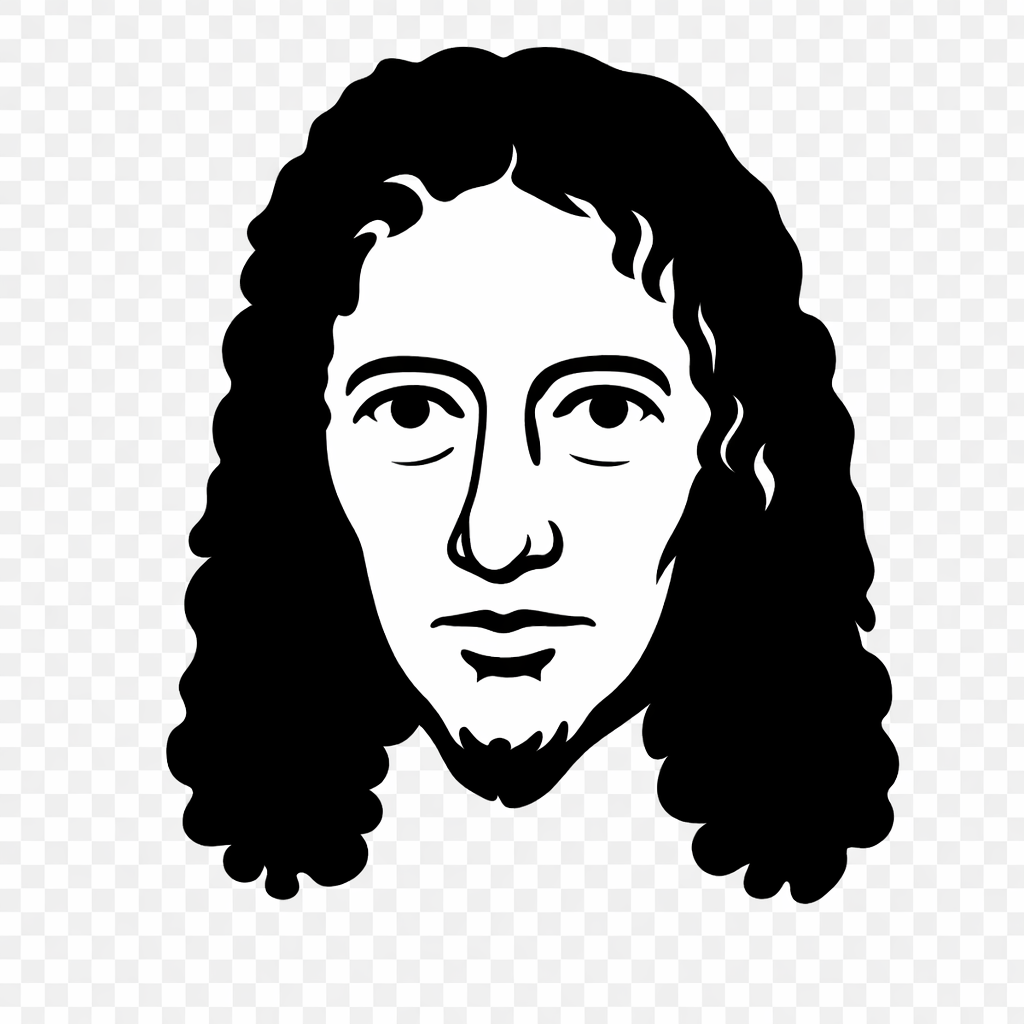
The background
- Nationality:
- Anglo-Irish
- Branchs:
- Physics, Chemistry, Natural Philosophy, Theology
- Period:
- Scientific Revolution
The synopsis
Robert Boyle (25 January 1627 – 31 December 1691) was an Anglo-Irish natural philosopher, chemist, physicist, alchemist, and inventor. Boyle is largely regarded today as the first modern chemist, and therefore one of the founders of modern chemistry, and one of the pioneers of modern experimental scientific method. He is best known for Boyle's law, which describes the inversely proportional relationship between the absolute pressure and volume of a gas, if the temperature is kept constant within a closed system. Among his works, *The Sceptical Chymist* is seen as a cornerstone book in the field of chemistry. He was a devout and pious Anglican and is noted for his works in theology. Boyle was born at Lismore Castle in County Waterford, Ireland, the seventh son and fourteenth child of the 1st Earl of Cork. He received private tutoring and was sent to Eton College. He traveled abroad, studying Galileo Galilei in Florence. Returning to England in 1644, he devoted his life to scientific research, becoming a prominent member of the 'Invisible College.' He moved to Ireland in 1652 but found it unconducive to his chemical work. In 1654, he moved to Oxford to pursue his research more successfully. He devised improvements to Otto von Guericke's vacuum pump with Robert Hooke. His work on the spring of air led to the formulation of Boyle's law. In 1663, the Invisible College became The Royal Society, and Boyle was a council member. He declined the presidency in 1680 due to oaths. In 1668, he moved to London, residing with his elder sister, Katherine Jones, Lady Ranelagh, with whom he shared a lifelong intellectual partnership. In 1669, his health began to fail, and he gradually withdrew from public life. He died in London in 1691 from paralysis. Boyle's will endowed the Boyle Lectures to defend Christianity.
The works
New Experiments Physico-Mechanical, Touching the Spring of the Air, and its Effects
The Sceptical Chymist
A Defence of the Authors Explication of the Experiments, Against the Obiections of Franciscus Linus and Thomas Hobbes
Considerations touching the Usefulness of Experimental Natural Philosophy
Experiments and Considerations Touching Colours, with Observations on a Diamond that Shines in the Dark
New Experiments and Observations Touching Cold
Hydrostatical Paradoxes
Origin of Forms and Qualities according to the Corpuscular Philosophy
A Continuation of New Experiments Physico-mechanical, Touching the Spring and Weight of the Air, and Their Effects
Tracts about the Cosmical Qualities of Things, the Temperature of the Subterraneal and Submarine Regions, the Bottom of the Sea, &tc. with an Introduction to the History of Particular Qualities
Origin and Virtues of Gems
Essays of the Strange Subtilty, Great Efficacy, Determinate Nature of Effluviums
Two volumes of tracts on the Saltiness of the Sea, Suspicions about the Hidden Realities of the Air, Cold, Celestial Magnets
Animadversions upon Mr. Hobbes's Problemata de Vacuo
Experiments and Notes about the Mechanical Origin or Production of Particular Qualities, including some notes on electricity and magnetism
Observations upon an artificial Substance that Shines without any Preceding Illustration
The Aerial Noctiluca
New Experiments and Observations upon the Icy Noctiluca
Memoirs for the Natural History of the Human Blood
Short Memoirs for the Natural Experimental History of Mineral Waters
A Free Enquiry into the Vulgarly Received Notion of Nature
Medicina Hydrostatica
Experimenta et Observationes Physicae
Some Motives and Incentives to the Love of God
Some Considerations Touching the Style of the Holy Scriptures
Excellence of Theology compared with Natural Philosophy
Occasional Reflections upon Several Subjects
Some Considerations about the Reconcileableness of Reason and Religion, with aDiscourse about the Possibility of the Resurrection
The Martyrdom of Theodora, and of Didymus
The Christian Virtuoso
The quotes
And I might add the confidence with which distracted persons do oftentimes, when they are awake, think, they see black fiends in places, where there is no black object in sight without them.
The gospel comprises indeed, and unfolds, the whole mystery of man's redemption, as far forth as it is necessary to be known for our salvation.