The Philosopher
Richard Dedekind
The face
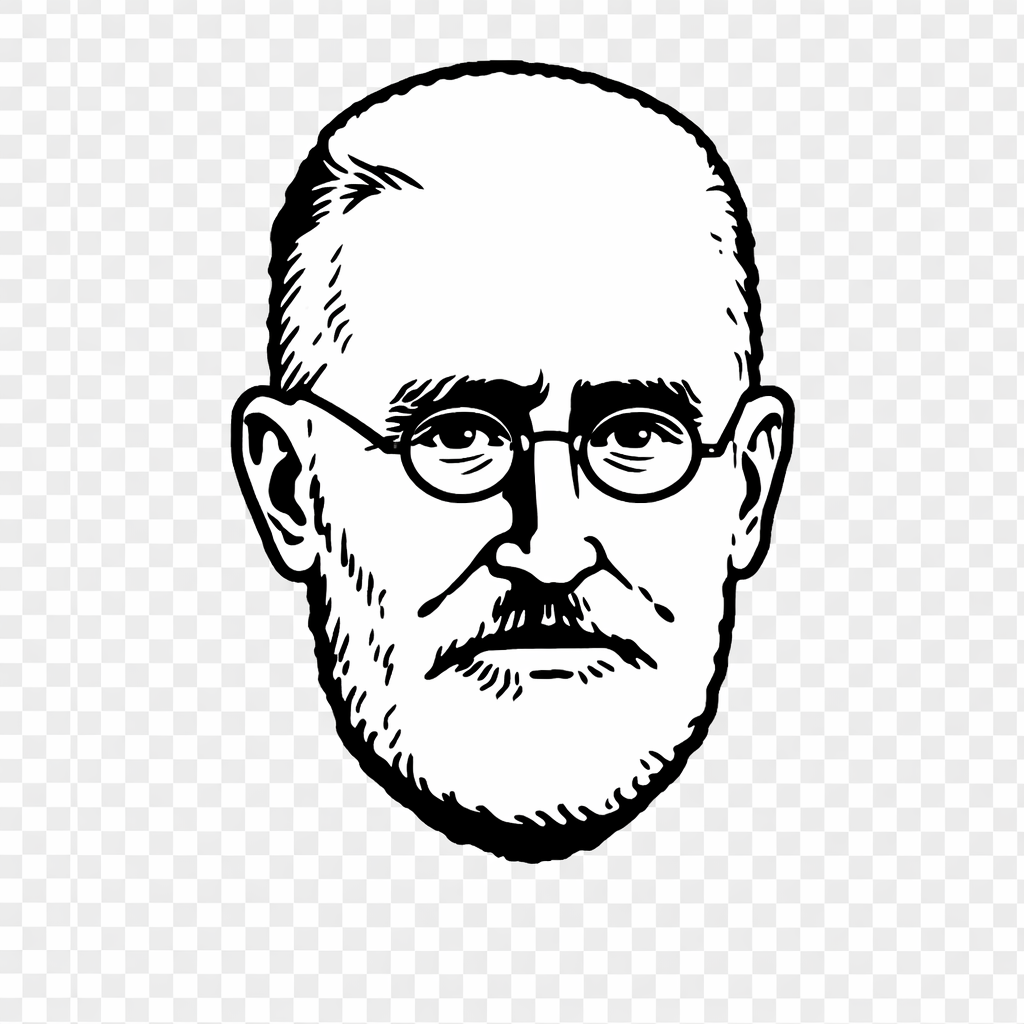
The background
- Nationality:
- German
- Schools:
- Logicism
- Branchs:
- Number Theory, Abstract algebra, Ring theory, Axiomatic foundations of arithmetic, Set theory, Philosophy of mathematics, Algebraic number theory, Real numbers, Logicism, Groups, Galois theory, Elliptic functions, Abelian functions, Algebraic number fields, Ideals, Algebraic integers, Riemann surfaces, Modular lattices
- Period:
- 19th century
The synopsis
Julius Wilhelm Richard Dedekind (born 6 October 1831 – died 12 February 1916) was a German mathematician who made important contributions to number theory, abstract algebra (particularly ring theory), and the axiomatic foundations of arithmetic. His best known contribution is the definition of real numbers through the notion of Dedekind cut. He is also considered a pioneer in the development of modern set theory and of the philosophy of mathematics known as logicism.
Dedekind's father was Julius Levin Ulrich Dedekind, an administrator of Collegium Carolinum in Braunschweig. His mother was Caroline Henriette Dedekind (née Emperius), the daughter of a professor at the Collegium. Richard Dedekind had three older siblings. As an adult, he never used the names Julius Wilhelm. He was born in Braunschweig (often called "Brunswick" in English), which is where he lived most of his life and died. His body rests at Braunschweig Main Cemetery.
He first attended the Collegium Carolinum in 1848 before transferring to the University of Göttingen in 1850. There, Dedekind was taught number theory by professor Moritz Stern. Gauss was still teaching, although mostly at an elementary level, and Dedekind became his last student. Dedekind received his doctorate in 1852, for a thesis titled Über die Theorie der Eulerschen Integrale ("On the Theory of Eulerian integrals"). This thesis did not display the talent evident in Dedekind's subsequent publications.
At that time, the University of Berlin, not Göttingen, was the main facility for mathematical research in Germany. Thus Dedekind went to Berlin for two years of study, where he and Bernhard Riemann were contemporaries; they were both awarded the habilitation in 1854. Dedekind returned to Göttingen to teach as a Privatdozent, giving courses on probability and geometry. He studied for a while with Peter Gustav Lejeune Dirichlet, and they became good friends. Because of lingering weaknesses in his mathematical knowledge, he studied elliptic and abelian functions. Yet he was also the first at Göttingen to lecture concerning Galois theory. About this time, he became one of the first people to understand the importance of the notion of groups for algebra and arithmetic.
In 1858, he began teaching at the Polytechnic school in Zürich (now ETH Zürich). When the Collegium Carolinum was upgraded to a Technische Hochschule (Institute of Technology) in 1862, Dedekind returned to his native Braunschweig, where he spent the rest of his life, teaching at the Institute. He retired in 1894, but did occasional teaching and continued to publish. He never married, instead living with his sister Julia.
Dedekind was elected to the Academies of Berlin (1880) and Rome, and to the French Academy of Sciences (1900). He received honorary doctorates from the universities of Oslo, Zurich, and Braunschweig.
The works
Über die Theorie der Eulerschen Integrale
Stetigkeit und irrationale Zahlen
Vorlesungen über Zahlentheorie
Was sind und was sollen die Zahlen?