The Philosopher
Richard Avenarius
The face
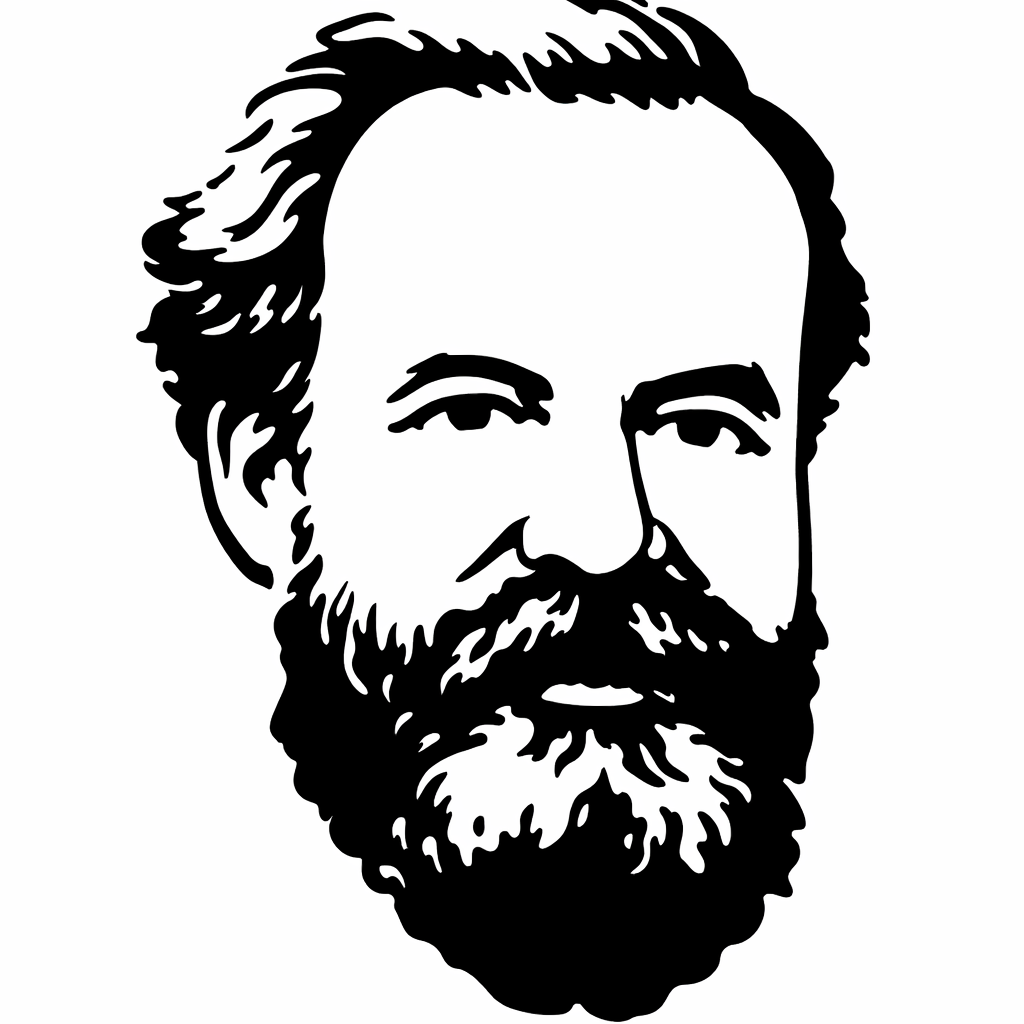
The background
- Nationality:
- German-Swiss
- Schools:
- Empirio-criticism, Positivism
- Branchs:
- Empirical knowledge, Philosophy of science
- Period:
- 19th-century philosophy
The synopsis
Richard Ludwig Heinrich Avenarius, born Richard Habermann, was a philosopher born in Paris, France, on November 19, 1843, and died in Zurich, Switzerland, on August 18, 1896. He was a French-born German-Swiss philosopher who formulated the radical positivist doctrine of 'empirical criticism' or 'empirio-criticism'. Avenarius attended the Nicolaischule in Leipzig and studied at the University of Zurich, Berlin, and the University of Leipzig. He received his Doctor of Philosophy in 1868 for his thesis on Baruch Spinoza and his pantheism. In 1876, he obtained his habilitation and taught as a Privatdozent at the University of Leipzig. The following year, he became a professor at the University of Zurich, where he remained until his death. Avenarius believed that scientific philosophy should focus on purely descriptive definitions of experience, free from metaphysics and materialism. His opposition to the materialist assertions of Carl Vogt led to an attack by Vladimir Lenin in 'Materialism and Empirio-criticism.' Avenarius's main works include 'Critique of Pure Experience' (1888–1890) and 'The Human Concept of the World' (1891), which influenced Ernst Mach, Ber Borochov, and William James. He also taught Anatoly Lunacharsky and influenced Alexander Bogdanov and Nikolai Valentinov.
The works
Ueber die beiden ersten Phasen des Spinozischen Pantheismus und das Verhältnis der zweiten zur dritten Phase
Philosophie als Denken der Welt gemäß dem Prinzip des kleinsten Kraftmaßes. Prolegomena zu einer Kritik der reinen Erfahrung
Kritik der reinen Erfahrung
Der menschliche Weltbegriff