The Philosopher
Ralph Waldo Emerson
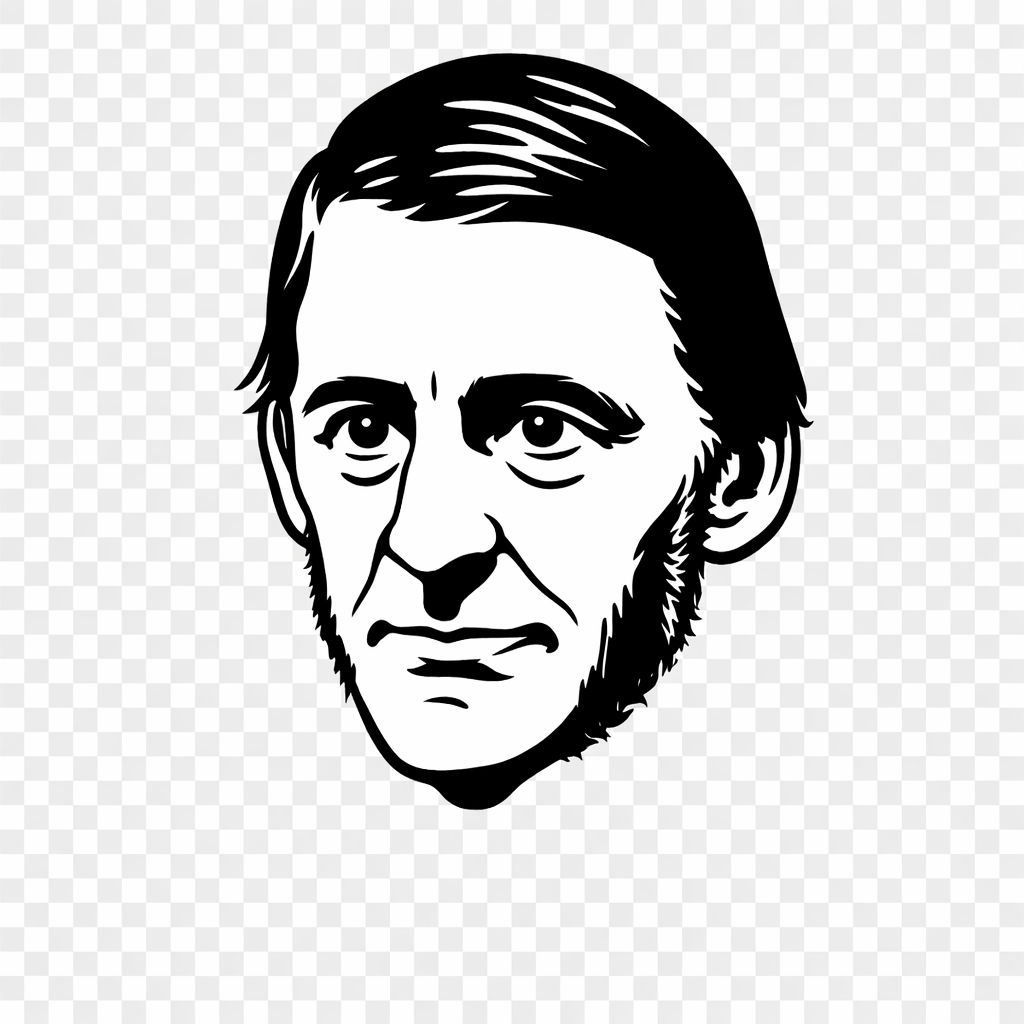
The face
The background
- Nationality:
- American
- Schools:
- Transcendentalism
- Branchs:
- Transcendentalism
- Period:
- 19th-century philosophy
The synopsis
Ralph Waldo Emerson (May 25, 1803 – April 27, 1882) was an American essayist, lecturer, philosopher, minister, abolitionist, and poet who led the Transcendentalist movement of the mid-19th century. He is considered a champion of individualism and critical thinking, as well as a prescient critic of the countervailing pressures of society and conformity. Friedrich Nietzsche thought he was "the most gifted of the Americans," and Walt Whitman called Emerson his "master." Emerson gradually moved away from the religious and social beliefs of his contemporaries, formulating and expressing the philosophy of Transcendentalism in his 1836 essay, "Nature." His speech "The American Scholar," given in 1837, was called America's "intellectual Declaration of Independence." Emerson wrote most of his important essays as lectures and then revised them for print. His first two collections of essays, "Essays: First Series" (1841) and "Essays: Second Series" (1844), represent the core of his thinking. They include the well-known essays "Self-Reliance," "The Over-Soul," "Circles," "The Poet," and "Experience." Together with "Nature," these essays made the mid-1830s to the mid-1840s Emerson's most fertile period. Emerson wrote on a number of subjects, never espousing fixed philosophical tenets. He instead developed ideas such as individuality, freedom, the ability for mankind to achieve almost anything, and the relationship between the soul and the surrounding world. Emerson's "nature" was more philosophical than naturalistic: "Philosophically considered, the universe is composed of Nature and the Soul." He remains among the linchpins of the American romantic movement, and his work has greatly influenced the thinkers, writers, and poets that followed him. "In all my lectures," he wrote, "I have taught one doctrine, namely, the infinitude of the private man." Emerson is also well-known as a mentor and friend of Henry David Thoreau, a fellow Transcendentalist.
The works
Nature
Essays: First Series
Essays: Second Series
Self-Reliance
The American Scholar
The quotes
If the tongue had not been framed for articulation, man would still be a beast in the forest.
O Day of days when we can read! The reader and the book, either without the other is naught.
We have listened too long to the courtly Muses of Europe.
In art, the hand can never execute anything higher than the heart can imagine.