The Philosopher
Peter Kropotkin
The face
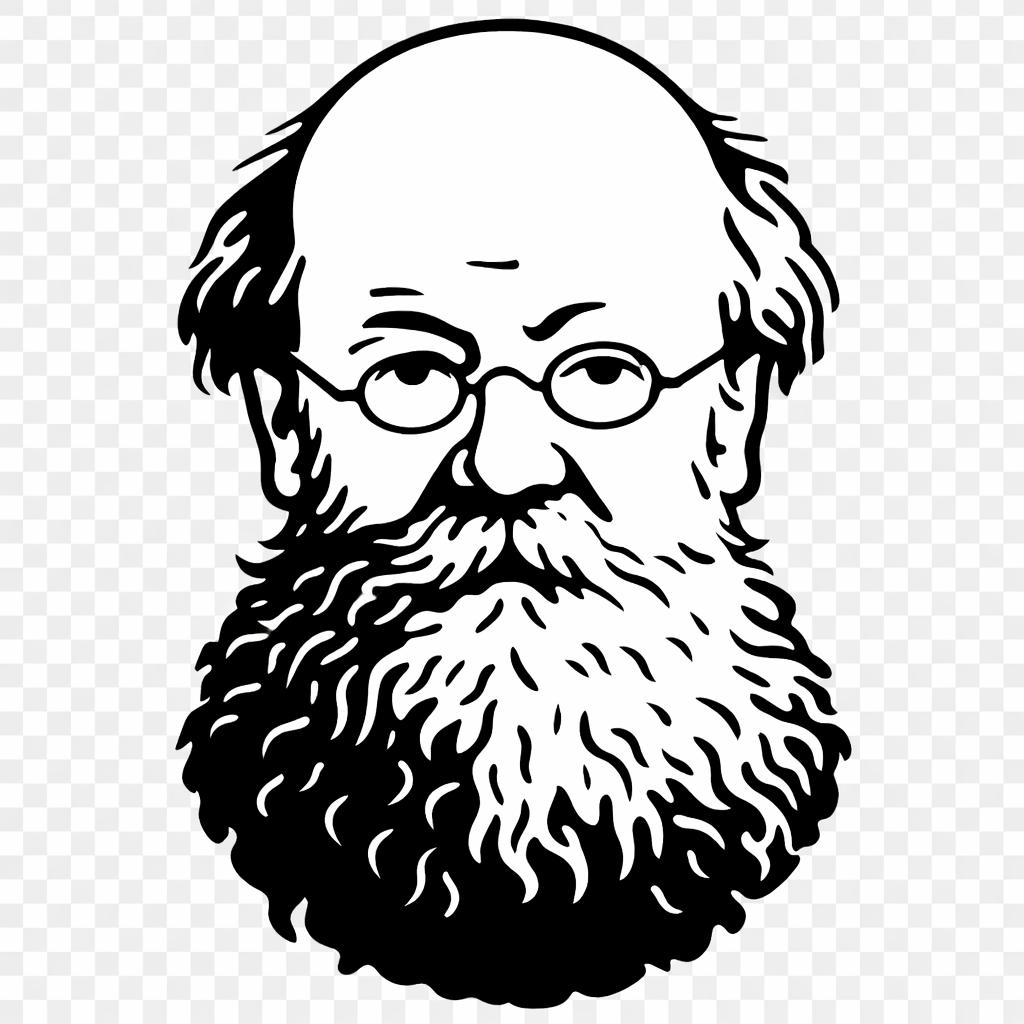
The background
- Nationality:
- Russian
- Period:
- 19th-century, 20th-century
The synopsis
Pyotr Alexeyevich Kropotkin was a Russian anarchist political philosopher and geographer known as a proponent of anarchist communism. Born into an aristocratic land-owning family, Kropotkin attended the Page Corps and later served as an officer in Siberia, where he participated in several geological expeditions. He was imprisoned for his activism in 1874 and managed to escape two years later. He spent the next 41 years in exile in Switzerland, France (where he was imprisoned for almost four years), and England. While in exile, he gave lectures and published widely on anarchism and geography. Kropotkin returned to Russia after the Russian Revolution in 1917, but he was disappointed by the Bolshevik state. Kropotkin was a proponent of the idea of decentralized communist society free from central government and based on voluntary associations of self-governing communities and worker-run enterprises. He wrote many books, pamphlets and articles, the most prominent being The Conquest of Bread (1892) and Fields, Factories, and Workshops (1899), with Mutual Aid: A Factor of Evolution (1902) being his principal scientific offering. He contributed the article on anarchism to the eleventh edition of the Encyclopædia Britannica and left an unfinished work on anarchist ethical philosophy.
The works
The Conquest of Bread
Fields, Factories, and Workshops
Memoirs of a Revolutionist
Mutual Aid: A Factor of Evolution
The quotes
Have not prisons - which kill all will and force of character in man, which enclose within their walls more vices than are met with on any other spot of the globe - always been universities of crime?
America is just the country that how all the written guarantees in the world for freedom are no protection against tyranny and oppression of the worst kind. There the politician has come to be looked upon as the very scum of society.
The law is an adroit mixture of customs that are beneficial to society, and could be followed even if no law existed, and others that are of advantage to a ruling minority, but harmful to the masses of men, and can be enforced on them only by terror.