The Philosopher
Paul Joseph Cohen
The face
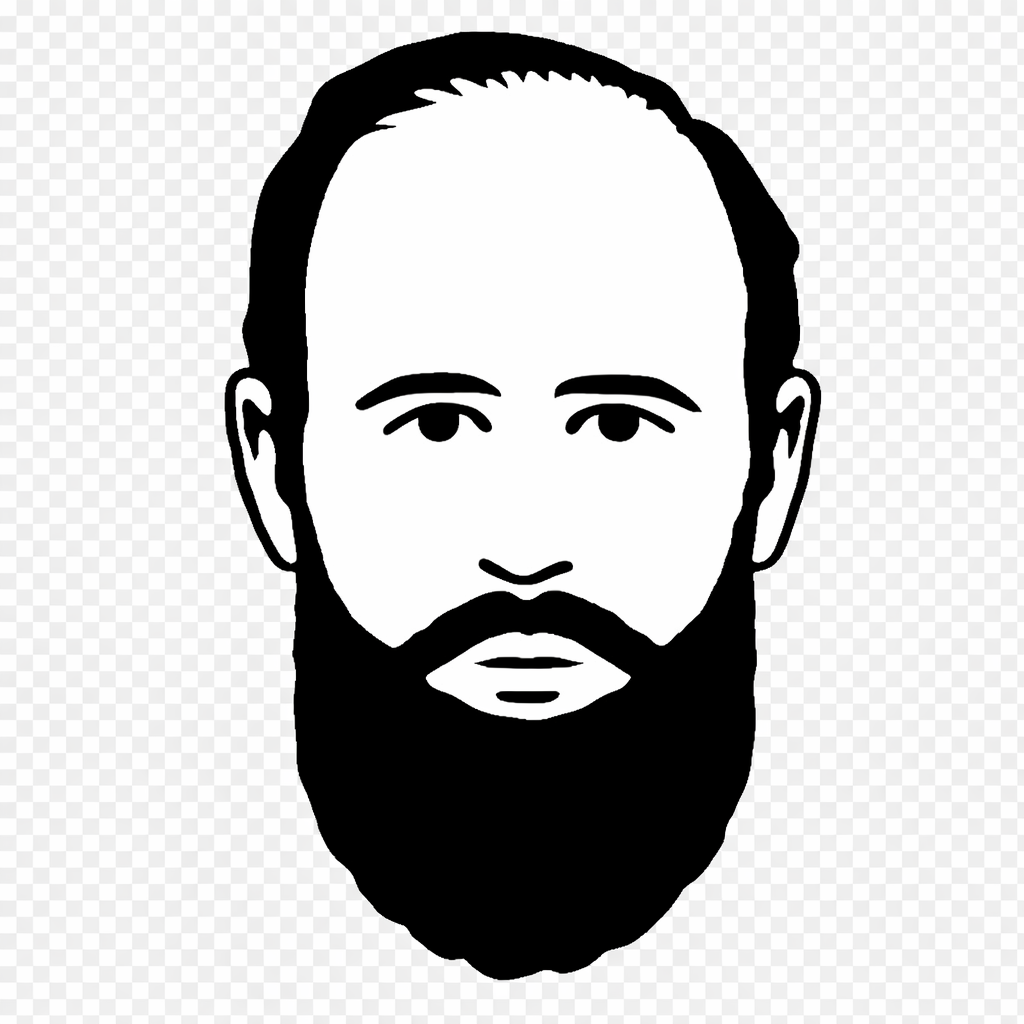
The background
- Nationality:
- American
- Schools:
- Zermelo–Fraenkel set theory
- Branchs:
- Set theory, Mathematical logic, Analysis
- Period:
- 20th century
The synopsis
Paul Joseph Cohen was an American mathematician and professor at Stanford University. He is best known for his work on set theory, particularly his proof that the continuum hypothesis (CH) and the axiom of choice (AC) are independent of the Zermelo–Fraenkel axioms (ZF). To achieve this, he developed a powerful mathematical technique called forcing. This groundbreaking work demonstrated that CH and AC could neither be proved nor disproved from the standard axioms of set theory, establishing their undecidability. Cohen's proof of the independence of the continuum hypothesis earned him the prestigious Fields Medal in 1966, the only Fields Medal awarded for work in mathematical logic. He also received the National Medal of Science in 1967. Beyond set theory, Cohen made significant contributions to mathematical analysis, including work on factorization in group algebras and the Littlewood conjecture. He was awarded the Bôcher Memorial Prize in 1964 for his paper on idempotent measures. Cohen was born in Long Branch, New Jersey, and studied at the University of Chicago under Antoni Zygmund. He lectured at various institutions, including the Institute for Advanced Study, before joining Stanford University. His work on the continuum hypothesis was described by Kurt Gödel as a "delight" to read and a "best possible proof." Cohen died in 2007, leaving a lasting legacy in mathematical logic and set theory.
The works
Topics in the Theory of Uniqueness of Trigonometrical Series
Factorization in group algebras
On a conjecture by Littlewood and idempotent measures
The independence of the continuum hypothesis
The independence of the continuum hypothesis, II
Set theory and the continuum hypothesis