The Philosopher
Nikolay Mikhaylovsky
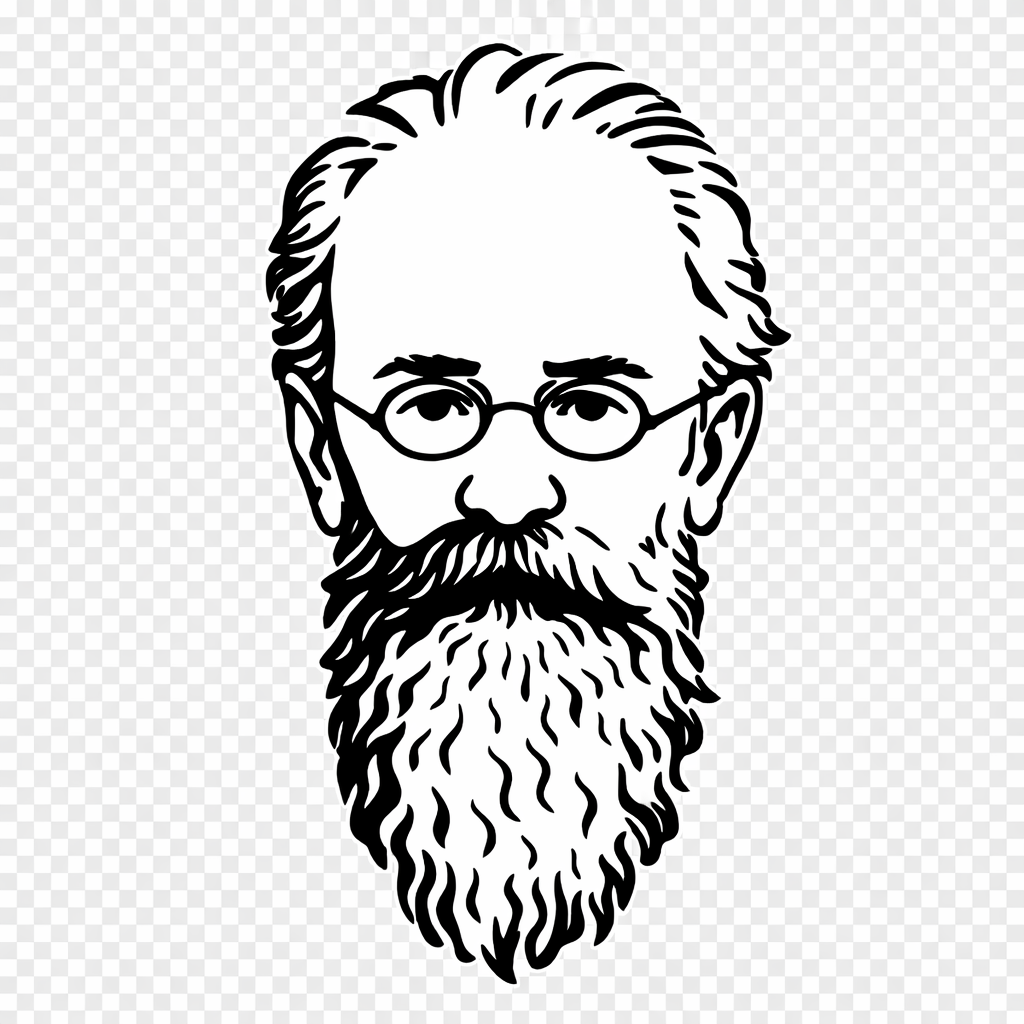
The face
The background
- Nationality:
- Russian
- Schools:
- Narodniks
- Branchs:
- Sociology, Literary criticism, Public affairs
- Period:
- 19th century
The synopsis
Nikolay Konstantinovich Mikhaylovsky (27 November 1842 – 10 February 1904) was a prominent Russian literary critic, sociologist, writer, and a key theoretician of the Narodniki movement. His intellectual contributions were significant in the Russian Empire during the 1870s and 1880s, a period marked by discussions of political and economic reforms. Mikhaylovsky was associated with influential publications such as *Otechestvennye Zapiski*, where he was a contributor from 1869 until its suppression in 1884. He later became co-editor of *Severny Vestnik* in 1873 and, from 1890 until his death, served as co-editor of *Russkoye Bogatstvo* alongside Vladimir Korolenko. His collected writings were posthumously published in 1913. In his theoretical work, Mikhaylovsky explored the dynamic between individuals and masses, particularly in his essays like "Heroes and Crowd." He posited that an individual's influence on historical events is amplified by the crowd's perception and psychological response, rather than solely by the individual's inherent greatness. He also critiqued the simplistic application of Darwinian principles to societal development, advocating for a broader understanding that incorporated concepts of environmental adaptation and solidarity, as articulated by Karl Ernst von Baer. Mikhaylovsky believed that social progress was best measured by the emergence of a perfectly developed, harmonious individual and saw the traditional Russian peasant community (*obshchina*) as a unique organizational structure that distinguished Russia from the West. He was part of a generation of radical thinkers deeply affected by a sense of historical responsibility and debt to the populace.
The works
Heroes and Crowd