The Philosopher
Nikolay Chernyshevsky
The face
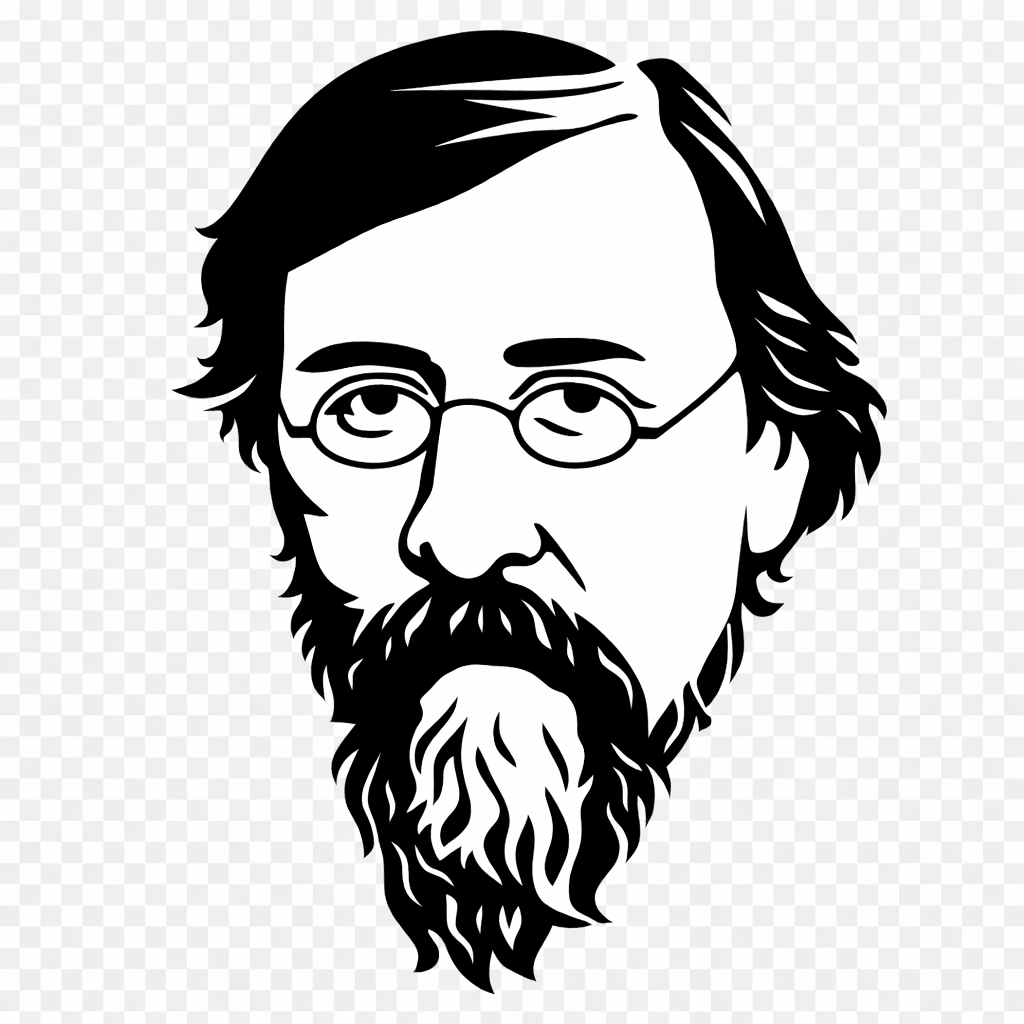
The background
- Nationality:
- Russian
- Schools:
- Russian nihilism, Utopian socialism, Narodism, Materialism, Positivism
- Period:
- 19th-century philosophy
The synopsis
Nikolay Gavrilovich Chernyshevsky was a Russian literary and social critic, journalist, novelist, democrat, and socialist philosopher. He is often identified as a utopian socialist and a leading theoretician of Russian nihilism and the Narodniks. Chernyshevsky was the dominant intellectual figure of the 1860s revolutionary democratic movement in Russia. Despite spending much of his later life in exile to Siberia, his ideas were highly praised by prominent figures like Karl Marx, Georgi Plekhanov, and Vladimir Lenin.
Born in Saratov, Russian Empire, Chernyshevsky received a broad education at the local seminary and later at Saint Petersburg University. He was influenced by philosophers such as Hegel, Feuerbach, and Fourier, as well as by Russian thinkers like Belinsky and Herzen. His views developed into revolutionary, democratic, and materialist perspectives. He worked as a teacher and later as the chief editor of the influential journal *Sovremennik*.
Chernyshevsky's most famous work is the novel *What Is to Be Done?* (1863), which advocated for revolutionary change and inspired generations of Russian revolutionaries. The novel's protagonist, Rakhmetov, embodied a radical dedication to the cause. Chernyshevsky's philosophical contributions include his work on materialist aesthetics, as seen in his dissertation "The Aesthetic Relation of Art to Reality" (1855), where he argued that art should reflect and explain reality for the benefit of humanity.
His political activism led to his arrest in 1862 and subsequent sentencing to penal servitude and exile in Siberia. Despite these hardships, his ideas continued to resonate. Chernyshevsky is considered a founder of Narodism and agrarian socialism, advocating for the revolutionary overthrow of the autocracy and the establishment of a socialist society. His emphasis on the masses as the chief makers of history and his belief in the transformative power of revolution left a lasting impact on Russian political thought and the development of socialist movements.
The works
What Is to Be Done?
A Story Within A Story
Prologue: A Novel for the Beginning of the 1860s
Aesthetic Relations of Art to Reality
The Nature of Human Knowledge
Critique of Philosophical Prejudices Against Communal Ownership
The Anthropological Principle in Philosophy
Essays on the Gogol Period in Russian Literature