The Philosopher
Nikolai Tchaikovsky
The face
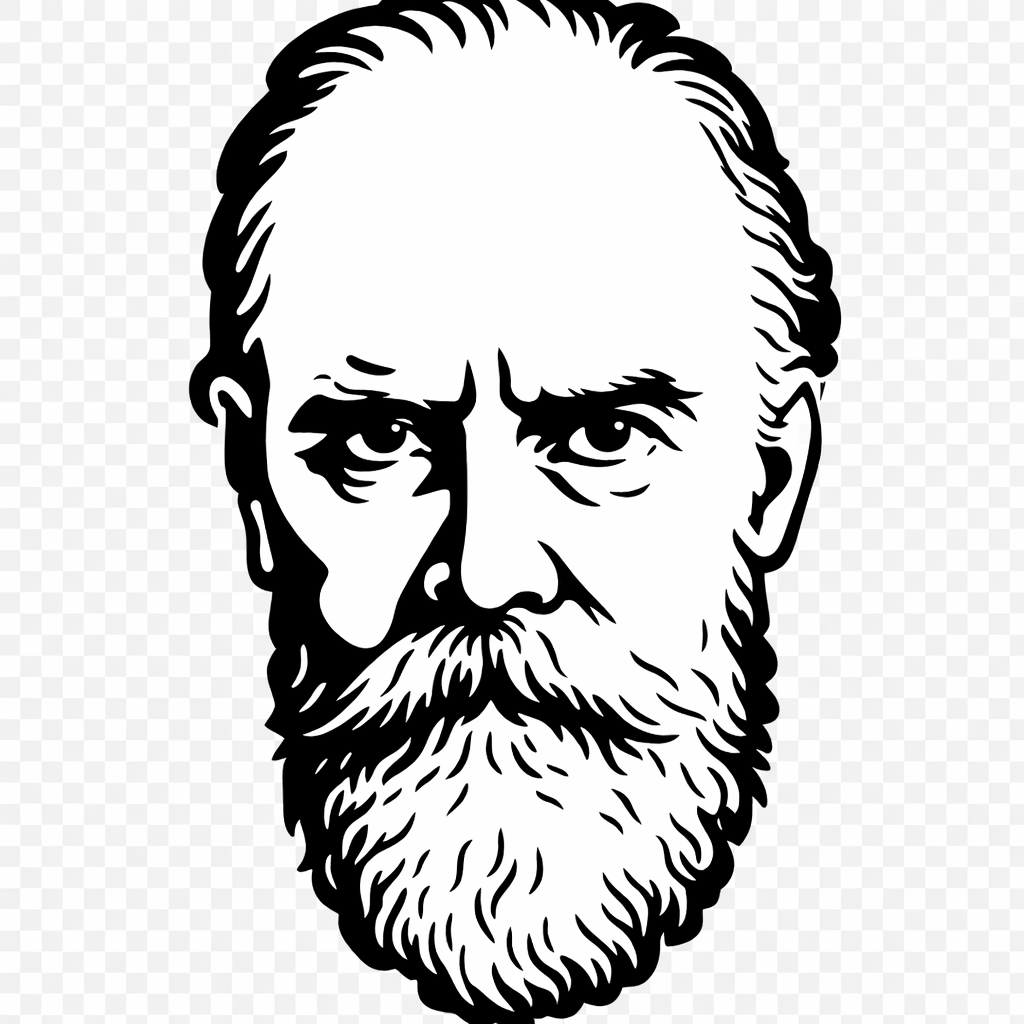
The background
- Nationality:
- Russian
- Branchs:
- Revolutionary politics, Socialism, Communism, Religious movements, Cooperative organizations, Freemasonry
- Period:
- 19th-20th century
The synopsis
Nikolai Vasilyevich Tchaikovsky was born on January 7, 1851, in Vyatka, Russian Empire. He studied chemistry at St. Petersburg University, where he became involved with a radical student group that advocated revolutionary socialist ideals, forming the basis of the Narodnik movement. Due to political repression, the group became more revolutionary and terrorist, which Tchaikovsky did not approve of. He joined a social-religious group called "God-men." In 1874, he left Russia and, in 1875, founded a short-lived communistic settlement in Kansas, USA. Recognizing the failure of this experiment, he returned to Europe in 1879 and settled in England in 1880, actively participating in Russian revolutionary organizations abroad. He collaborated with Peter Kropotkin and organized the supply of revolutionary literature to Russia. During the 1905 revolution, he toured America to raise funds. Returning to Russia in 1907, he was arrested and imprisoned but later released. He remained interested in cooperative organizations. During World War I, he worked with the Russian Red Cross. After the February Revolution of 1917, he was elected to the Petrograd Soviet and opposed Bolshevik propaganda. Following the October Revolution, he was elected to the Constituent Assembly and actively fought against the Bolsheviks. He co-founded the anti-Bolshevik "Union of the Reconstruction of Russia" and was involved in the White movement in Northern Russia. He represented the North Region at the Versailles Conference. Tchaikovsky was also an active Freemason. He died in Harrow, London, England, on April 30, 1926.
The works