The Philosopher
Nassim Nicholas Taleb
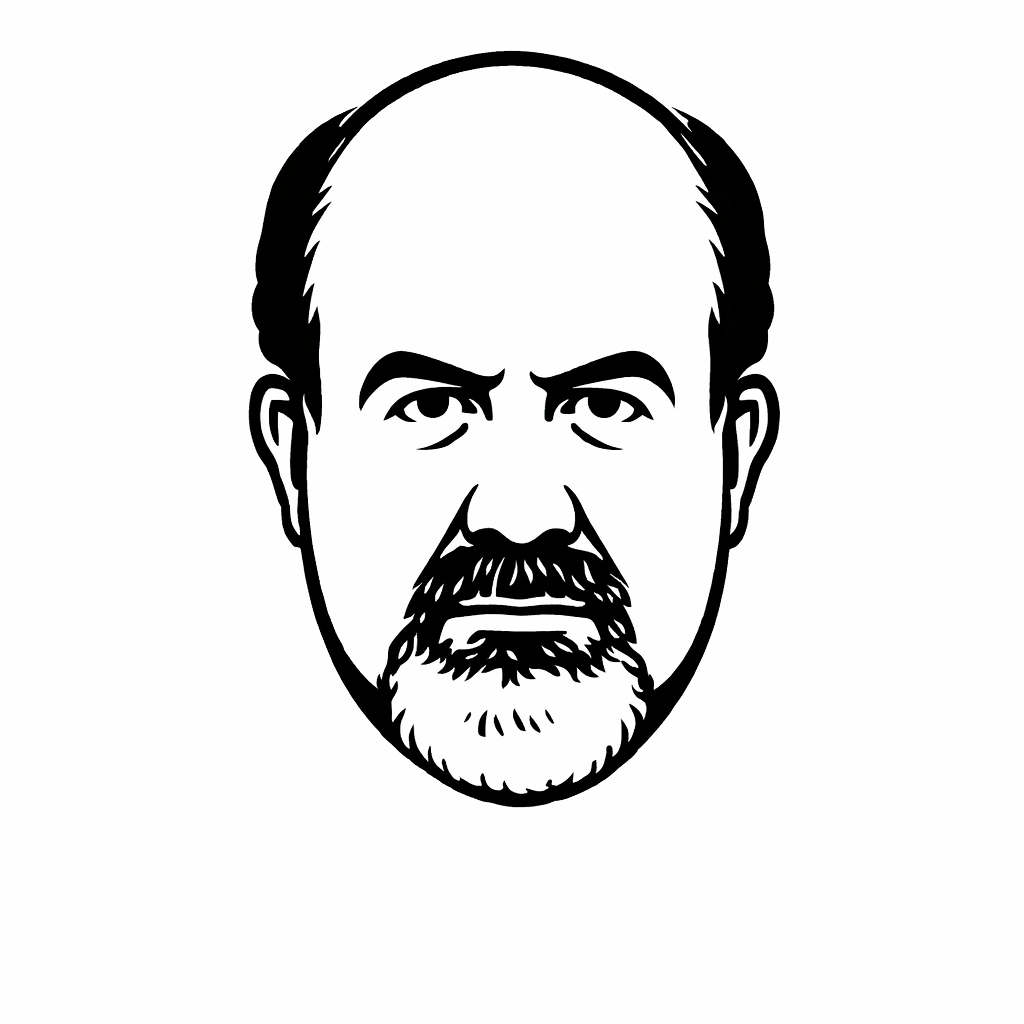
The face
The background
- Nationality:
- Lebanese-American
- Period:
- 21st-century
The synopsis
Nassim Nicholas Taleb is a Lebanese-American scholar, essayist, mathematical statistician, former option trader, and aphorist. His work focuses on problems of randomness, probability, complexity, and uncertainty. Taleb is the author of the five-volume work 'Incerto,' which includes the highly influential books 'The Black Swan: The Impact of the Highly Improbable' and 'Antifragile: Things That Gain from Disorder.' He has held academic positions at universities such as New York University and the University of Oxford. Taleb is known for his critiques of financial risk management and his theories on 'black swan' events and 'antifragility,' advocating for systems that can benefit from volatility and unpredictability. His writings often blend personal narrative, philosophical insights, and scientific commentary.
The works
The quotes
Being an economist is the least ethical profession, closer to charlatanism than any science.
You are rich if and only if money you refuse tastes better than money you accept.
What we do today has nothing to do with capitalism or socialism. It is a crony type of system that transfers money to the coffers of bureaucrats.
Inequalities of wealth lead to a dispersion in wealth for all.
The best philosophers were not academics, but had another job, so their philosophy was not corrupted by careerism.
You have family-owned businesses that have been around for 500 years. You cannot name a corporation that survives intact for even a few decades.
I lift heavy weights and sprint, but I am so bad at it that I develop severe injuries.
Nobody reads the disclosures that roll down your computer screen. You click 'I agree' but you don't know what you're agreeing to.
Failure saves lives. In the airline industry, every time a plane crashes the probability of the next crash is lowered by that. The Titanic saved lives because we're building bigger and bigger ships. So these people died, but we have effectively improved the safety of the system, and nothing failed in vain.
I hated school because I liked to daydream and the system tried to stop me from that.
Never think that lack of variability is stability. Don't confuse lack of volatility with stability, ever.
We humans lack imagination, to the point of not even knowing what tomorrow's important things will look like.
Economics make homeopath and alternative healers look empirical and scientific.
If I ask you to write down the last 4 digits of your social security number, and then take you out to lunch and ask you how many dentists there are in Manhattan, there's going to be a high correlation between those two numbers. What happens is that the number psychologically makes you feel confident.
We know from chaos theory that even if you had a perfect model of the world, you'd need infinite precision in order to predict future events. With sociopolitical or economic phenomena, we don't have anything like that.
What America does best is produce the ability to accept failure.
You will get the most attention from those who hate you. No friend, no admirer and no partner will flatter you with as much curiosity.
You know, children philosophize more than adults - and they are critical of adults.
In the United States, large corporations control some members of Congress. All this does is delay the corporation's funeral at our expense.
Paul Krugman is a danger to society!
If you are an Arabic-speaking, Greek-Orthodox going to a French school it makes you deeply sceptical if you have to listen to three different accounts of the Crusades - one from the Muslim side, one from the Greek side and one from the Catholic side.
A country's assets reside in the tinkerers, the hobbyists, and the risk-takers.
I have never had personal debt and never will.
For many people, commuting is the worst part of the day, and policies that can make commuting shorter and more convenient would be a straightforward way to reduce minor but widespread suffering.
The track record of economists in predicting events is monstrously bad. It is beyond simplification; it is like medieval medicine.
The key to wealth is that it doesn't matter. Once you've had it, you don't think anything of it; you can wear cheap watches.
Globalization has created this interlocking fragility. At no time in the history of the universe has the cancellation of a Christmas order in New York meant layoffs in China.
I'm in favour of religion as a tamer of arrogance. For a Greek Orthodox, the idea of God as creator outside the human is not God in God's terms. My God isn't the God of George Bush.
I drive a hybrid, moving into an electric car. I only drink tap water, never consume food that's travelled.
I'm a capitalist but one who is smallist and localist, and who favours businesses where owners are still in charge.
I don't go to the doctor except when I'm very ill, and when I go to India, I drink a drop of local water.
People have the problem of denial. This is one of the things I learned in Lebanon. Everybody who left Beirut when the war started, including my parents, said, 'Oh, its temporary.' It lasted 17 years! People tend to underestimate the gravity of these situations. That's how they work.
Nature builds things that are antifragile. In the case of evolution, nature uses disorder to grow stronger. Occasional starvation or going to the gym also makes you stronger, because you subject your body to stressors and gain from them.
Debt is a mistake between lender and borrower, and both should suffer.
Banking is a very treacherous business because you don't realize it is risky until it is too late. It is like calm waters that deliver huge storms.
Individuals should think about the worst-case scenarios and plan for them. The world will be crazier than you think it will be. Put money away, and then you can live with much more freedom.
Corporations take the humanity out of trade - they take the happiness out and replace it with something that is ugly.
When you ask people, 'What's the opposite of fragile?,' they tend to say robust, resilient, adaptable, solid, strong. That's not it. The opposite of fragile is something that gains from disorder.
When I trade, I don't have an agency problem; I have my neck on the line. When a bank or banker trades, it's not his neck on the line.
We should ban banks from risk-taking because society is going to pay the price.
It might be useful to be able to predict war. But tension does not necessarily lead to war, but often to peace and to denouement.
I am happy everywhere except in places where I see glitz and rich farts. I am happiest in Brooklyn, where the concentration of rich farts is minimal.
Steve Jobs, Bill Gates and Mark Zuckerberg didn't finish college. Too much emphasis is placed on formal education - I told my children not to worry about their grades but to enjoy learning.
If you take risks and face your fate with dignity, there is nothing you can do that makes you small; if you don't take risks, there is nothing you can do that makes you grand, nothing.
Fragility is the quality of things that are vulnerable to volatility.
We have this culture of financialization. People think they need to make money with their savings rather with their own business. So you end up with dentists who are more traders than dentists. A dentist should drill teeth and use whatever he does in the stock market for entertainment.
There are two types of people: those who try to win and those who try to win arguments. They are never the same.
Never take advice from anyone in a tie. They'll bankrupt you. Don't ask a general for advice on war, and don't ask a broker for advice on money.
The world we live in is vastly different from the world we think we live in.
All of technology, really, is about maximizing free options.
The next time you experience a blackout, take some solace by looking at the sky. You will not recognize it.
The mortgage crisis is a clear instance of consumers who needed protection. There was predatory lending to people who didn't know what they were doing.
Capitalism has forced everyone to overoptimize in order to compete.
I don't read the papers; I stopped reading the papers. I read the papers only during periods of crisis, and I think papers are too long on a regular day and too short days when we have a crisis.
Writing is sacred, other activities are profane, and I don't want them to corrupt my writing.