The Philosopher
Mikhail Shcherbatov
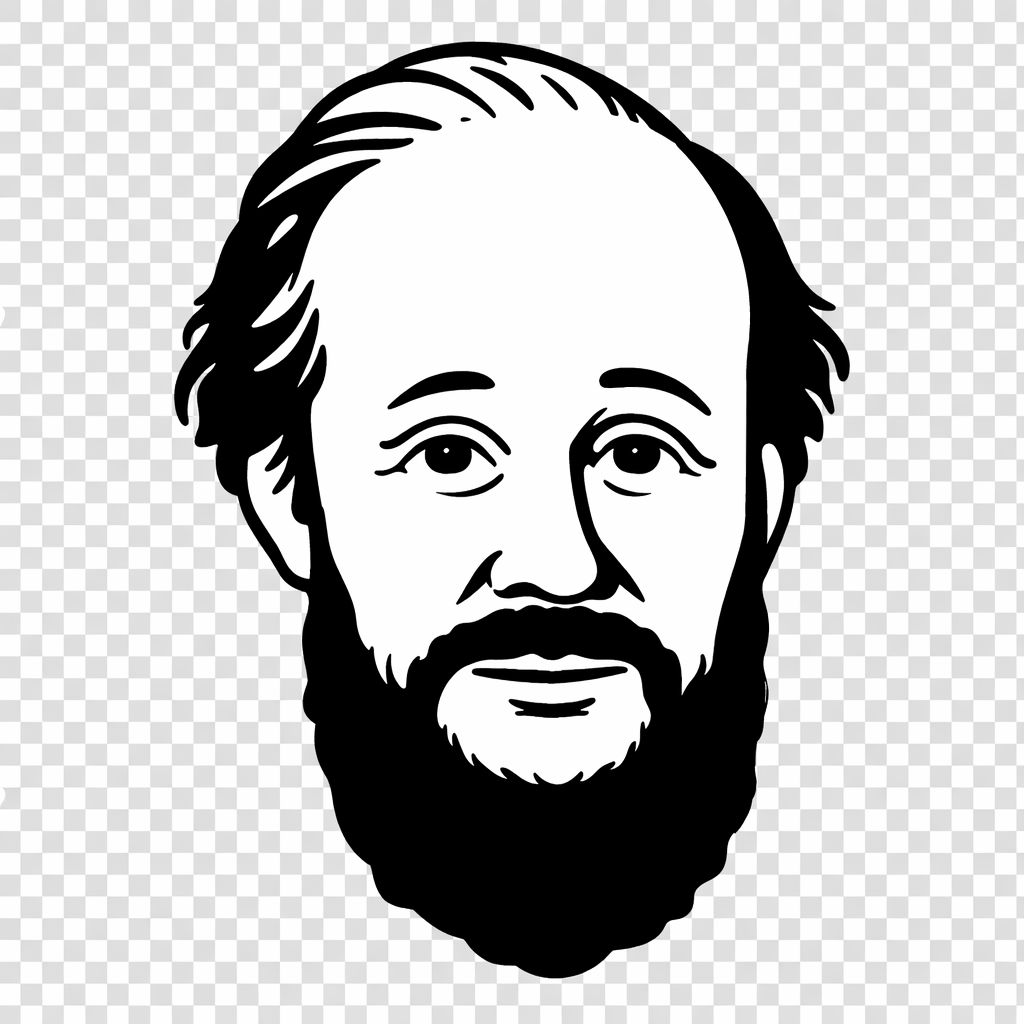
The face
The background
- Nationality:
- Russian
- Schools:
- Russian conservatism
- Branchs:
- History, Philosophy, Literature, Medicine
- Period:
- 18th century
The synopsis
Prince Mikhail Mikhailovich Shcherbatov (1733–1790) was a leading ideologue and exponent of the Russian Enlightenment, on par with Mikhail Lomonosov and Nikolay Novikov. His view of human nature and social progress is kindred to Swift's pessimism. He was known as a statesman, historian, writer and philosopher, and was one of the most visible representatives of the nascent Russian conservatism during the second half of the 18th century.
Scherbatov was the son of Prince Mikhail Yuryevich Scherbatov (1678-1738), Governor-general of Moscow. His belonging to one of the oldest Russian families may explain Scherbatov's lifelong interest in national history. In a series of articles published in 1759-61, he defended serfdom and upheld ancient privileges of nobility repealed by Peter the Great. M. M. Shcherbatov received a good, formal education, studying history, philosophy, literature, and medicine. Until the end of his life, he possessed a vast collection of 40,000 volumes in his home library. He was proficient in French, German, Italian, and a few other Western languages. From 1767 onwards, Shcherbatov was in public service and held responsible posts. He represented the Yaroslavl nobility at the Nakaz commission (1767), was a member of a private commission of the middle-class people, a member of the Board of Trade (1770), a president of the Chamber Council, and a Senator (1779).
In 1768, he received the position of historiographer and was appointed Chief Herald of the Senate. His political ideal was to follow the British example of a constitutional monarchy with separation of powers, finding an analogy in Pre-Petrian Russia where autocracy was confined to the Council of Boyars. His views on Peter I were ambiguous; in a draft "An examination of defects and autocracy of Peter the Great" (1782), he criticized Peter's methods but acknowledged they might have been necessary for Russia's progress, albeit with humane means and smaller losses.
When elected by the nobility of Yaroslavl to represent their interests at the Legislative Assembly of 1767, Shcherbatov criticized the existing institutions of the Russian Empire. He caught the attention of Empress Catherine the Great and was appointed imperial historian in 1768 and president of a ministry in 1778. He worked in the Senate from 1779 to 1786.
Scherbatov's *History of Russia from the Earliest Times*, with seven volumes published between 1771 and 1791, is imbued with the rationalistic ideals of the Age of Reason. He believed inequality was inherent to human nature, illustrated in his utopia, *Journey to the Land of Ophir* (1784). His most lasting work, *On the Corruption of Morals in Russia* (published 1797), was a scathing attack on contemporary social customs.
The works
Articles defending serfdom and upholding ancient privileges of nobility
History of Russia from the Earliest Times
An examination of defects and autocracy of Peter the Great
Journey to the Land of Ophir
On the Corruption of Morals in Russia
Various Opinions about Government
General Thoughts about Legislation