The Philosopher
Marshall McLuhan
The face
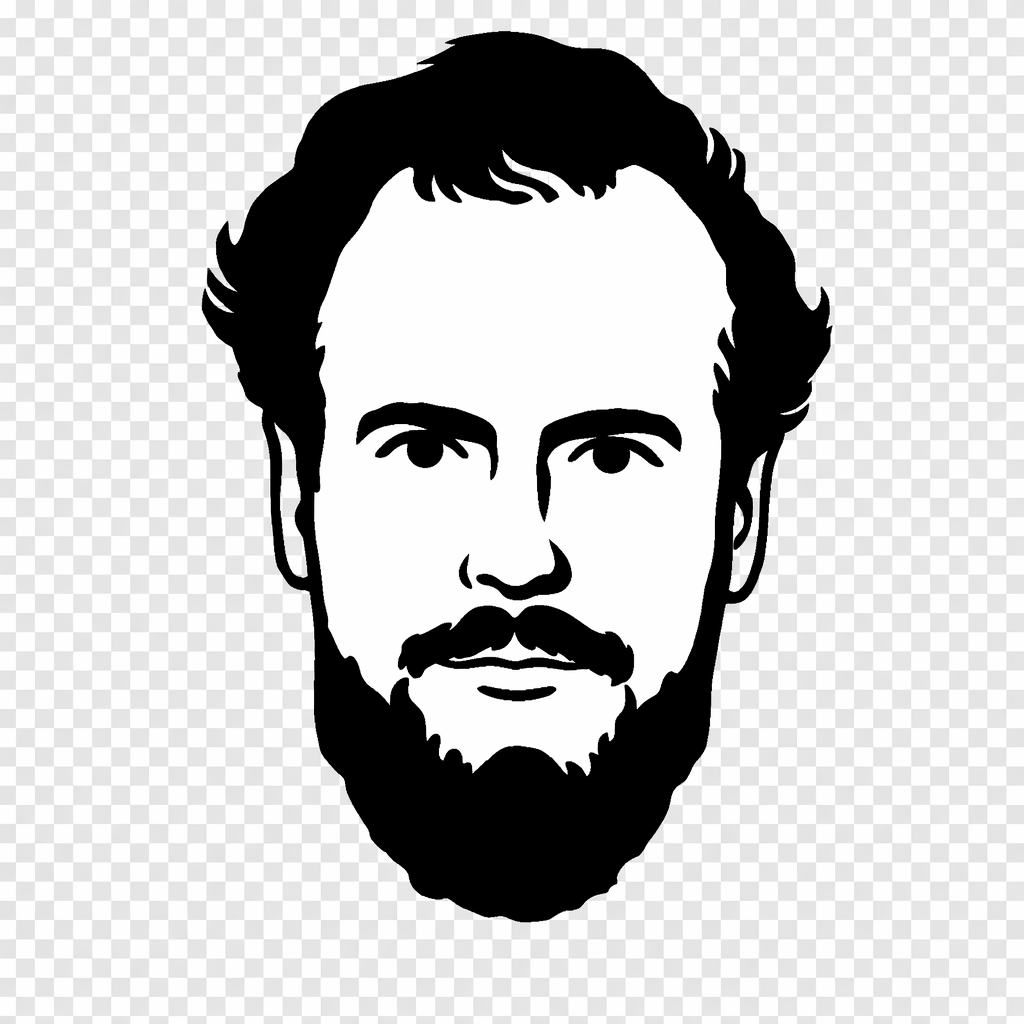
The background
- Nationality:
- Canadian
- Period:
- 20th century
The synopsis
Herbert Marshall McLuhan (July 21, 1911 – December 31, 1980) was a Canadian philosopher, cultural theorist, and professor, best known for his contributions to the field of media studies. He was the son of Herbert Ernest McLuhan and Elsie Naomi (née Hall). McLuhan was born in Edmonton, Alberta, and grew up in Winnipeg, Manitoba. He studied at the University of Manitoba, where he earned Bachelor of Arts and Master of Arts degrees. He later pursued graduate studies at the University of Cambridge in England. McLuhan's academic career included teaching positions at various universities in the United States and Canada, eventually settling at the University of Toronto in 1946, where he remained for the rest of his life. He is widely regarded as the father of media studies. McLuhan's key concepts include 'the medium is the message,' which posits that media technologies fundamentally alter human perception and social organization independently of their content, and 'global village,' describing the interconnectedness of society through electronic media. His influential works include *The Mechanical Bride: Folklore of Industrial Man* (1951), *The Gutenberg Galaxy: The Making of Typographic Man* (1962), *Understanding Media: The Extensions of Man* (1964), and *The Medium Is the Massage* (1967). He was a Companion of the Order of Canada and received other honors for his work. McLuhan died in Toronto in 1980.
The works
The Mechanical Bride: Folklore of Industrial Man
The Gutenberg Galaxy: The Making of Typographic Man
Understanding Media: The Extensions of Man
The Medium Is the Massage: An Inventory of Effects
War and Peace in the Global Village
From Cliché to Archetype
Laws of Media
The Global Village: Transformations in World Life and Media in the 21st Century
The quotes
There are no passengers on spaceship earth. We are all crew.
We drive into the future using only our rearview mirror.
The medium is the message.
I wouldn't have seen it if I hadn't believed it.
Canada is the only country in the world that knows how to live without an identity.
The car has become the carapace, the protective and aggressive shell, of urban and suburban man.
As technology advances, it reverses the characteristics of every situation again and again. The age of automation is going to be the age of 'do it yourself.'
Obsolescence never meant the end of anything, it's just the beginning.
Affluence creates poverty.
Where the whole man is involved there is no work. Work begins with the division of labor.
Good taste is the first refuge of the non-creative. It is the last-ditch stand of the artist.
Art is anything you can get away with.
Ads are the cave art of the twentieth century.
Far more thought and care go into the composition of any prominent ad in a newspaper or magazine than go into the writing of their features and editorials.
Darkness is to space what silence is to sound, i.e., the interval.
Historians and archaeologists will one day discover that the ads of our time are the richest and most faithful reflections that any society ever made of its entire range of activities.
It is the framework which changes with each new technology and not just the picture within the frame.
The printing press was at first mistaken for an engine of immortality by everybody except Shakespeare.
The modern Little Red Riding Hood, reared on singing commercials, has no objection to being eaten by the wolf.
The scientist rigorously defends his right to be ignorant of almost everything except his specialty.
Appetite is essentially insatiable, and where it operates as a criterion of both action and enjoyment (that is, everywhere in the Western world since the sixteenth century) it will infallibly discover congenial agencies (mechanical and political) of expression.
Jokes are grievances.
The photograph reverses the purpose of travel, which until now had been to encounter the strange and unfamiliar.
The business of the advertiser is to see that we go about our business with some magic spell or tune or slogan throbbing quietly in the background of our minds.
One of the effects of living with electric information is that we live habitually in a state of information overload. There's always more than you can cope with.
In this electronic age we see ourselves being translated more and more into the form of information, moving toward the technological extension of consciousness.
Art at its most significant is a Distant Early Warning System that can always be relied on to tell the old culture what is beginning to happen to it.
The new electronic independence re-creates the world in the image of a global village.
We shape our tools and afterwards our tools shape us.
Advertising is the greatest art form of the 20th century.
Ideally, advertising aims at the goal of a programmed harmony among all human impulses and aspirations and endeavors. Using handicraft methods, it stretches out toward the ultimate electronic goal of a collective consciousness.
The spoken word was the first technology by which man was able to let go of his environment in order to grasp it in a new way.
Television brought the brutality of war into the comfort of the living room. Vietnam was lost in the living rooms of America - not on the battlefields of Vietnam.
Our Age of Anxiety is, in great part, the result of trying to do today's job with yesterday's tools and yesterday's concepts.
A point of view can be a dangerous luxury when substituted for insight and understanding.
If the nineteenth century was the age of the editorial chair, ours is the century of the psychiatrist's couch.
The more the data banks record about each one of us, the less we exist.
Most of our assumptions have outlived their uselessness.
Great art speaks a language which every intelligent person can understand. The people who call themselves modernists today speak a different language.
Mass transportation is doomed to failure in North America because a person's car is the only place where he can be alone and think.
The mark of our time is its revulsion against imposed patterns.
I think of art, at its most significant, as a DEW line, a Distant Early Warning system that can always be relied on to tell the old culture what is beginning to happen to it.
As the unity of the modern world becomes increasingly a technological rather than a social affair, the techniques of the arts provide the most valuable means of insight into the real direction of our own collective purposes.
Anyone who tries to make a distinction between education and entertainment doesn't know the first thing about either.
Antipathy, dissimilarity of views, hate, contempt, can accompany true love.
We become what we behold. We shape our tools and then our tools shape us.
All media exist to invest our lives with artificial perceptions and arbitrary values.
The name of a man is a numbing blow from which he never recovers.
American youth attributes much more importance to arriving at driver's license age than at voting age.
The medium is the message. This is merely to say that the personal and social consequences of any medium - that is, of any extension of ourselves - result from the new scale that is introduced into our affairs by each extension of ourselves, or by any new technology.
Today the tyrant rules not by club or fist, but disguised as a market researcher, he shepherds his flocks in the ways of utility and comfort.
I don't necessarily agree with everything I say.
An administrator in a bureaucratic world is a man who can feel big by merging his non-entity in an abstraction. A real person in touch with real things inspires terror in him.
Everybody experiences far more than he understands. Yet it is experience, rather than understanding, that influences behavior.
Politics will eventually be replaced by imagery. The politician will be only too happy to abdicate in favor of his image, because the image will be much more powerful than he could ever be.
When producers want to know what the public wants, they graph it as curves. When they want to tell the public what to get, they say it in curves.
Societies have always been shaped more by the nature of the media by which men communicate than by the content of the communication.
Diaper backward spells repaid. Think about it.
Advertising is an environmental striptease for a world of abundance.