The Philosopher
Joseph de Maistre
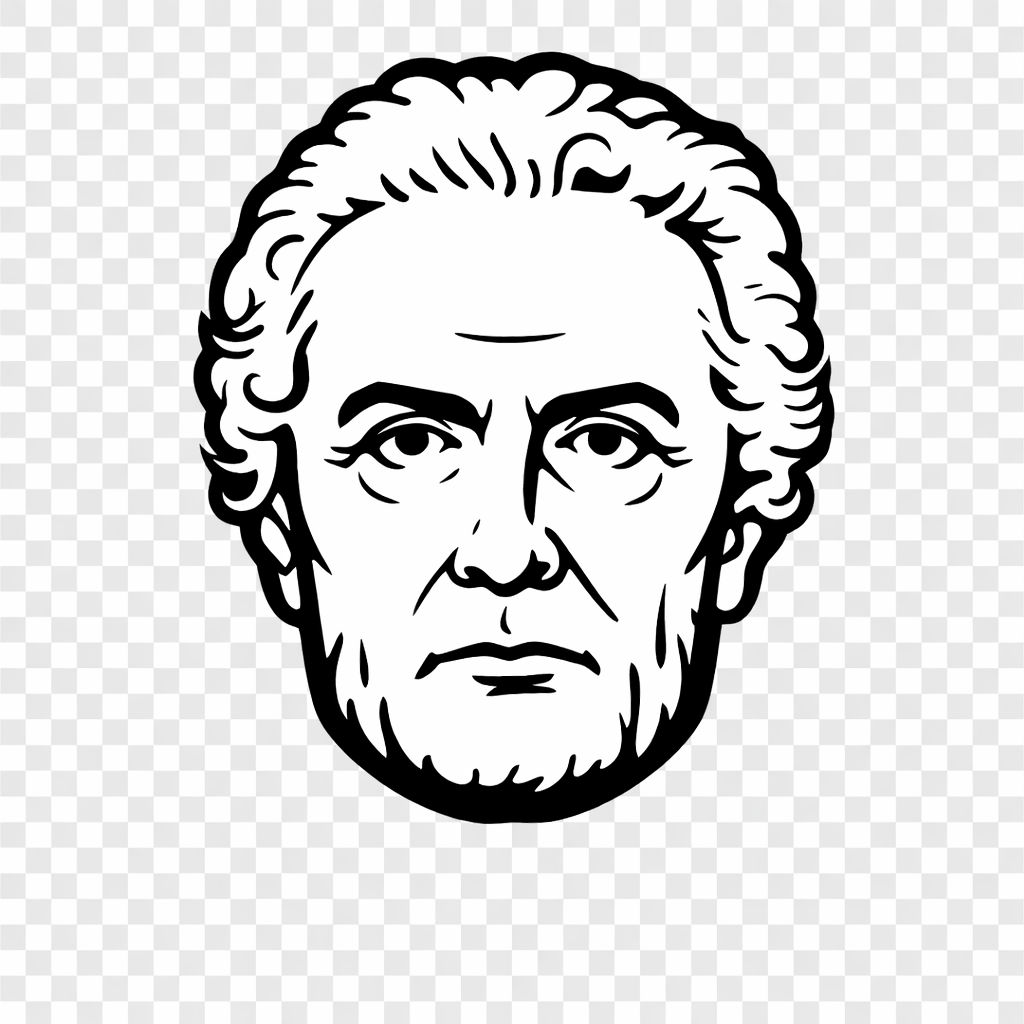
The face
The background
- Nationality:
- Savoyard
- Schools:
- Conservatism, Traditionalism, Ultramontanism, Clericalism, Monarchism, Royalism, Medievalism, Mysticism, Counter-Enlightenment, Romanticism
- Branchs:
- Political philosophy, Political theology
- Period:
- 18th-century philosophy
The synopsis
Joseph Marie, comte de Maistre was a Savoyard lawyer, diplomat, and political philosopher. He is chiefly remembered as one of the intellectual forefathers of modern conservatism. Born in the Kingdom of Sardinia, Maistre was noted for his advocacy of monarchism and social stratification in the period immediately following the French Revolution. French by language and culture, Maistre was nonetheless a subject of the King of Piedmont–Sardinia, whom he served in various government positions, including stints in the Savoy Senate (1787–1792), as ambassador to the Russian Empire (1803–1817), and as minister of state to the court in Turin (1817–1821). A key figure of the Counter-Enlightenment and a precursor of Romanticism, Maistre regarded monarchy both as a divinely sanctioned institution and as the only stable form of government. Maistre argued that the rationalist rejection of Christianity was directly responsible for the Reign of Terror and the chaos that followed the Revolution of 1789 in France. He therefore called for the restoration of the House of Bourbon to the throne of France and for the ultimate authority of the Pope in both spiritual and temporal matters.
The works
Considérations sur la France
The Pope: Considered in His Relations with the Church, Temporal Sovereignties, Separated Churches and the Cause of Civilization
St. Petersburg Dialogues
Against Rousseau: "On the State of Nature" and "On the Sovereignty of the People"
Examination of the Philosophy of Bacon
The quotes
Every country has the government it deserves.
Man is insatiable for power; he is infantile in his desires and, always discontented with what he has, loves only what he has not. People complain of the despotism of princes; they ought to complain of the despotism of man.
Wherever an altar is found, there civilization exists.
There is no philosophy without the art of ignoring objections.
I don't know what a scoundrel is like, but I know what a respectable man is like, and it's enough to make one's flesh creep.
False opinions are like false money, struck first of all by guilty men and thereafter circulated by honest people who perpetuate the crime without knowing what they are doing.
Man, in spite of his fatal degradation, bears always the evident marks of his divine origin, in that every universal belief is always more or less true.
In the works of man, everything is as poor as its author; vision is confined, means are limited, scope is restricted, movements are labored, and results are humdrum.
We recognize in a plant some unknown power, a single, form-giving force, which creates and conserves, which moves unwaveringly toward its end, which appropriates what is useful to it and rejects that which would harm it.
No man has ceased to believe in God before having decided that he should not exist; no book would produce atheism, and no book can restore faith.
Man in harmony with his Creator is sublime, and his action is creative; equally, once he separates himself from God and acts alone, he does not cease to be powerful, since this is the privilege of his nature, but his acts are negative and lead only to destruction.
It is one of man's curious idiosyncrasies to create difficulties for the pleasure of resolving them.
We are all bound to the throne of the Supreme Being by a flexible chain which restrains without enslaving us. The most wonderful aspect of the universal scheme of things is the action of free beings under divine guidance.
Government is a true religion: it has its dogmas, its mysteries, its priests. To submit it to the individual discussion is to destroy it; it is given life only through the national mind, that is to say, by political faith, which is a creed.
Man is so muddled, so dependent on the things immediately before his eyes, that every day even the most submissive believer can be seen to risk the torments of the afterlife for the smallest pleasure.
Man may well have covered over and, so to speak, encrusted the truth with the errors he has loaded onto it, but these errors are local, and universal truth will always show itself.
A constitution that is made for all nations is made for none.
Without doubt, God is the universal moving force, but each being is moved according to the nature that God has given it.
If there was no moral evil upon earth, there would be no physical evil.
We are tainted by modern philosophy which has taught us that all is good, whereas evil has polluted everything and in a very real sense all is evil, since nothing is in its proper place.
Man in general, if reduced to himself, is too wicked to be free.
There is no man who desires as passionately as a Russian. If we could imprison a Russian desire beneath a fortress, that fortress would explode.
All pain is a punishment, and every punishment is inflicted for love as much as for justice.
Genius is a grace. The true man of genius acts by movement or by impulsion.