The Philosopher
John Scotus Eriugena
The face
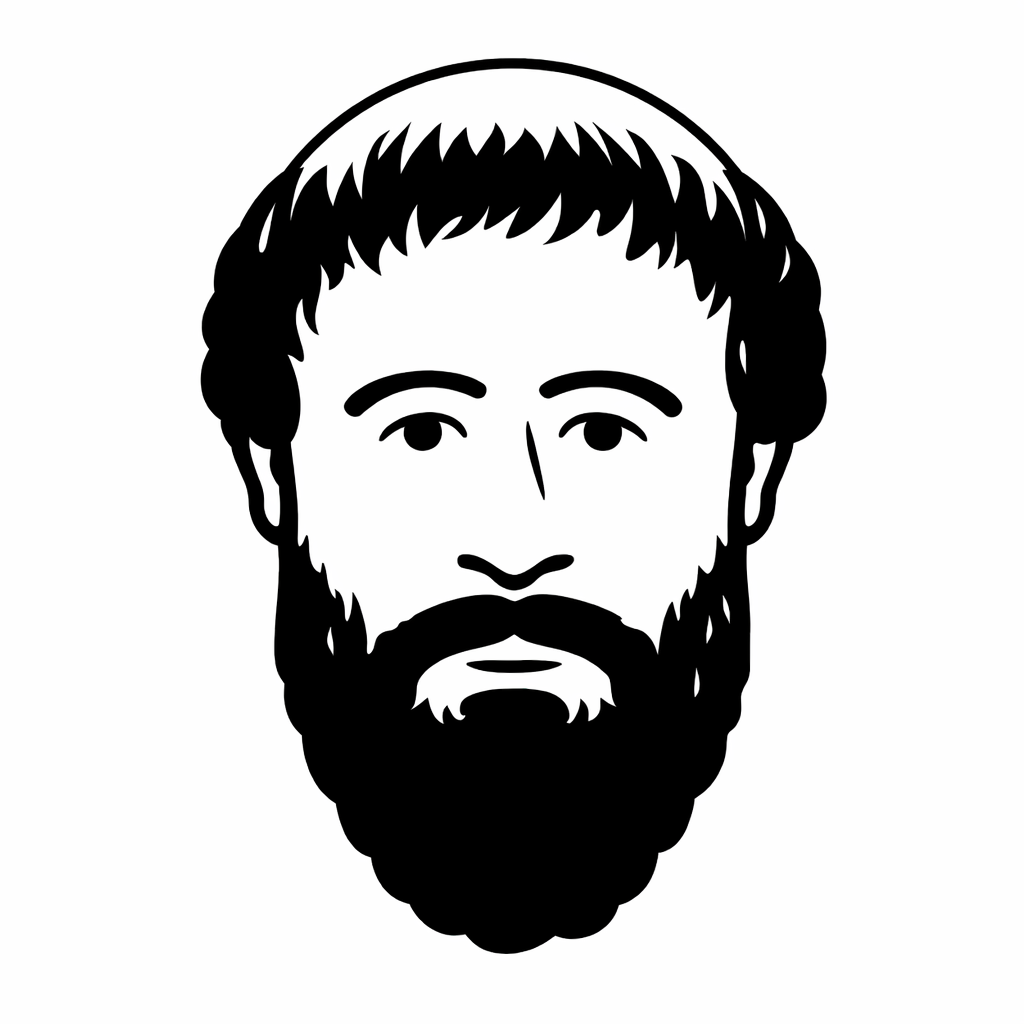
The background
- Nationality:
- Irish
- Schools:
- Neoplatonism, Augustinianism
- Branchs:
- Neoplatonism, Philosophy, Theology
- Period:
- Early Middle Ages
The synopsis
John Scotus Eriugena, also known as Johannes Scotus Erigena, John the Scot, or John the Irish-born, was an Irish Neoplatonist philosopher, theologian, and poet of the Early Middle Ages. Bertrand Russell called him "the most astonishing person of the ninth century." The Stanford Encyclopedia of Philosophy states that he "is the most significant Irish intellectual of the early monastic period. He is generally recognized to be both the outstanding philosopher (in terms of originality) of the Carolingian era and of the whole period of Latin philosophy stretching from Boethius to Anselm". He wrote a number of works, but is best known today for having written "De Divisione Naturae" ("The Division of Nature"), or "Periphyseon," which has been called the "final achievement" of ancient philosophy, a work which "synthesizes the philosophical accomplishments of fifteen centuries." The principal concern of "De Divisione Naturae" is to unfold from physis (physis), which John defines as "all things which are and which are not," the entire integrated structure of reality. Eriugena achieves this through a dialectical method elaborated through exitus and reditus, that interweaves the structure of the human mind and reality as produced by the logos (logos) of God. Eriugena is generally classified as a Neoplatonist, though he was not influenced directly by such pagan philosophers as Plotinus or Iamblichus. Jean Trouillard stated that, although he was almost exclusively dependent on Christian theological texts and the Christian Canon, Eriugena, "reinvented the greater part of the theses of Neoplatonism." He succeeded Alcuin of York (c. 735–804) as head of the Palace School at Aachen. He also translated and made commentaries upon the work of Pseudo Dionysius the Areopagite and was one of the few Western European philosophers of his day who knew Greek, having studied it in Ireland. A later medieval tradition recounts that Eriugena was stabbed to death by his students at Malmesbury with their pens, although this may rather be allegorical. Johannes Scotus Eriugena was educated in Ireland. He moved to France (about 845) at the invitation of Carolingian King Charles the Bald. He succeeded Alcuin of York (735–804), the leading scholar of the Carolingian Renaissance, as head of the Palace School. The reputation of this school increased greatly under Eriugena's leadership, and he was treated with indulgence by the king. Whereas Alcuin was a schoolmaster rather than a philosopher, Eriugena was a noted Greek scholar, a skill which, though rare at that time in Western Europe, was used in the learning tradition of Early and Medieval Ireland, as evidenced by the use of Greek script in medieval Irish manuscripts. He remained in France for at least thirty years, and it was almost certainly during this period that he wrote his various works. The latter part of his life is unclear. There is a story that in 882 he was invited to Oxford by Alfred the Great, laboured there for many years, became abbot at Malmesbury, and was stabbed to death by his pupils with their styli. Whether this is to be taken literally or figuratively is not clear, and some scholars think it may refer to some other Johannes. William Turner says the tradition has no support in contemporary documents and may well have arisen from some confusion of names on the part of later historians. He probably never left France, and the date of his death is generally given as 877. From the evidence available, it is impossible to determine whether he was a cleric or a layman; the general conditions of the time make it likely that he was a cleric and perhaps a monk.
The works
De Divisione Naturae
Commentary on "The Celestial Hierarchy"
Translation of "The Celestial Hierarchy"
De hominis opificio
Ambigua ad Iohannem