The Philosopher
John Locke
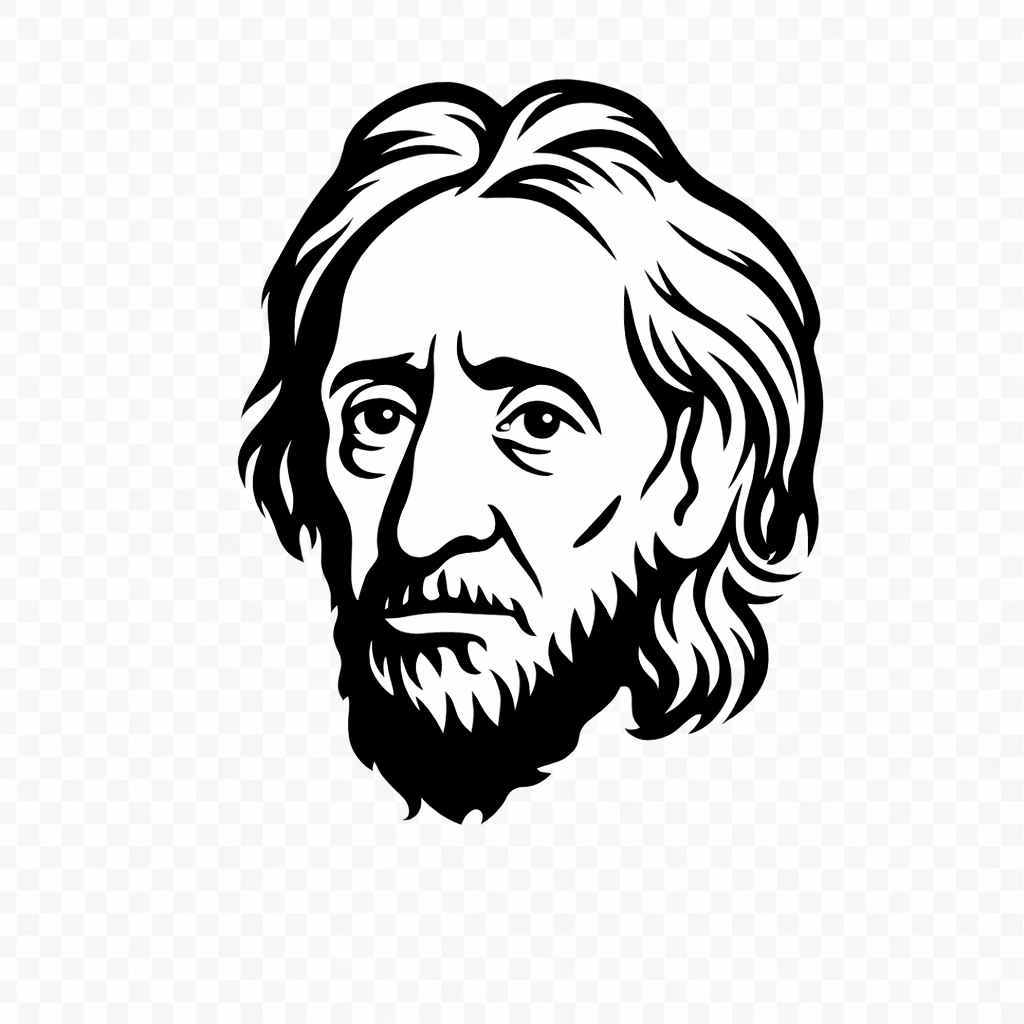
The face
The background
- Nationality:
- English
- Schools:
- Empiricism, social contract, Natural law, Liberalism, Classical liberalism, Foundationalism, Conceptualism, Indirect Realism, Correspondence theory of truth, Ideational theory of meaning, Corpuscularianism
- Branchs:
- Empiricism, Social contract theory, Natural law, Liberalism, Epistemology, Political philosophy, Philosophy of mind, Philosophy of education, Economics
- Period:
- Age of Enlightenment
The synopsis
John Locke (1632–1704) was an English philosopher and physician, widely regarded as one of the most influential Enlightenment thinkers and the father of liberalism. His major works, including 'A Letter Concerning Toleration,' 'Two Treatises of Government,' and 'An Essay Concerning Human Understanding,' profoundly shaped political philosophy and epistemology. Locke argued for religious tolerance, the separation of church and state, government based on the consent of the governed, and the right to revolt against tyrannical rule. His concept of the mind as a 'tabula rasa' (blank slate) at birth, shaped by experience and sense perception, laid the groundwork for empiricism and influenced subsequent thinkers like Voltaire and Rousseau. Locke's political ideas influenced the American Declaration of Independence. He also contributed to theories of personal identity, property rights, and education.
The works
A Letter Concerning Toleration
Two Treatises of Government
An Essay Concerning Human Understanding
Some Considerations on the consequences of the Lowering of Interest and the Raising of the Value of Money
Some Thoughts Concerning Education
The Reasonableness of Christianity, as Delivered in the Scriptures
The quotes
The discipline of desire is the background of character.
What worries you, masters you.
Things of this world are in so constant a flux, that nothing remains long in the same state.
The only fence against the world is a thorough knowledge of it.
Reading furnishes the mind only with materials of knowledge; it is thinking that makes what we read ours.
We are like chameleons, we take our hue and the color of our moral character, from those who are around us.
Government has no other end, but the preservation of property.
An excellent man, like precious metal, is in every way invariable; A villain, like the beams of a balance, is always varying, upwards and downwards.
New opinions are always suspected, and usually opposed, without any other reason but because they are not already common.
I have always thought the actions of men the best interpreters of their thoughts.
We should have a great fewer disputes in the world if words were taken for what they are, the signs of our ideas only, and not for things themselves.
Our deeds disguise us. People need endless time to try on their deeds, until each knows the proper deeds for him to do. But every day, every hour, rushes by. There is no time.
To prejudge other men's notions before we have looked into them is not to show their darkness but to put out our own eyes.
I have spent more than half a lifetime trying to express the tragic moment.
Every man has a property in his own person. This nobody has a right to, but himself.
All men are liable to error; and most men are, in many points, by passion or interest, under temptation to it.
Fashion for the most part is nothing but the ostentation of riches.
There cannot be greater rudeness than to interrupt another in the current of his discourse.
Our incomes are like our shoes; if too small, they gall and pinch us; but if too large, they cause us to stumble and to trip.
Fortitude is the guard and support of the other virtues.
The end of law is not to abolish or restrain, but to preserve and enlarge freedom. For in all the states of created beings capable of law, where there is no law, there is no freedom.
No man's knowledge here can go beyond his experience.
All mankind... being all equal and independent, no one ought to harm another in his life, health, liberty or possessions.
Parents wonder why the streams are bitter, when they themselves have poisoned the fountain.
As people are walking all the time, in the same spot, a path appears.
The improvement of understanding is for two ends: first, our own increase of knowledge; secondly, to enable us to deliver that knowledge to others.
Where all is but dream, reasoning and arguments are of no use, truth and knowledge nothing.
To love our neighbor as ourselves is such a truth for regulating human society, that by that alone one might determine all the cases in social morality.
Where there is no property there is no injustice.
It is of great use to the sailor to know the length of his line, though he cannot with it fathom all the depths of the ocean.
Any one reflecting upon the thought he has of the delight, which any present or absent thing is apt to produce in him, has the idea we call love.
I attribute the little I know to my not having been ashamed to ask for information, and to my rule of conversing with all descriptions of men on those topics that form their own peculiar professions and pursuits.
A sound mind in a sound body, is a short, but full description of a happy state in this World: he that has these two, has little more to wish for; and he that wants either of them, will be little the better for anything else.
Education begins the gentleman, but reading, good company and reflection must finish him.
The Bible is one of the greatest blessings bestowed by God on the children of men. It has God for its author; salvation for its end, and truth without any mixture for its matter. It is all pure.
Reverie is when ideas float in our mind without reflection or regard of the understanding.
The dread of evil is a much more forcible principle of human actions than the prospect of good.
There is frequently more to be learned from the unexpected questions of a child than the discourses of men.
It is one thing to show a man that he is in an error, and another to put him in possession of the truth.
The reason why men enter into society is the preservation of their property.
It is easier for a tutor to command than to teach.
One unerring mark of the love of truth is not entertaining any proposition with greater assurance than the proofs it is built upon will warrant.