The Philosopher
John Dewey
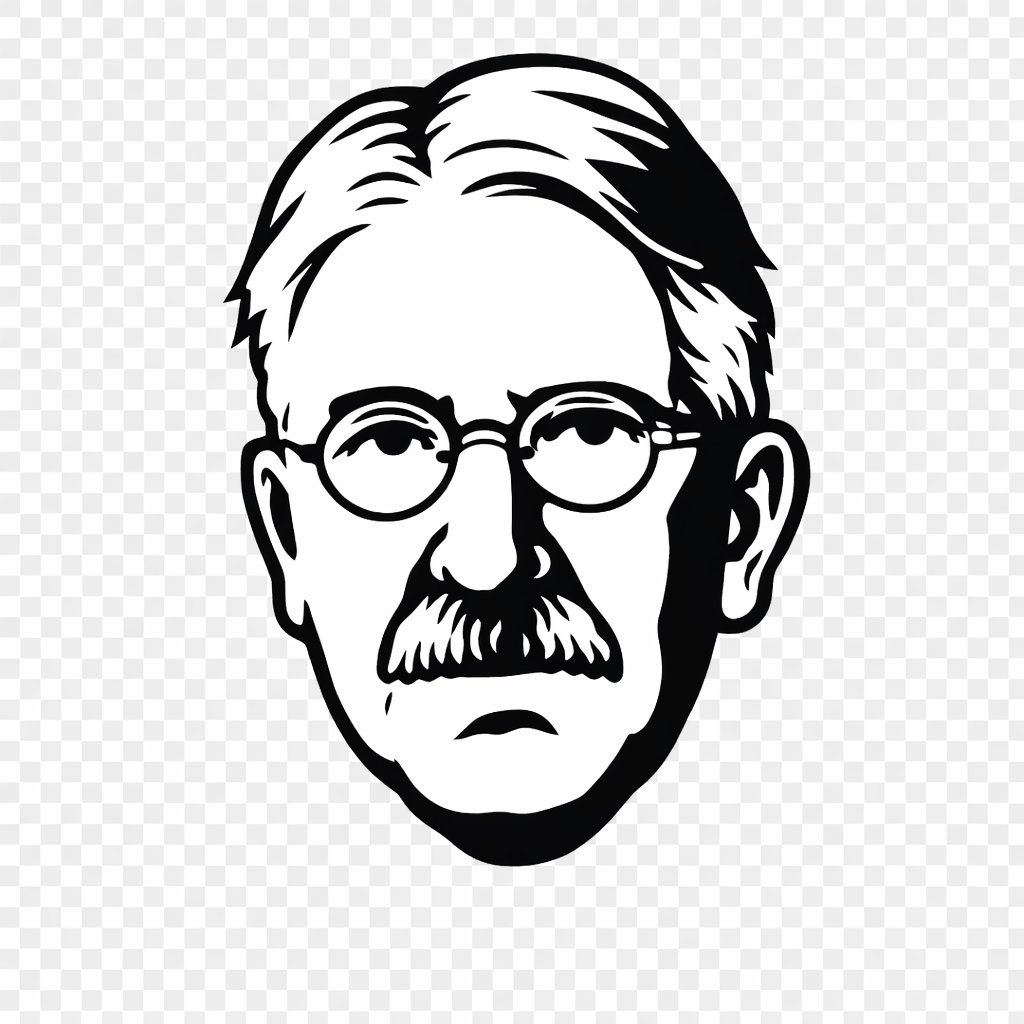
The face
The background
- Nationality:
- American
- Branchs:
- Psychology, Philosophy of education, Epistemology, Metaphysics, Aesthetics, Art, Logic, Social theory, Ethics, Political philosophy, Journalism, Democracy
- Period:
- 20th-century
The synopsis
John Dewey (October 20, 1859 – June 1, 1952) was an American philosopher, psychologist, and educational reformer. He was one of the most prominent American scholars in the first half of the twentieth century. The overriding theme of Dewey's works was his profound belief in democracy, be it in politics, education, or communication and journalism. As Dewey himself stated in 1888, while still at the University of Michigan, "Democracy and the one, ultimate, ethical ideal of humanity are to my mind synonymous." Dewey considered two fundamental elements—schools and civil society—to be major topics needing attention and reconstruction to encourage experimental intelligence and plurality. He asserted that complete democracy was to be obtained not just by extending voting rights but also by ensuring that there exists a fully formed public opinion, accomplished by communication among citizens, experts, and politicians.
Dewey was one of the primary figures associated with the philosophy of pragmatism and is considered one of the founding thinkers of functional psychology. His paper "The Reflex Arc Concept in Psychology", published in 1896, is regarded as the first major work in the (Chicago) functionalist school of psychology. A Review of General Psychology survey, published in 2002, ranked Dewey as the 93rd-most-cited psychologist of the 20th century.
Dewey was also a major educational reformer for the 20th century. A well-known public intellectual, he was a major voice of progressive education and liberalism. While a professor at the University of Chicago, he founded the University of Chicago Laboratory Schools, where he was able to apply and test his progressive ideas on pedagogical method. From 1904 until his retirement in 1930 he was professor of philosophy at Teachers College at Columbia University and influenced Carl Rogers.
Although Dewey is known best for his publications about education, he also wrote about many other topics, including epistemology, metaphysics, aesthetics, art, logic, social theory, and ethics.
The works
Psychology
Leibniz's New Essays Concerning the Human Understanding
The Reflex Arc Concept in Psychology
My Pedagogic Creed
The School and Society
The Child and the Curriculum
How We Think
German Philosophy and Politics
Democracy and Education: an introduction to the philosophy of education
Reconstruction in Philosophy
Letters from China and Japan
China, Japan and the U.S.A.
Human Nature and Conduct: An Introduction to Social Psychology
Experience and Nature
The Public and its Problems
The Quest for Certainty
The Sources of a Science of Education
Individualism Old and New
Philosophy and Civilization
Ethics
Art as Experience
A Common Faith
Liberalism and Social Action
Experience and Education
Logic: The Theory of Inquiry
Freedom and Culture
Theory of Valuation
Knowing and the Known
Unmodern Philosophy and Modern Philosophy
Lectures in China, 1919–1920
The quotes
Education is not preparation for life; education is life itself.
Every great advance in science has issued from a new audacity of imagination.
Education, therefore, is a process of living and not a preparation for future living.
Anyone who has begun to think, places some portion of the world in jeopardy.
Luck, bad if not good, will always be with us. But it has a way of favoring the intelligent and showing its back to the stupid.
No man's credit is as good as his money.
Man lives in a world of surmise, of mystery, of uncertainties.
By object is meant some element in the complex whole that is defined in abstraction from the whole of which it is a distinction.
One lives with so many bad deeds on one's conscience and some good intentions in one's heart.
Such happiness as life is capable of comes from the full participation of all our powers in the endeavor to wrest from each changing situations of experience its own full and unique meaning.
To me faith means not worrying.
Man is not logical and his intellectual history is a record of mental reserves and compromises. He hangs on to what he can in his old beliefs even when he is compelled to surrender their logical basis.
The self is not something ready-made, but something in continuous formation through choice of action.
The good man is the man who, no matter how morally unworthy he has been, is moving to become better.
Arriving at one goal is the starting point to another.
To find out what one is fitted to do, and to secure an opportunity to do it, is the key to happiness.
The belief that all genuine education comes about through experience does not mean that all experiences are genuinely or equally educative.
Just as a flower which seems beautiful and has color but no perfume, so are the fruitless words of the man who speaks them but does them not.
We only think when we are confronted with problems.
Time and memory are true artists; they remould reality nearer to the heart's desire.
Failure is instructive. The person who really thinks learns quite as much from his failures as from his successes.
The path of least resistance and least trouble is a mental rut already made. It requires troublesome work to undertake the alternation of old beliefs.
Nature is the mother and the habitat of man, even if sometimes a stepmother and an unfriendly home.
Without some goals and some efforts to reach it, no man can live.
Skepticism: the mark and even the pose of the educated mind.