The Philosopher
Johannes Kepler
The face
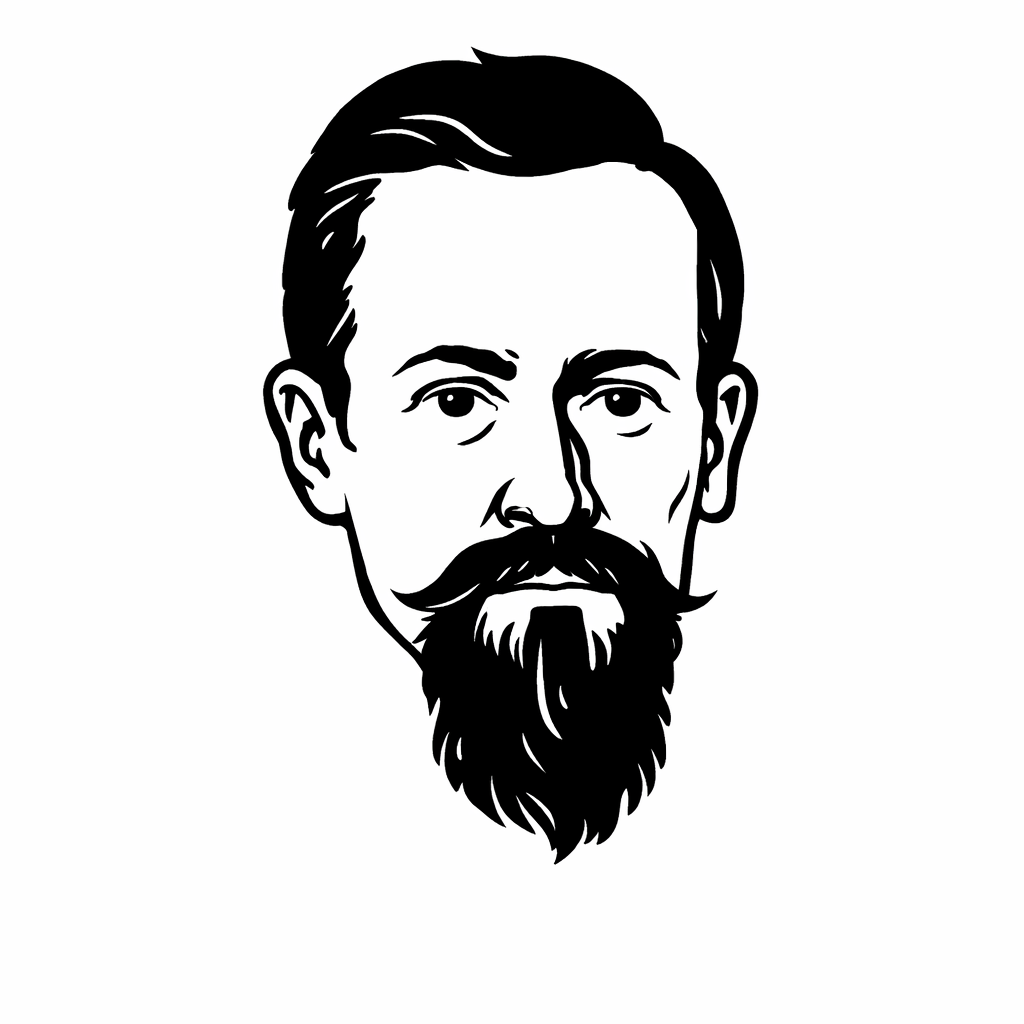
The background
- Nationality:
- German
- Schools:
- University of Tübingen
- Branchs:
- Astronomy, Astrology, Mathematics, Natural Philosophy, Music theory, Optics
- Period:
- 17th-century
The synopsis
Johannes Kepler was a German polymath, renowned as an astronomer, mathematician, astrologer, natural philosopher, and music theorist. A pivotal figure in the 17th-century Scientific Revolution, he is celebrated for his groundbreaking laws of planetary motion. Kepler's seminal works, including *Astronomia nova*, *Harmonice Mundi*, and *Epitome Astronomiae Copernicanae*, fundamentally altered our understanding of the cosmos. He is credited with laying the foundation for modern astronomy, the scientific method, natural science, and modern science. Kepler also made significant contributions to optics, earning him the title 'father of modern optics' for his work in *Astronomiae pars optica*. He developed an improved refracting telescope, the Keplerian telescope, which became a basis for modern designs. His mathematical contributions include the Kepler conjecture on sphere packing and foundational work in calculus. Despite the era's lack of distinction between astronomy and astrology, Kepler integrated religious and philosophical arguments into his scientific endeavors, believing the universe was created according to an intelligible, divine plan.
The works
Mysterium Cosmographicum
De Fundamentis Astrologiae Certioribus
Astronomiae pars optica
De Stella nova in pede Serpentarii
Astronomia nova
Tertius Interveniens
Dissertatio cum Nuncio Sidereo
Dioptrice
De nive sexangula
De vero Anno, quo aeternus Dei Filius humanam naturam in Utero benedictae Virginis Mariae assumpsit
Eclogae Chronicae
Nova stereometria doliorum vinariorum
Ephemerides novae motuum coelestium
Epitome astronomiae copernicanae
De cometis
Harmonice Mundi
Tabulae Rudolphinae
Somnium
The quotes
I much prefer the sharpest criticism of a single intelligent man to the thoughtless approval of the masses.
Truth is the daughter of time, and I feel no shame in being her midwife.
The radius vector describes equal areas in equal times.
The squares of the periodic times are to each other as the cubes of the mean distances.
Planets move in ellipses with the Sun at one focus.
Nature uses as little as possible of anything.
The diversity of the phenomena of nature is so great, and the treasures hidden in the heavens so rich, precisely in order that the human mind shall never be lacking in fresh nourishment.
I demonstrate by means of philosophy that the earth is round, and is inhabited on all sides; that it is insignificantly small, and is borne through the stars.