The Philosopher
Jeremy Bentham
The face
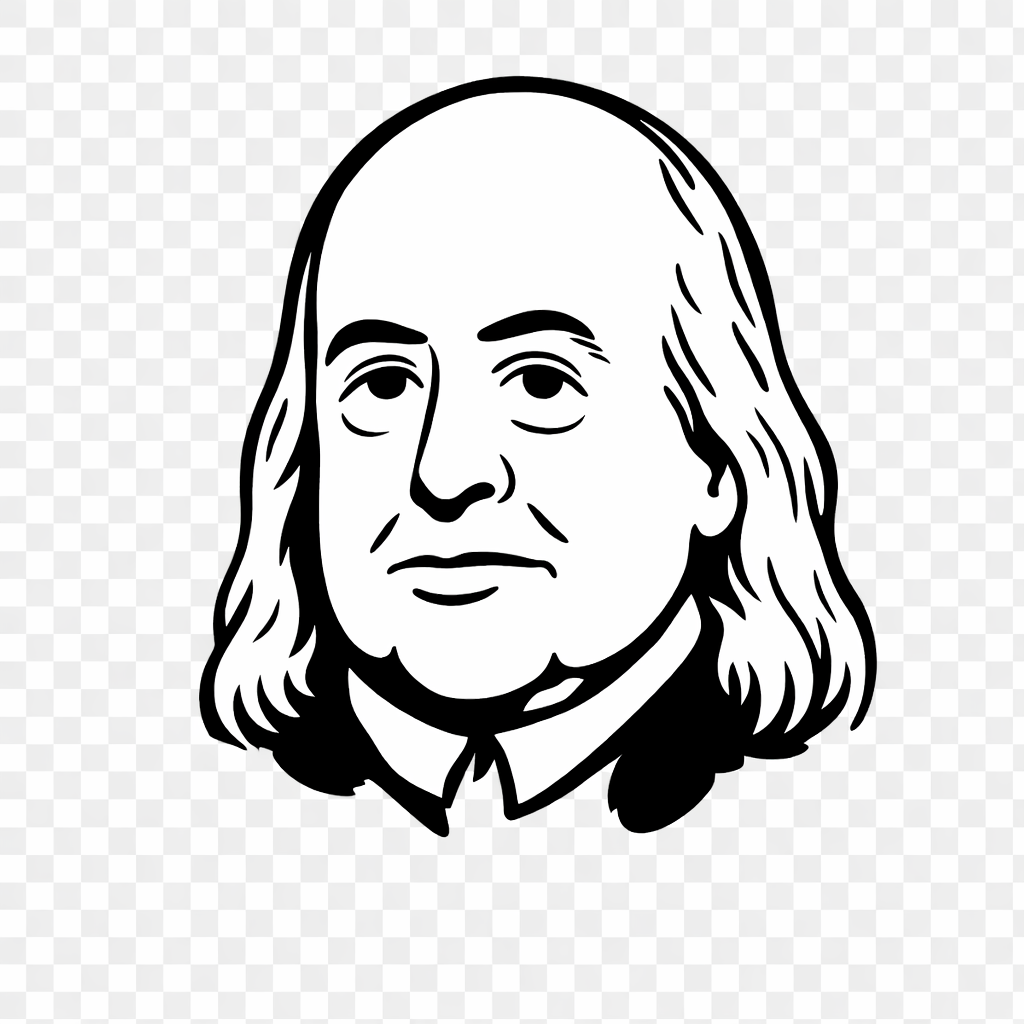
The background
- Nationality:
- English
- Schools:
- utilitarianism, Radicalism, Liberalism, Legal positivism, Epicureanism
- Branchs:
- Philosophy of law, Political philosophy, Ethics, Economics, Legal reform, Privacy
- Period:
- 18th-century and 19th-century
The synopsis
Jeremy Bentham (1748–1832) was an English philosopher, jurist, and social reformer, widely regarded as the founder of modern utilitarianism. His core philosophical principle was that "it is the greatest happiness of the greatest number that is the measure of right and wrong." Bentham was a leading theorist in the philosophy of law and a political radical whose ideas influenced the development of welfarism. He championed individual and economic freedoms, the separation of church and state, freedom of expression, equal rights for women, and the decriminalization of homosexual acts. He also advocated for the abolition of capital punishment and physical punishment, and was an early proponent of animal rights. Bentham famously critiqued the concept of natural law and natural rights, calling them "nonsense upon stilts." His students included James Mill and John Stuart Mill. Upon his death, Bentham's body was preserved as an "auto-icon" and is now displayed at University College London. His influential work, *An Introduction to the Principles of Morals and Legislation*, laid the groundwork for utilitarianism.
The works
A Fragment on Government
Short Review of the Declaration
An Introduction to the Principles of Morals and Legislation
Offences Against One's Self
Panopticon; or, the Inspection-House
Defence of Usury
Essay on Political Tactics
Anarchical Fallacies; Being an Examination of the Declarations of Rights Issued During the French Revolution
Traités de Législation Civile et Pénale
Théorie des Peines et des Récompenses
Panopticon versus New South Wales: or, the Panopticon Penitentiary System, and the Penal Colonization System, Compared
Defence of Usury, &c.
Plan of Parliamentary Reform
Swear Not At All
A Table of the Springs of Action
Church-of-Englandism and Its Catechism Examined, &c. &c.
The Elements of the Art of Packing, as Applied to Special Juries, Particularly in Cases of Libel Law
On the Liberty of the Press, and Public Discussion
Analysis of the Influence of Temporal Happiness, of Mankind
The Book of Fallacies: From Unfinished Papers of Jeremy Bentham
A Treatise on Judicial Evidence Extracted from the Manuscripts of Jeremy Bentham, Esq
Rationale of Judicial Evidence, Specially Applied to English Practice
Emancipate Your Colonies! Addressed to the National Convention of France A° 1793
Deontology; or, the Science of Morality
The Works of Jeremy Bentham
The quotes
Nature has placed mankind under the governance of two sovereign masters, pain and pleasure. It is for them alone to point out what we ought to do, as well as to determine what we shall do.
It is the greatest good to the greatest number of people which is the measure of right and wrong.
Every law is an infraction of liberty.
The age we live in is a busy age; in which knowledge is rapidly advancing towards perfection.
It is vain to talk of the interest of the community, without understanding what is the interest of the individual.
He who thinks and thinks for himself, will always have a claim to thanks; it is no matter whether it be right or wrong, so as it be explicit. If it is right, it will serve as a guide to direct; if wrong, as a beacon to warn.
No power of government ought to be employed in the endeavor to establish any system or article of belief on the subject of religion.
As to the evil which results from a censorship, it is impossible to measure it, for it is impossible to tell where it ends.
The greatest happiness of the greatest number is the foundation of morals and legislation.
Lawyers are the only persons in whom ignorance of the law is not punished.
All punishment is mischief; all punishment in itself is evil.
The said truth is that it is the greatest happiness of the greatest number that is the measure of right and wrong.
The question is not, 'Can they reason?' nor, 'Can they talk?' but rather, 'Can they suffer?'
Secrecy, being an instrument of conspiracy, ought never to be the system of a regular government.
The power of the lawyer is in the uncertainty of the law.
Stretching his hand up to reach the stars, too often man forgets the flowers at his feet.
Tyranny and anarchy are never far apart.
The principle of asceticism never was, nor ever can be, consistently pursued by any living creature. Let but one tenth part of the inhabitants of the earth pursue it consistently, and in a day's time they will have turned it into a Hell.