The Philosopher
Jean Piaget
The face
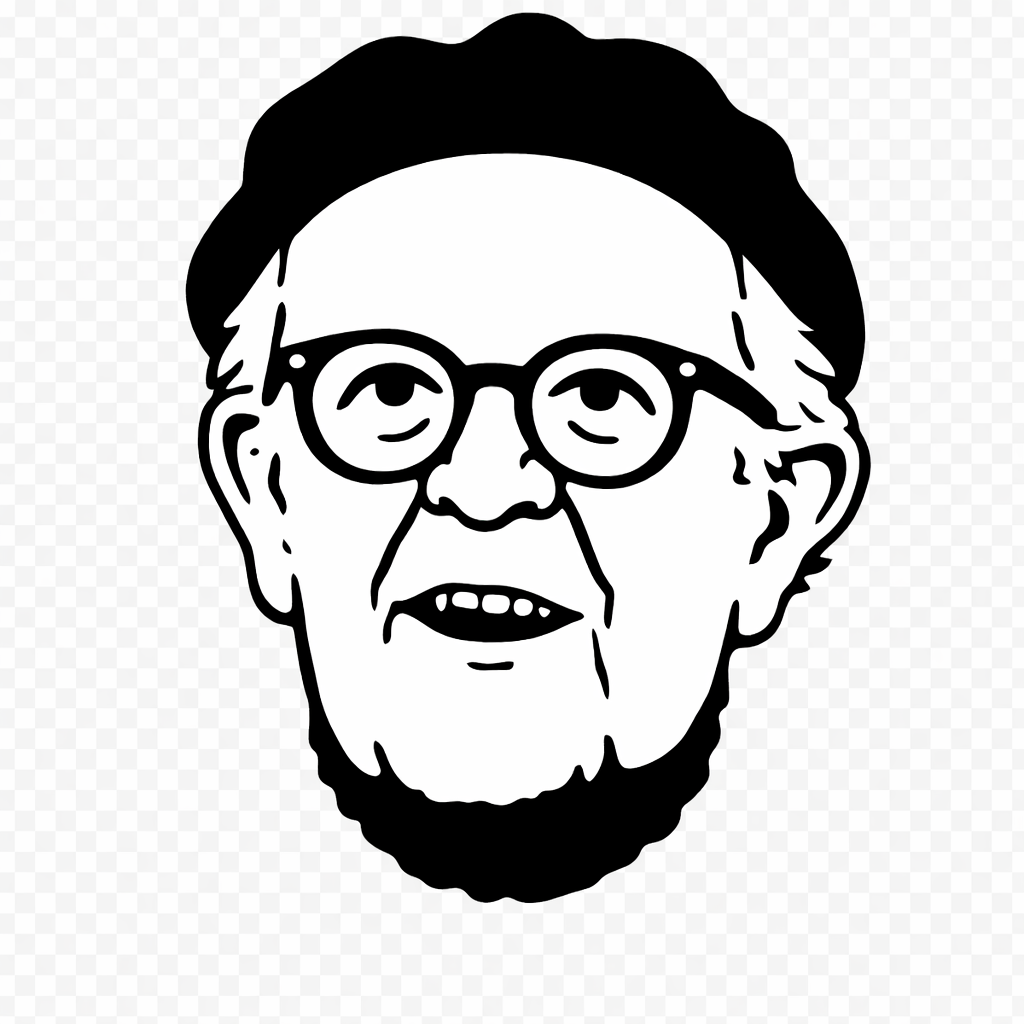
The background
- Nationality:
- Swiss
- Schools:
- Constructivism, Genevan School
- Period:
- 20th century
The synopsis
The works
Le Langage et la pensée chez l'enfant
La Représentation du monde chez l'enfant
Judgment and Reasoning in the Child
Le jugement moral chez l'enfant
La naissance de l'intelligence chez l'enfant
La formation du symbole chez l'enfant; imitation, jeu et reve, image et représentation
La psychologie de l'intelligence
La construction du réel chez l'enfant
De la logique de l'enfant à la logique de l'adolescent
La psychologie de l'enfant
La genèse des structures logiques elementaires
The Child's Conception of Space
The Child's Conception of Number
Structuralism
Genetic epistemology
The quotes
The more the schemata are differentiated, the smaller the gap between the new and the familiar becomes, so that novelty, instead of constituting an annoyance avoided by the subject, becomes a problem and invites searching.
The current state of knowledge is a moment in history, changing just as rapidly as the state of knowledge in the past has ever changed and, in many instances, more rapidly.
In genetic epistemology, as in developmental psychology, too, there is never an absolute beginning.
It is with children that we have the best chance of studying the development of logical knowledge, mathematical knowledge, physical knowledge, and so forth.
The child often sees only what he already knows. He projects the whole of his verbal thought into things. He sees mountains as built by men, rivers as dug out with spades, the sun and moon as following us on our walks.
Play is the answer to the question, 'How does anything new come about?'
From the moral as from the intellectual point of view, the child is born neither good nor bad but master of his destiny.
Knowing reality means constructing systems of transformations that correspond, more or less adequately, to reality.
The first type of abstraction from objects I shall refer to as simple abstraction, but the second type I shall call reflective abstraction, using this term in a double sense.
The child of three or four is saturated with adult rules. His universe is dominated by the idea that things are as they ought to be, that everyone's actions conform to laws that are both physical and moral - in a word, that there is a Universal Order.
The practice of narrative and argument does not lead to invention, but it compels a certain coherence of thought.
To express the same idea in still another way, I think that human knowledge is essentially active.
I engage my subjects in conversation, patterned after psychiatric questioning, with the aim of discovering something about the reasoning underlying their right but especially their wrong answers.
Children's games constitute the most admirable social institutions. The game of marbles, for instance, as played by boys, contains an extremely complex system of rules - that is to say, a code of laws, a jurisprudence of its own.
From this time on, the universe is built up into an aggregate of permanent objects connected by causal relations that are independent of the subject and are placed in objective space and time.
Every acquisition of accommodation becomes material for assimilation, but assimilation always resists new accommodations.
With regard to moral rules, the child submits more or less completely in intention to the rules laid down for him, but these, remaining, as it were, external to the subject's conscience, do not really transform his conduct.
Childish egocentrism is, in its essence, an inability to differentiate between the ego and the social environment.
Reflective abstraction, however, is based not on individual actions but on coordinated actions.
Before playing with his equals, the child is influenced by his parents. He is subjected from his cradle to a multiplicity of regulations, and even before language he becomes conscious of certain obligations.
In other words, knowledge of the external world begins with an immediate utilisation of things, whereas knowledge of self is stopped by this purely practical and utilitarian contact.
On the one hand, there are individual actions such as throwing, pushing, touching, rubbing. It is these individual actions that give rise most of the time to abstraction from objects.
To reason logically is so to link one's propositions that each should contain the reason for the one succeeding it, and should itself be demonstrated by the one preceding it. Or at any rate, whatever the order adopted in the construction of one's own exposition, it is to demonstrate judgments by each other.
Everyone knows that at the age of 11-12, children have a marked impulse to form themselves into groups and that the respect paid to the rules and regulations of their play constitutes an important feature of this social life.
The goal of education is not to increase the amount of knowledge but to create the possibilities for a child to invent and discover, to create men who are capable of doing new things.
Our problem, from the point of view of psychology and from the point of view of genetic epistemology, is to explain how the transition is made from a lower level of knowledge to a level that is judged to be higher.
I have always detested any departure from reality, an attitude which I relate to my mother's poor mental health.
Scientific thought, then, is not momentary; it is not a static instance; it is a process.
During the first few months of an infant's life, its manner of taking the breast, of laying its head on the pillow, etc., becomes crystallized into imperative habits. This is why education must begin in the cradle.
The self thus becomes aware of itself, at least in its practical action, and discovers itself as a cause among other causes and as an object subject to the same laws as other objects.
The main functions of intelligence, that of inventing solutions and that of verifying them, do not necessarily involve one another. The first partakes of imagination; the second alone is properly logical.
Logical positivists have never taken psychology into account in their epistemology, but they affirm that logical beings and mathematical beings are nothing but linguistic structures.
All morality consists in a system of rules, and the essence of all morality is to be sought for in the respect which the individual acquires for these rules.