The Philosopher
Jean-Jacques Rousseau
The face
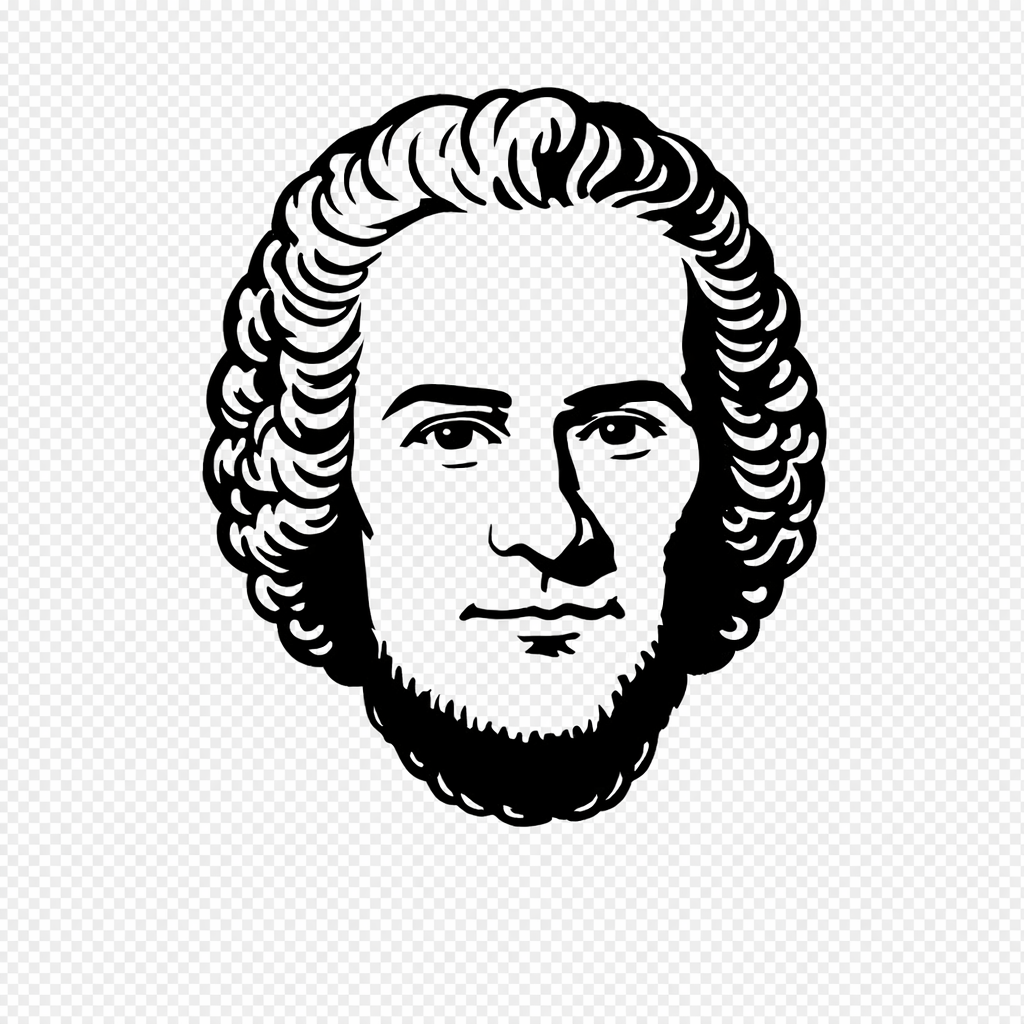
The background
- Nationality:
- Genevan
- Branchs:
- Political philosophy, Music, Education, Literature
- Period:
- Age of Enlightenment
The synopsis
Jean-Jacques Rousseau (1712–1778) was a Genevan philosopher, writer, and composer. His political philosophy influenced the Age of Enlightenment and the French Revolution, as well as modern political, economic, and educational thought. Rousseau's "Discourse on Inequality" and "The Social Contract" are foundational texts in modern political and social thought. His novel "Julie, or the New Heloise" contributed to the development of preromanticism and romanticism. Rousseau's "Emile, or On Education" is a key work in educational philosophy, and his autobiographical writings, "Confessions" and "Reveries of the Solitary Walker," are significant for their focus on subjectivity and introspection.
The works
Discourse on the Arts and Sciences
Letter on French Music
Discourse on the Origin and Basis of Inequality Among Men
Discourse on Political Economy
Letter to M. D'Alembert on Spectacles
Julie; or, The New Heloise
Emile, or On Education
The Social Contract
Confessions of Jean-Jacques Rousseau
Considerations on the Government of Poland
Essay on the Origin of Languages
Reveries of the Solitary Walker
The quotes
Happiness: a good bank account, a good cook, and a good digestion.
We are born weak, we need strength; helpless, we need aid; foolish, we need reason. All that we lack at birth, all that we need when we come to man's estate, is the gift of education.
Free people, remember this maxim: we may acquire liberty, but it is never recovered if it is once lost.
I long remained a child, and I am still one in many respects.
The body politic, as well as the human body, begins to die as soon as it is born, and carries itself the causes of its destruction.
I undertake the same project as Montaigne, but with an aim contrary to his own: for he wrote his Essays only for others, and I write my reveries only for myself.
It is unnatural for a majority to rule, for a majority can seldom be organized and united for specific action, and a minority can.
The training of children is a profession, where we must know how to waste time in order to save it.
Reading, solitude, idleness, a soft and sedentary life, intercourse with women and young people, these are perilous paths for a young man, and these lead him constantly into danger.
O love, if I regret the age when one savors you, it is not for the hour of pleasure, but for the one that follows it.
The first step towards vice is to shroud innocent actions in mystery, and whoever likes to conceal something sooner or later has reason to conceal it.
Gratitude is a duty which ought to be paid, but which none have a right to expect.
Man was born free, and he is everywhere in chains.
Patience is bitter, but its fruit is sweet.
Ordinary readers, forgive my paradoxes: one must make them when one reflects; and whatever you may say, I prefer being a man with paradoxes than a man with prejudices.
No true believer could be intolerant or a persecutor. If I were a magistrate and the law carried the death penalty against atheists, I would begin by sending to the stake whoever denounced another.
We are born, so to speak, twice over; born into existence, and born into life; born a human being, and born a man.
Falsehood has an infinity of combinations, but truth has only one mode of being.
When something an affliction happens to you, you either let it defeat you, or you defeat it.
Our will is always for our own good, but we do not always see what that is.
I may be no better, but at least I am different.
To endure is the first thing that a child ought to learn, and that which he will have the most need to know.
Virtue is a state of war, and to live in it we have always to combat with ourselves.
People who know little are usually great talkers, while men who know much say little.
However great a man's natural talent may be, the act of writing cannot be learned all at once.
Although modesty is natural to man, it is not natural to children. Modesty only begins with the knowledge of evil.
The English are predisposed to pride, the French to vanity.
Religious persecutors are not believers, they are rascals.