The Philosopher
James McCosh
The face
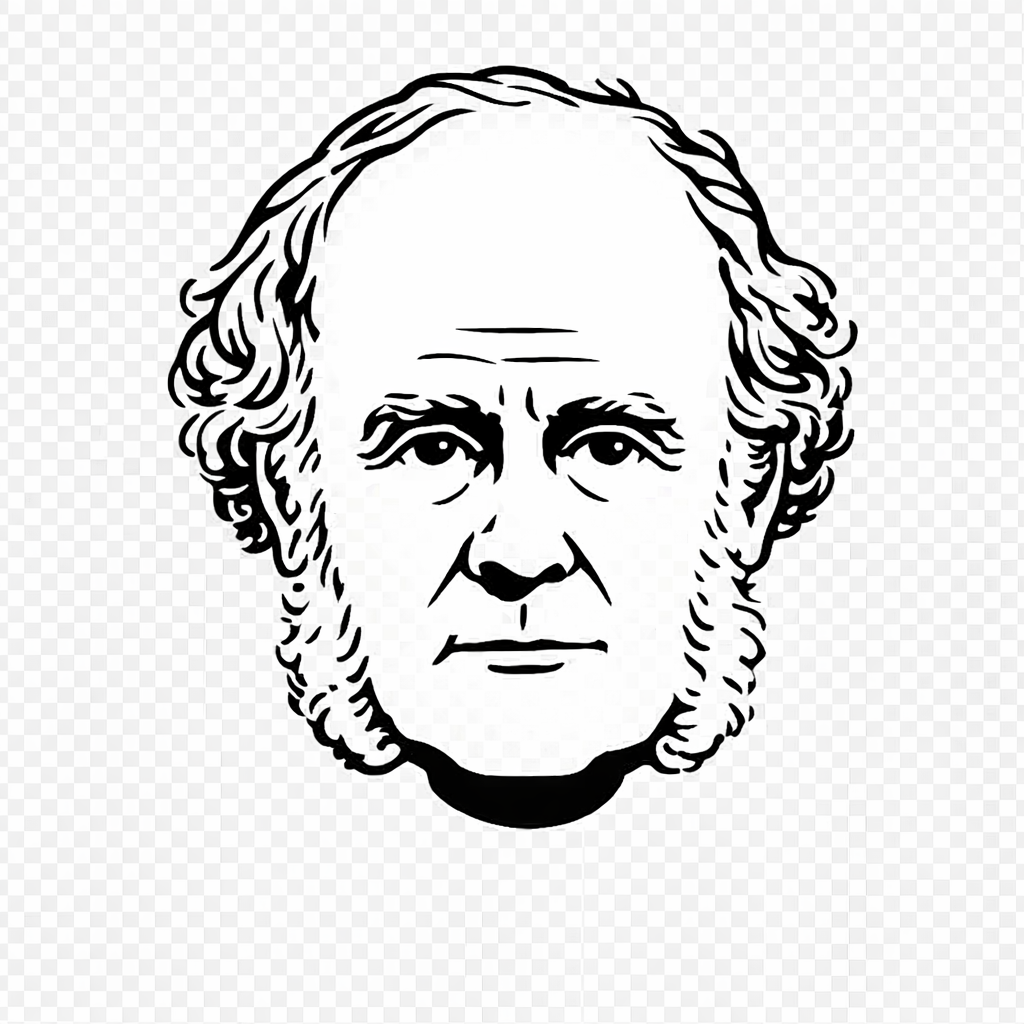
The background
- Nationality:
- Scottish
- Schools:
- Scottish School of Common Sense
- Branchs:
- Logic, Metaphysics, Natural theology, Apologetics, Moral philosophy, Psychology
- Period:
- 19th-century
The synopsis
James McCosh (April 1, 1811 – November 16, 1894) was a philosopher of the Scottish School of Common Sense. He was president of Princeton University from 1868 to 1888. Born in Ayrshire, Scotland, McCosh studied at the Universities of Glasgow and Edinburgh. He served as a minister in the Church of Scotland before joining the Free Church of Scotland after the Disruption of 1843. In 1850, he became Professor of Logic and Metaphysics at Queen's College, Belfast. In 1868, he was appointed president of the College of New Jersey (now Princeton University), a position he held until 1888, after which he continued to teach philosophy. McCosh's philosophy aligned with Thomas Reid's common-sense philosophy, emphasizing direct realism and the role of intuition. He is particularly noted for his attempts to reconcile Darwinian evolution with Christian theology, arguing that evolution did not contradict divine design but rather glorified the designer. His work was influential among Presbyterian clergy in America. Several buildings and features at Princeton University are named in his honor.
The works
The Wheat and the Chaff gathered into Bundles: a Statistical Contribution towards the History of the Recent Disruption of the Scottish Ecclesiastical Establishment
Does the Established Church acknowledge Christ as its Head ?
A Tribute to the Memory of Dr Chalmers, by a Former Pupil
The Method of the Divine Government, Physical and Moral
The Ulster Revival and its Physiological Accidents
The Intuitions of the Mind Inductively Investigated
The Supernatural in relation to the Natural
Supplement to Dugald Stewart's "Outlines of Moral Philosophy"
An Examination of Mr J. S. Mill's Philosophy, being a Defence of Fundamental Truth
Philosophical Papers — I., Examination of Sir William Hamilton's Logic; II., Reply to Mr Mill's Third Edition; III., Present State of Moral Philosophy in Britain
The Laws of Discursive Thought
Christianity and Positivism : a Series of Lectures on Natural Theology and Apologetics
The Scottish Philosophy: Biographical, Expository, Critical, from Hutcheson to Hamilton
Ideas in Nature overlooked by Dr Tyndall
The Development Hypothesis : is it sufficient?
The Emotions
The Conflicts of the Age
Psychology: the Motive Powers — Emotions, Conscience, Will
Realistic Philosophy Defended in a Philosophic Series
The Religious Aspect of Evolution, the Bedell Lectures for 1887
First and Fundamental Truths
Psychology : the Cognitive Powers
The Tests of Various Kinds of Truths (Merrick Lectures)
The Prevailing Types of Philosophy : can they reach Reality logically?
Our Moral Nature
Typical Forms and Special Ends in Creation
The Method of Divine Government, Physical and Moral
The Typical Forms and Special Ends in Creation
Intuitions of the Mind Inductively Investigated
An Examination of Mr J. S. Mill's Philosophy
Dr. McCosh's Logic: Laws of Discursive Thought, Being a Text-Book of Formal Logic
Philosophical Papers
First and Fundamental Truths: Being a Treatise on Metaphysics
The Religious Aspect of Evolution