The Philosopher
Henry David Thoreau
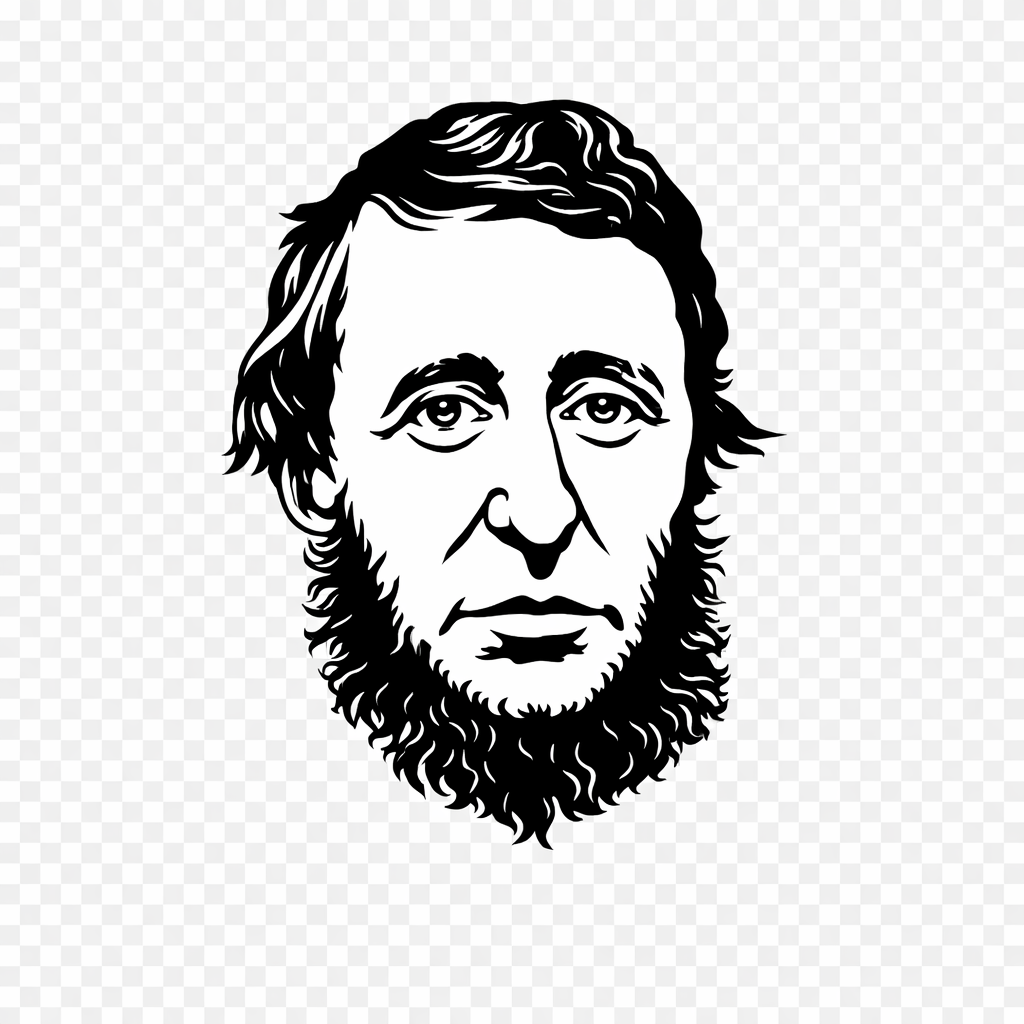
The face
The background
- Nationality:
- American
- Schools:
- Transcendentalism
- Branchs:
- Transcendentalism, Nature writing, Philosophy, Environmentalism
- Period:
- 19th-century
The synopsis
Henry David Thoreau (born David Henry Thoreau; July 12, 1817 – May 6, 1862) was an American naturalist, essayist, poet, and philosopher. A leading transcendentalist, he is best known for his book Walden, a reflection upon simple living in natural surroundings, and his essay "Civil Disobedience" (originally published as "Resistance to Civil Government"), an argument in favor of citizen disobedience against an unjust state. Thoreau's books, articles, essays, journals, and poetry amount to more than 20 volumes. Among his lasting contributions are his writings on natural history and philosophy, in which he anticipated the methods and findings of ecology and environmental history, two sources of modern-day environmentalism. His literary style interweaves close observation of nature, personal experience, pointed rhetoric, symbolic meanings, and historical lore, while displaying a poetic sensibility, philosophical austerity, and attention to practical detail. He was also deeply interested in the idea of survival in the face of hostile elements, historical change, and natural decay; at the same time he advocated abandoning waste and illusion to discover life's true essential needs. Thoreau was a lifelong abolitionist, delivering lectures that attacked the fugitive slave law while praising the writings of Wendell Phillips and defending the abolitionist John Brown. Thoreau's philosophy of civil disobedience later influenced the political thoughts and actions of notable figures such as Leo Tolstoy, Mahatma Gandhi, and Martin Luther King Jr. Thoreau is sometimes referred to retrospectively as an anarchist, but may perhaps be more properly regarded as a proto-anarchist.
The works
A Week on the Concord and Merrimack Rivers
Resistance to Civil Government (Civil Disobedience)
Walden; or, Life in the Woods
The Maine Woods
Cape Cod
A Yankee in Canada, with Anti-Slavery and Reform Papers
The quotes
The greatest compliment that was ever paid me was when one asked me what I thought, and attended to my answer.
The youth gets together his materials to build a bridge to the moon, or, perchance, a palace or temple on the earth, and, at length, the middle-aged man concludes to build a woodshed with them.
As for doing good; that is one of the professions which is full. Moreover I have tried it fairly and, strange as it may seem, am satisfied that it does not agree with my constitution.
It is an interesting question how far men would retain their relative rank if they were divested of their clothes.