The Philosopher
Henri Poincaré
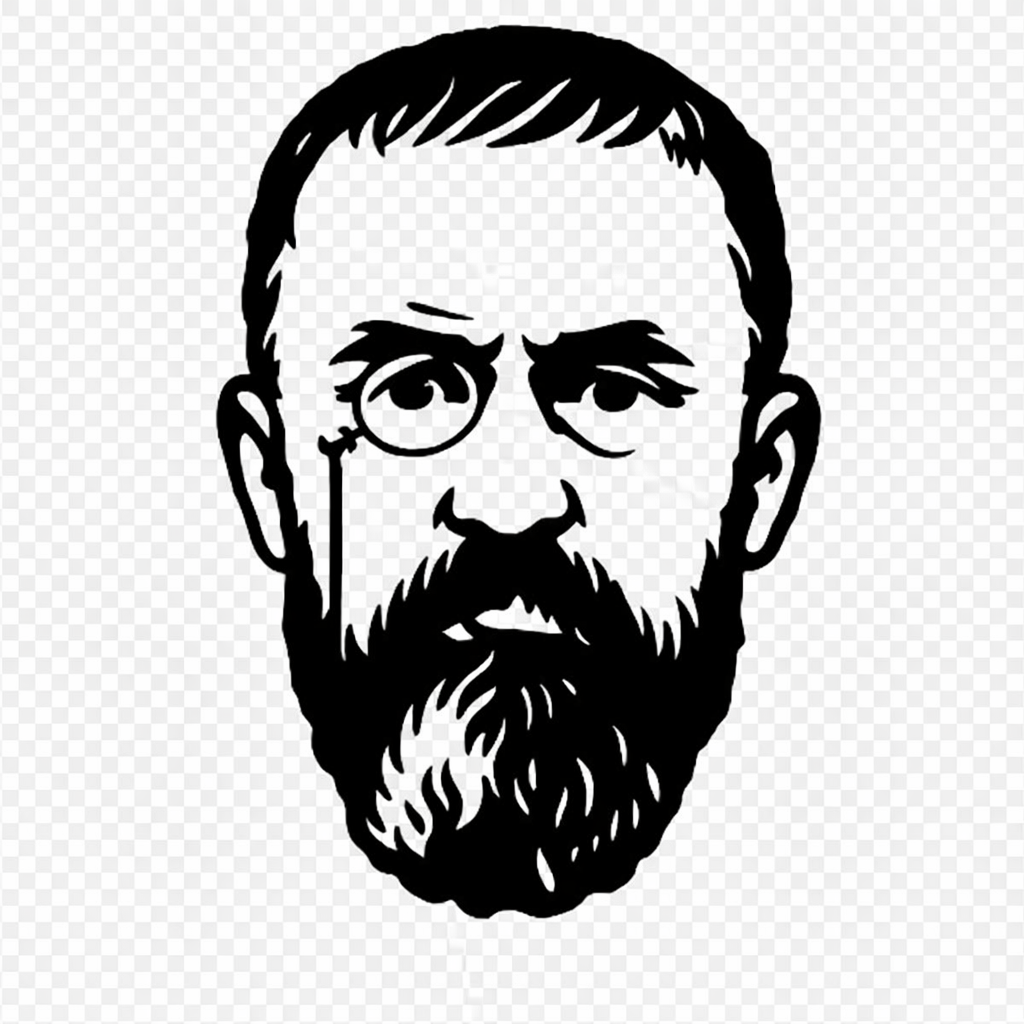
The face
The background
- Nationality:
- French
- Period:
- 19th-20th century
The synopsis
Poincaré made many contributions to different fields of pure and applied mathematics such as: celestial mechanics, fluid mechanics, optics, electricity, telegraphy, capillarity, elasticity, thermodynamics, potential theory, Quantum mechanics, theory of relativity and physical cosmology. Among the specific topics he contributed to are the following: algebraic topology (a field that Poincaré virtually invented), the theory of analytic functions of several complex variables, the theory of abelian functions, algebraic geometry, the Poincaré conjecture, Poincaré recurrence theorem, hyperbolic geometry, Fuchsian groups, number theory, the three-body problem, the theory of diophantine equations, electromagnetism, special relativity, the fundamental group, and in the field of differential equations, Poincaré has given many results that are critical for the qualitative theory of differential equations, for example the Poincaré sphere and the Poincaré map. He also published an influential paper providing a novel mathematical argument in support of quantum mechanics. He was considered the dominant figure in mathematics and theoretical physics during his time, and was the most respected mathematician of his time, being described as "the living brain of the rational sciences" by mathematician Paul Painlevé. Philosopher Karl Popper regarded Poincaré as the greatest philosopher of science of all time, with Poincaré also originating the conventionalist view in science. Poincaré was a public intellectual in his time, and personally, he believed in political equality for all, while wary of the influence of anti-intellectual positions that the Catholic Church held at the time. He served as the president of the French Academy of Sciences (1906), the president of Société astronomique de France (1901–1903), and twice the president of Société mathématique de France (1886, 1900).
The works
Leçons sur la théorie mathématique de la lumière
Solutions periodiques, non-existence des integrales uniformes, solutions asymptotiques
Methodes de mm. Newcomb, Gylden, Lindstedt et Bohlin
Oscillations électriques
Invariants integraux, solutions periodiques du deuxieme genre, solutions doublement asymptotiques
Valeur de la science
Electricité et optique
Science et l'hypothèse
Thermodynamique
Dernières pensées
Science et méthode
The quotes
It is through science that we prove, but through intuition that we discover.
Mathematics is the art of giving the same name to different things.
Thought is only a flash between two long nights, but this flash is everything.
No more than these machines need the mathematician know what he does.
Thus, they are free to replace some objects by others so long as the relations remain unchanged.
The mind uses its faculty for creativity only when experience forces it to do so.
In the old days when people invented a new function they had something useful in mind.
If nature were not beautiful, it would not be worth knowing, and if nature were not worth knowing, life would not be worth living.
Just as houses are made of stones, so is science made of facts.
A scientist worthy of his name, about all a mathematician, experiences in his work the same impression as an artist; his pleasure is as great and of the same nature.
Science is facts.
Need we add that mathematicians themselves are not infallible?
The mathematical facts worthy of being studied are those which, by their analogy with other facts, are capable of leading us to the knowledge of a physical law.
Mathematicians do not study objects, but relations between objects.
The scientist does not study nature because it is useful; he studies it because he delights in it, and he delights in it because it is beautiful.
Facts do not speak.
What is it indeed that gives us the feeling of elegance in a solution, in a demonstration?
If that enabled us to predict the succeeding situation with the same approximation, that is all we require, and we should say that the phenomenon had been predicted, that it is governed by the laws.
If we knew exactly the laws of nature and the situation of the universe at the initial moment, we could predict exactly the situation of the same universe at a succeeding moment.
Science is built up of facts, as a house is with stones. But a collection of facts is no more a science than a heap of stones is a house.
A sane mind should not be guilty of a logical fallacy, yet there are very fine minds incapable of following mathematical demonstrations.
Point set topology is a disease from which the human race will soon recover.
A very small cause which escapes our notice determines a considerable effect that we cannot fail to see, and then we say that the effect is due to chance.
Geometry is not true, it is advantageous.
It is far better to foresee even without certainty than not to foresee at all.
Ideas rose in clouds; I felt them collide until pairs interlocked, so to speak, making a stable combination.
Hypotheses are what we lack the least.
Absolute space, that is to say, the mark to which it would be necessary to refer the earth to know whether it really moves, has no objective existence.
How is an error possible in mathematics?
To doubt everything, or, to believe everything, are two equally convenient solutions; both dispense with the necessity of reflection.
It is the harmony of the diverse parts, their symmetry, their happy balance; in a word it is all that introduces order, all that gives unity, that permits us to see clearly and to comprehend at once both the ensemble and the details.
It has adopted the geometry most advantageous to the species or, in other words, the most convenient.
Mathematical discoveries, small or great are never born of spontaneous generation.
Invention consists in avoiding the constructing of useless contraptions and in constructing the useful combinations which are in infinite minority.
To invent is to discern, to choose.
If one looks at the different problems of the integral calculus which arise naturally when one wishes to go deep into the different parts of physics, it is impossible not to be struck by the analogies existing.
A small error in the former will produce an enormous error in the latter.
One would have to have completely forgotten the history of science so as to not remember that the desire to know nature has had the most constant and the happiest influence on the development of mathematics.