The Philosopher
George Henry Lewes
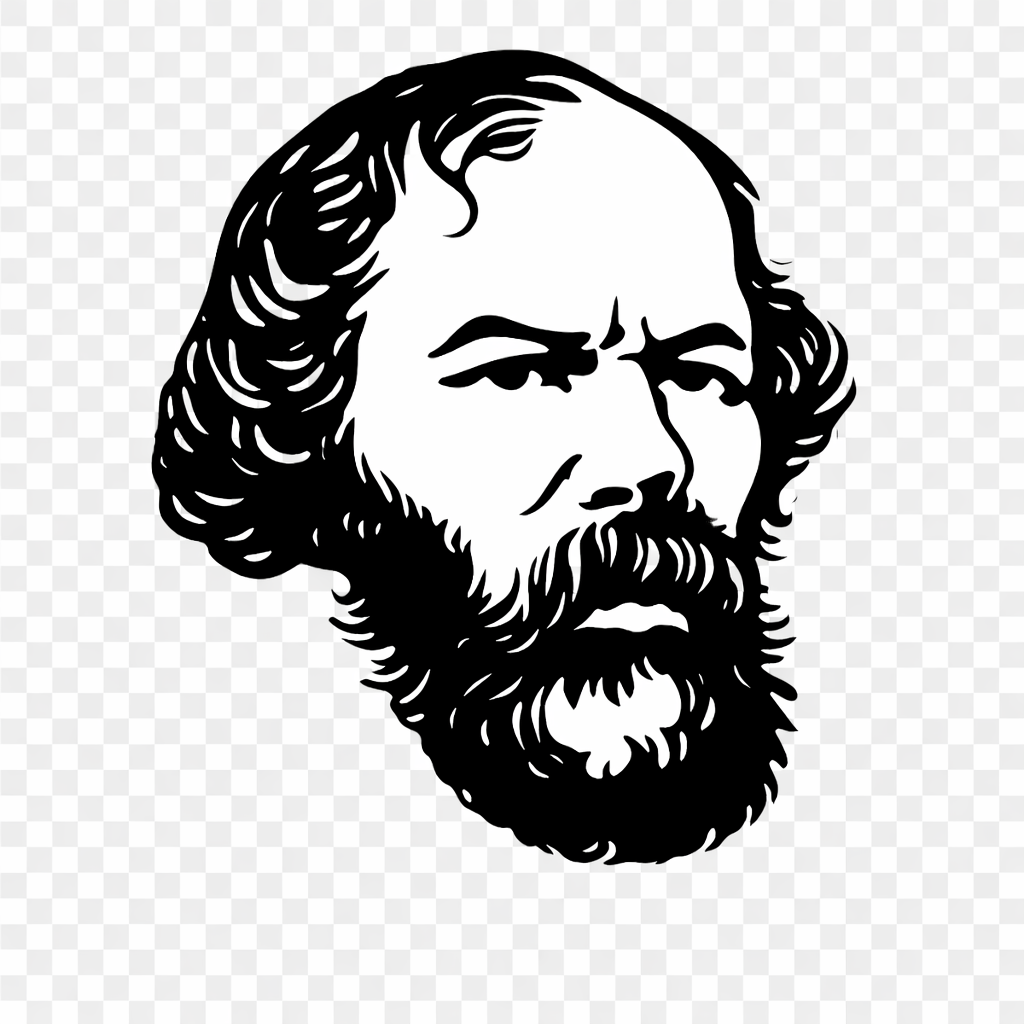
The face
The background
- Nationality:
- British
- Schools:
- Positivism
- Branchs:
- Literature, Theatre, Physiology, Science, Philosophy
- Period:
- 19th-century philosophy
The synopsis
The works
The Biographical History of Philosophy
The Spanish Drama
Ranthorpe
Rose, Blanche and Violet
Robespierre
Comte's Philosophy of the Sciences
Life of Goethe
Seaside Studies
Physiology of Common Life
Studies in Animal Life
Aristotle, A Chapter from the History of Science
Actors and Acting
The Problems of Life and Mind
The quotes
When a man fails to see the truth of certain generally accepted views, there is no law compelling him to provoke animosity by announcing his dissent.
Science is the systematic classification of experience.
Sincerity is moral truth.
We must never assume that which is incapable of proof.
Personal experience is the basis of all real Literature.
Endeavour to be faithful, and if there is any beauty in your thought, your style will be beautiful; if there is any real emotion to express, the expression will be moving.
Imagination is not the exclusive appanage of artists, but belongs in varying degrees to all men.
Good writers are of necessity rare.
The object of Literature is to instruct, to animate, or to amuse.
The superiority of one mind over another depends on the rapidity with which experiences are thus organised.
In complex trains of thought signs are indispensable.
Science is not addressed to poets.
No man was ever eloquent by trying to be eloquent, but only by being so.
Literature is at once the cause and the effect of social progress.
If you feel yourself to be above the mass, speak so as to raise the mass to the height of your argument.
Sincerity is not only effective and honourable, it is also much less difficult than is commonly supposed.
Genius is rarely able to give any account of its own processes.
The public can only be really moved by what is genuine.
All great authors are seers.
Insight is the first condition of Art.
Insincerity is always weakness; sincerity even in error is strength.
Philosophy and Art both render the invisible visible by imagination.
Many a genius has been slow of growth. Oaks that flourish for a thousand years do not spring up into beauty like a reed.
The delusions of self-love cannot be prevented, but intellectual misconceptions as to the means of achieving success may be corrected.
It is unhappily true that much insincere Literature and Art, executed solely with a view to effect, does succeed by deceiving the public.
As all Art depends on Vision, so the different kinds of Art depend on the different ways in which minds look at things.
Ordinary men live among marvels and feel no wonder, grow familiar with objects and learn nothing new about them.
A man may be variously accomplished, and yet be a feeble poet.
Literature delivers tidings of the world within and the world without.
The only cure for grief is action.
All good Literature rests primarily on insight.
Speak for yourself and from yourself, or be silent.
Language, after all, is only the use of symbols, and Art also can only affect us through symbols.
Books minister to our knowledge, to our guidance, and to our delight, by their truth, their uprightness, and their art.
Books have become our dearest companions, yielding exquisite delights and inspiring lofty aims.
The true function of philosophy is to educate us in the principles of reasoning and not to put an end to further reasoning by the introduction of fixed conclusions.
All bad Literature rests upon imperfect insight, or upon imitation, which may be defined as seeing at second-hand.
Murder, like talent, seems occasionally to run in families.