The Philosopher
Gaston Bachelard
The face
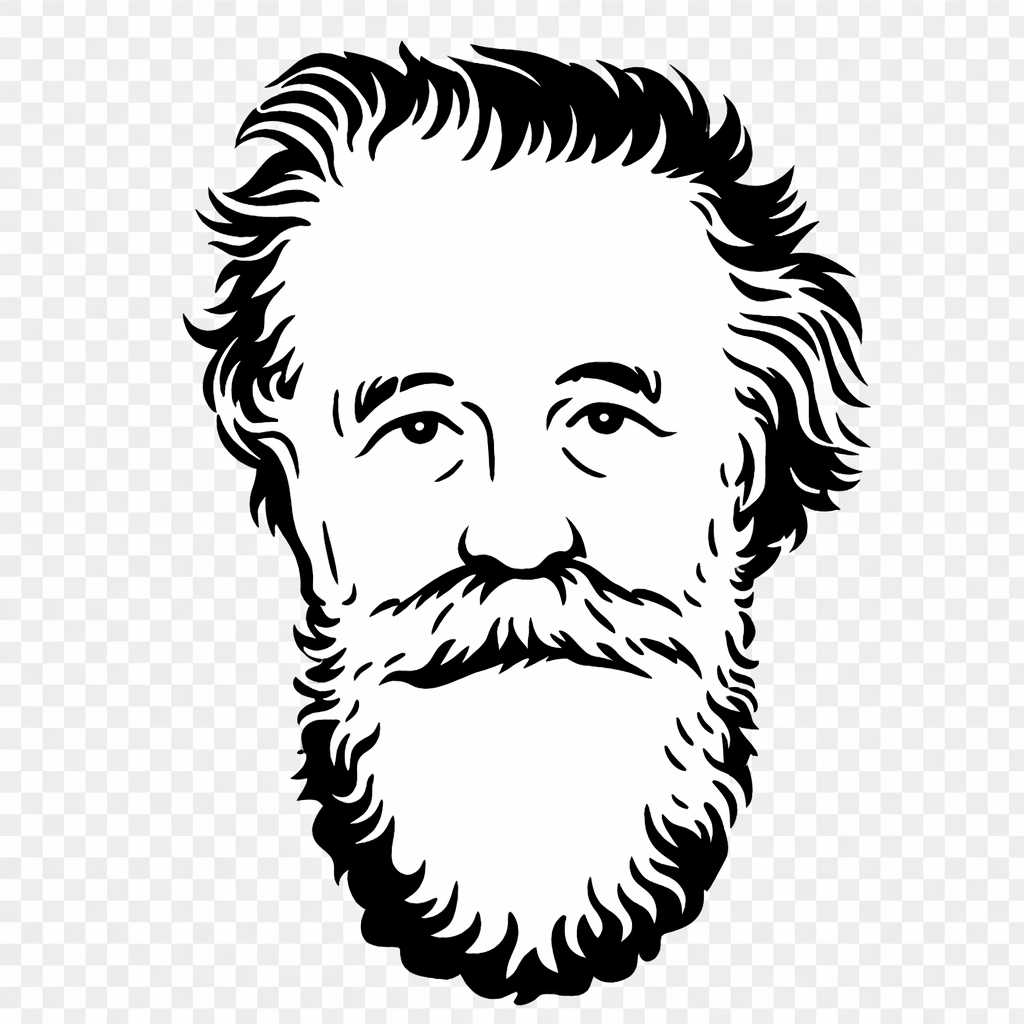
The background
- Nationality:
- French
- Branchs:
- Poetics, Philosophy of science, Psychology of science, Epistemology, Phenomenology, Psychoanalysis, literary theory, Education, Philosophy of art
- Period:
- 20th-century
The synopsis
Gaston Louis Pierre Bachelard (27 June 1884 – 16 October 1962) was a French philosopher. He made contributions in the fields of poetics and the philosophy of science. To the latter, he introduced the concepts of *epistemological obstacle* and *epistemological break* (*obstacle épistémologique* and *rupture épistémologique*). He influenced many subsequent French philosophers, among them Michel Foucault, Louis Althusser, Dominique Lecourt and Jacques Derrida, as well as the sociologists Pierre Bourdieu and Bruno Latour. For Bachelard, the scientific object should be constructed and therefore different from the positivist sciences; in other words, information is in continuous construction. Empiricism and rationalism are not regarded as dualism or opposition but complementary, therefore studies of a priori and a posteriori, or in other words reason and dialectic, are part of scientific research. He was born in Bar-sur-Aube, France. He was a postal clerk in Bar-sur-Aube, and then studied physics and chemistry before finally becoming interested in philosophy. To obtain his doctorate (*doctorat ès lettres*) in 1927, he wrote two theses: the main one, *Essai sur la connaissance approchée*, under the direction of Abel Rey, and the complementary one, *Étude sur l'évolution d'un problème de physique: la propagation thermique dans les solides*, supervised by Léon Brunschvicg. He first taught from 1902 to 1903 at the college of Sézanne, but turned away from teaching to consider a career in telegraphy. Literary by training, he took the technological path before moving towards science and mathematics. In particular, he was fascinated by the great discoveries of the end of the 19th century and the beginning of the 20th century (radioactivity, quantum and wave mechanics, relativity, electromagnetism and wireless telegraphy). Discharged in March 1919 and unemployed, Bachelard searched and obtained a job in October as a professor of physics and chemistry at the college of Bar-sur-Aube. At the age of thirty-six he began a completely unexpected philosophical career. Starting decisively in 1922, he acquired the title of Doctor of Letters at the Sorbonne in 1927. His theses, supported by Abel Rey and Léon Brunschvicg, were published. He became a lecturer at the Faculty of Letters of Dijon from October 1927, but remained at the college of Bar-sur-Aube until 1930. He even participated in the municipal elections of 1929 to defend the project of a college for all. He nevertheless accepted a professorship at the University of Burgundy when his daughter Suzanne entered the second degree. From 1930 to 1940 he was a professor at the University of Dijon and then was appointed chair in the history and philosophy of science at the University of Paris. On 25 August 1937 he was made a Knight of the Legion of Honour. He became a professor at the Sorbonne from 1940 to 1954. He held the chair of the history and philosophy of science, where he succeeded Abel Rey, director of the Institute of History and Philosophy of Science and Technology (IHST), which in 1992 became IHPST. When he was appointed to the Sorbonne as a university professor and director of the Institute for the History of Science and Technology in 1940, he accompanied his daughter in her higher educations. In 1958, he became a member of the Royal Academy of Science, Letters and Fine Arts of Belgium. Bachelard married Jeanne Rossi, a schoolteacher, in 1914. She was transferred to Voigny. His daughter Suzanne was born on 18 October. He travelled the six kilometers to Bar-sur-Aube on foot every day, was provided a very useful education, and enrolled for a philosophy degree. Jeanne died in June 1920, and Bachelard raised his daughter alone. Despite the sex role expectations at the time, Bachelard showed great concern in supporting his daughter's development into an academic career. Counter to stereotypes, he wanted to make his daughter, Suzanne, a scholar. Suzanne became a mathematician and philosopher involved in phenomenological and epistemological research of high standing. In 1962, he died in Paris.
The works
Essai sur la connaissance approchée
Étude sur l'évolution d'un problème de physique: la propagation thermique dans les solides
La valeur inductive de la relativité
La pluralisme cohérent de la chimie moderne
L'Intuition de l'instant
Les intuitions atomistiques: essai de classification
Le nouvel esprit scientifique
La dialectique de la durée
L'expérience de l'espace dans la physique contemporaine
La formation de l'esprit scientifique: contribution à une psychanalyse de la connaissance objective
La psychanalyse du feu
La philosophie du non: essai d'une philosophie du nouvel esprit scientifique
L'eau et les rêves
L'air et les songes
La terre et les rêveries de la volonté
La terre et les rêveries du repos
Le Rationalisme appliqué
L'activité rationaliste de la physique contemporaine
Le matérialisme rationnel
La poétique de l'espace
La poétique de la rêverie
La flamme d'une chandelle
L'engagement rationaliste
The quotes
If I were asked to name the chief benefit of the house, I should say: the house shelters day-dreaming, the house protects the dreamer, the house allows one to dream in peace.
Literary imagination is an aesthetic object offered by a writer to a lover of books.
To live life well is to express life poorly; if one expresses life too well, one is living it no longer.
So, like a forgotten fire, a childhood can always flare up again within us.
It is not that the child lives in a world of imagination, as we wrongly think, but that the imagination lives in the child.
The words of the world want to make sentences.
Poetry is one of the destinies of speech... One would say that the poetic image, in its newness, opens a future to language.
The subconscious is ceaselessly murmuring, and it is by listening to these murmurs that one hears the truth.
The repose of sleep refreshes only the body. It rarely sets the soul at rest. The repose of the night does not belong to us. It is not the possession of our being. Sleep opens within us an inn for phantoms. In the morning we must sweep out the shadows.
Ideas are refined and multiplied in the commerce of minds. In their splendor, images effect a very simple communion of souls.
A special kind of beauty exists which is born in language, of language, and for language.
There is no original truth, only original error.
The great function of poetry is to give back to us the situations of our dreams.
Man is an imagining being.