The Philosopher
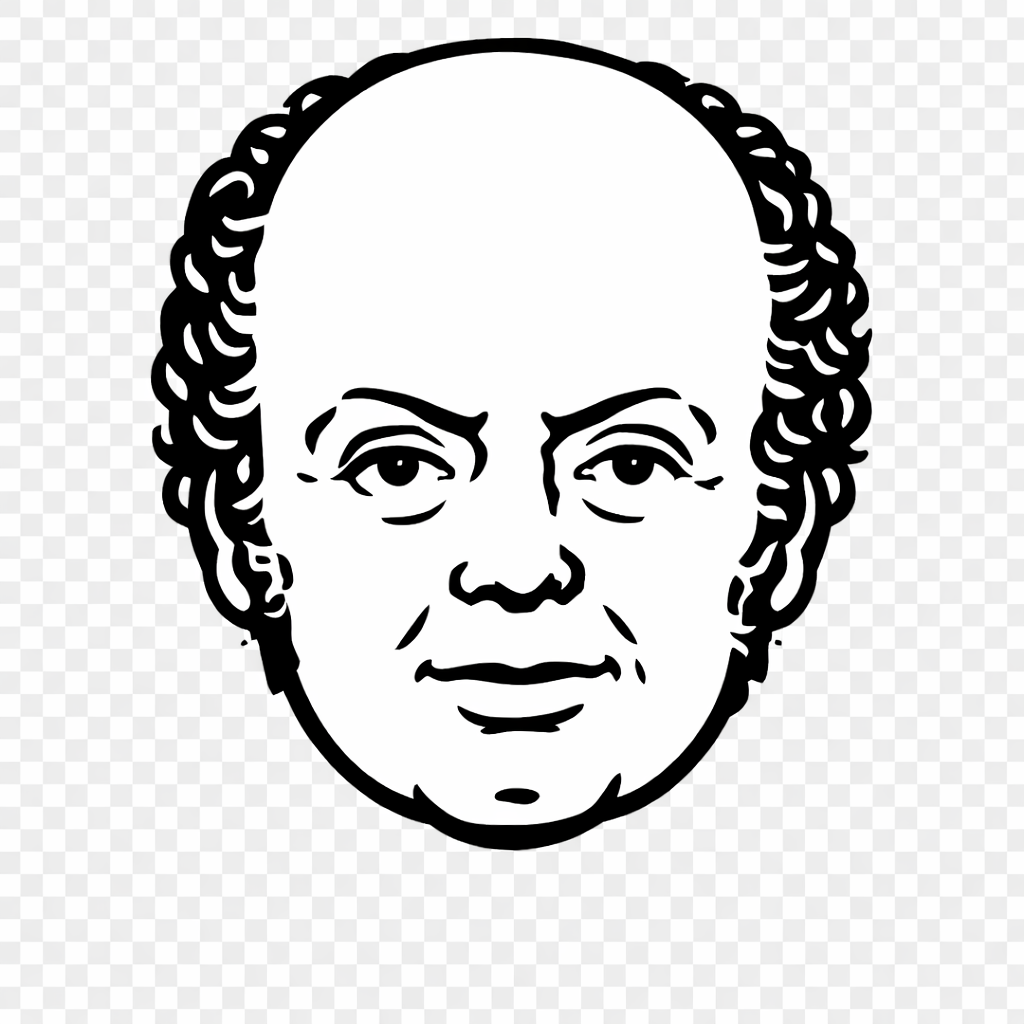
Franz Joseph Gall
The face
The background
- Nationality:
- German
- Schools:
- Phrenology
- Branchs:
- Neuroscience, Physiology, Psychology
- Period:
- 18th and 19th century
The synopsis
Franz Joseph Gall, born on March 9, 1758, in Tiefenbronn, Baden, was a German neuroanatomist and physiologist. He is widely recognized as the founder of phrenology, a field that proposed that the brain's structure and functions could be determined by examining the shape and bumps on a person's skull. Gall's early fascination with differences in skull shapes among his classmates led him to develop his theory of organology and cranioscopy, which later became known as phrenology. He believed that specific areas of the brain corresponded to distinct mental faculties and that the prominence of these areas would be reflected in the skull's external form. Gall collected and studied over 120 skulls to support his hypotheses, dividing the brain into 27 fundamental faculties, including memory, mechanical ability, poetic talent, and even a 'murder instinct.'
Despite the scientific community's eventual rejection of phrenology as a pseudoscience, Gall's work had a significant impact. It contributed to the early development of psychology by emphasizing the importance of empirical observation and by proposing the concept of functional localization within the brain. This idea laid groundwork for modern neuroscience, even though the specific methods and conclusions of phrenology were flawed. Gall's research also influenced the emergence of a naturalistic approach to studying humanity and played a role in the development of evolutionist theories, anthropology, and sociology.
Gall's career began with an education in medicine at the University of Strasbourg and later Vienna. He was influenced by his mentors, Johann Hermann and Maximilian Stoll, who stressed the importance of natural observation. He worked at a lunatic asylum and later established a successful private practice, where he also gave public lectures. His collaboration with Johann Spurzheim was crucial in developing and disseminating phrenological theories, though they later parted ways, with Spurzheim coining the term 'phrenology.'
Gall's ideas were met with considerable controversy. The Catholic Church and established scientific institutions often condemned his theories, and he faced opposition from governments, including Emperor Joseph II and Napoleon Bonaparte, who deemed his work a threat to public morality and scientific validity, respectively. Despite this resistance, Gall continued his research and lecturing, eventually settling in Paris. His work was later criticized by figures like Jean Pierre Flourens, who conducted experiments on animals to challenge Gall's theories of localized brain function.
Gall died in Paris on August 22, 1828. While he was married, he had no children. His legacy is complex: phrenology is now discredited, but his emphasis on brain localization and his rigorous methods in dissection significantly advanced neurological science and contributed to the foundation of modern brain research. His work also inspired later figures in criminology and anatomy, such as Cesare Lombroso and Paul Broca.
The works
On the Functions of the Brain and of Each of Its Parts: With Observations on the Possibility of Determining the Instincts, Propensities, and Talents, Or the Moral and Intellectual Dispositions of Men and Animals, by the Configuration of the Brain and Head