The Philosopher
Francisco Toledo
The face
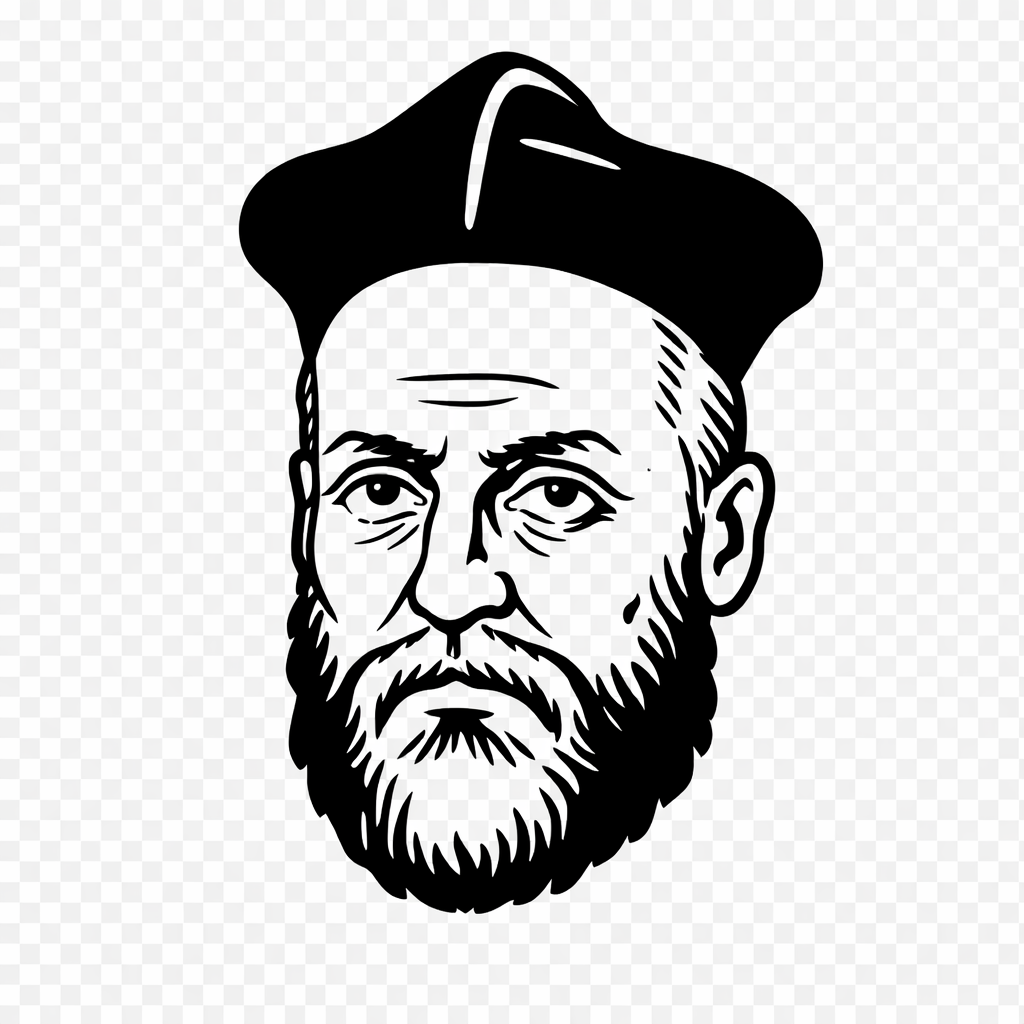
The background
- Nationality:
- Spanish
- Schools:
- Jesuit, Scholasticism
- Branchs:
- Theology, Philosophy, Biblical Exegesis
- Period:
- 16th century
The synopsis
Francisco de Toledo (4 October 1532 in Cordoba, Castille – 14 September 1596 in Rome) was a Spanish Jesuit priest and theologian, Biblical exegete, and professor at the Roman College. He holds the distinction of being the first Jesuit to be made a cardinal, an honor bestowed upon him in 1593 by Pope Clement VIII. Toledo's academic career began under Domingo de Soto, and he later became a professor of philosophy at the University of Salamanca from 1555 to 1559. He was ordained a priest in Salamanca in 1556 and joined the Jesuit order in 1558. Following his spiritual formation, he was called to Rome by the Superior General, Diego Láynez, to teach at the Roman College, where he successively held positions teaching Philosophy (1559-1562), Scholastic and Moral Theology (1562-1569), and served as prefect of studies. His scholarly output includes numerous commentaries on Aristotle's works in the 1570s, and he played a significant role in the revision of the Latin Vulgate, known as the Clementine Vulgate, which was published in 1598. He died in Rome in 1596 and is buried in Santa Maria Maggiore.
The works
Introductio in dialecticam Aristotelis
Commentaria una cum quæstionibus in universam Aristotelis logicam
Commentaria de physica auscultatione
De anima
De generatione et corruptione
Opera omnia. Opera philosophica
In Summam theologiæ S. Thomæ Aquinatis enarratio
Summa casuum sive instructio sacerdotum
In sacrosanctum Joannis Evangelium commentarium
Commentarii in prima XII capita sacrosancti Iesu Christi D.N. Evangelii secundum Lucam
Commentarii et annotationes in Epistolam Beati Pauli apostoli ad Romanos
Emmendationes in Sacra Biblia vulgata
Regulæ hebraicæ pro lingua sancta intelligenda
Motivós y advertencias de casas dignas de refomación cerca del Breviario