The Philosopher
Eduard Hanslick
The face
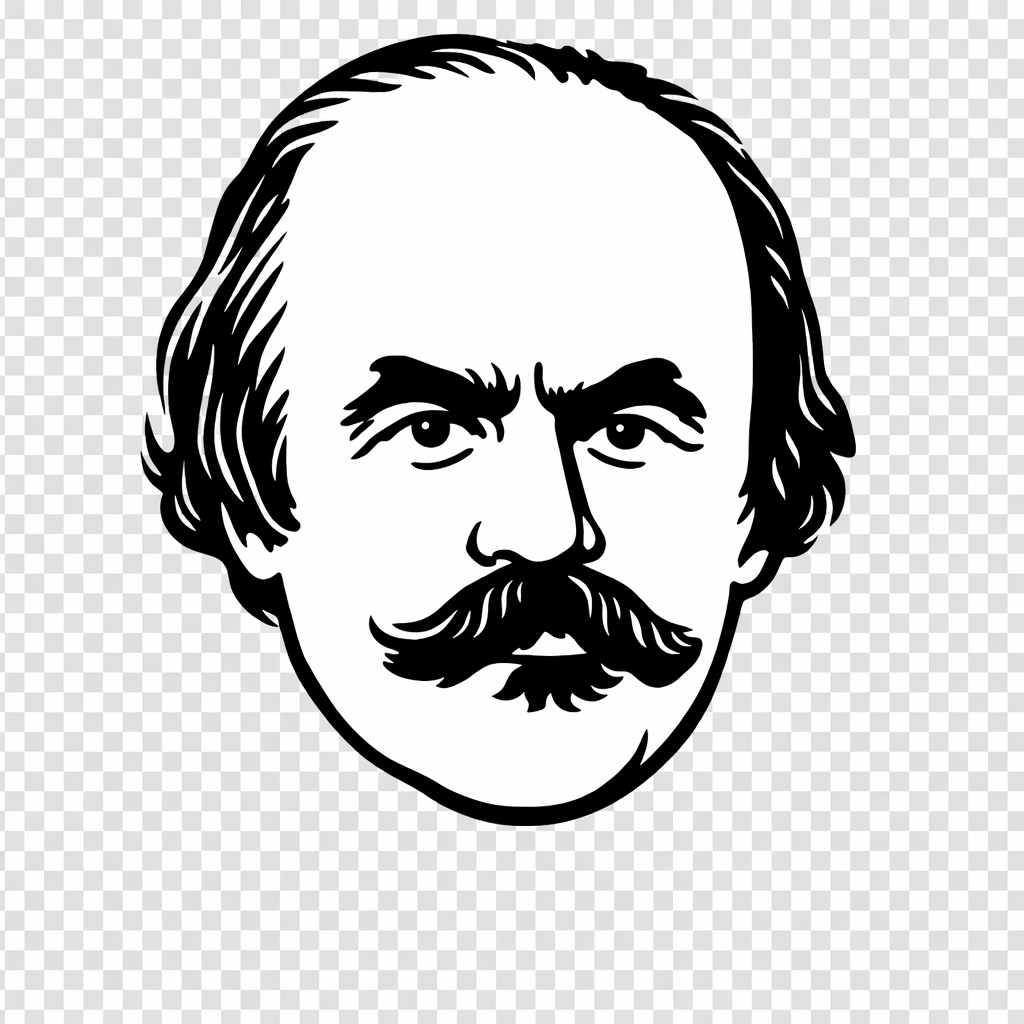
The background
- Nationality:
- Austrian
- Schools:
- Formalism (music)
- Branchs:
- Music Criticism, Music aesthetics, Music history
- Period:
- 19th century
The synopsis
Eduard Hanslick (11 September 1825 – 6 August 1904) was an Austrian music critic, aesthetician, and historian. He was the chief music critic for the Neue Freie Presse from 1864 until his death. His most famous work, the 1854 treatise "Vom Musikalisch-Schönen" (On the Musically Beautiful), is a foundational text in the aesthetics of music. Hanslick championed absolute music over programmatic music and was a prominent supporter of Johannes Brahms, while often criticizing composers like Richard Wagner and Franz Liszt. He taught music history and aesthetics at the University of Vienna, holding a professorship and receiving an honorary doctorate. Despite his critical engagements, he also served on juries for musical competitions and held administrative roles. Hanslick's critical approach emphasized the inherent form of music as its primary source of meaning, often clashing with the more expressive and programmatic tendencies of some of his contemporaries.
The works
Vom Musikalisch-Schönen
Geschichte des Konzertwesens in Wien
Die moderne Oper
Aus meinem Leben
Suite. Aufsätze über Musik und Musiker
The quotes
Music has no subject beyond the combinations of notes we hear, for music speaks not only by means of sounds, it speaks nothing but sound.
Grant that the true organ with which the beautiful is apprehended is the imagination, and it follows that all arts are likely to affect the feelings indirectly.
An art aims, above all, at producing something beautiful which affects not our feelings but the organ of pure contemplation, our imagination.
The course hitherto pursued in musical aesthetics has nearly always been hampered by the false assumption that the object was not so much to inquire into what is beautiful in music as to describe the feelings which music awakens.