The Philosopher
David Ricardo
The face
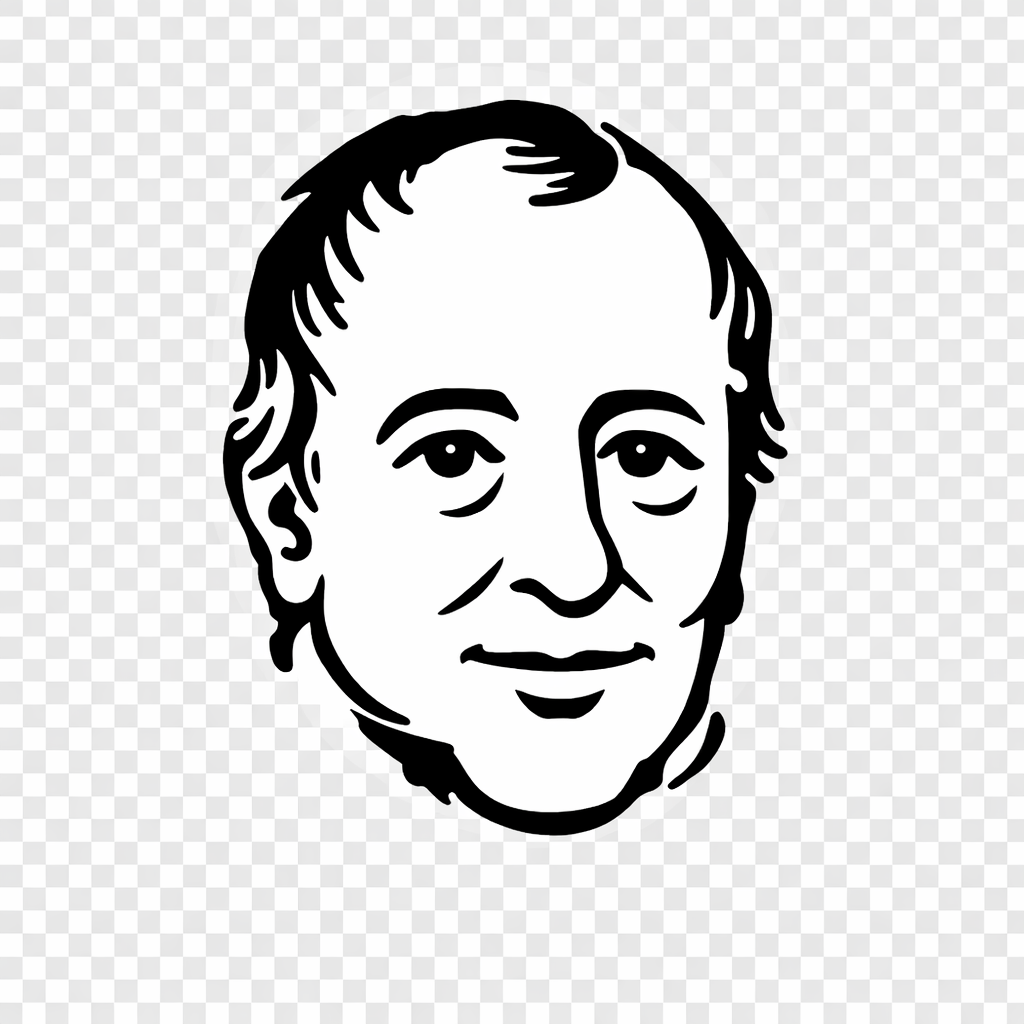
The background
- Nationality:
- British
- Schools:
- Classical economics
- Branchs:
- Classical economics, Political economy, International trade theory, Labor theory of value, Rent theory, Monetary policy
- Period:
- Classical economics
The synopsis
David Ricardo (1772–1823) was a prominent British economist and politician, celebrated as one of the most influential classical economists alongside Adam Smith and Thomas Malthus. Born in London to a successful stockbroker of Portuguese-Jewish origin, Ricardo converted to Unitarianism at 21, leading to estrangement from his family. He built substantial wealth through financing government loans and astute speculation. Later in life, he purchased Gatcombe Park in Gloucestershire and entered Parliament as the MP for Portarlington, where he championed liberal causes including free trade, parliamentary reform, and criminal justice reform. Ricardo's economic theories focused on labor as the determinant of value, though he refined Adam Smith's labor theory of value. He developed theories of rent, wages, and profits, famously introducing the concept of comparative advantage to explain the benefits of international free trade. Despite his capitalist views, his ideas influenced early socialists. Ricardo died at 51 from a severe infection, leaving behind a significant fortune and a lasting intellectual legacy that shaped economic policy.
The works
The High Price of Bullion, a Proof of the Depreciation of Bank Notes
Essay on the Influence of a Low Price of Corn on the Profits of Stock
On the Principles of Political Economy and Taxation
The quotes
It is not by the absolute quantity of produce obtained by either class, that we can correctly judge of the rate of profit, rent, and wages, but by the quantity of labour required to obtain that produce.
If the demand for home commodities should be diminished, because of the fall of rent on the part of the landlords, it will be increased in a far greater degree by the increased opulence of the commercial classes.
If we were left to ourselves, unfettered by legislative enactments, we should gradually withdraw our capital from the cultivation of such lands, and import the produce which is at present raised upon them.
A rise of wages from this cause will, indeed, be invariably accompanied by a rise in the price of commodities; but in such cases, it will be found that labour and all commodities have not varied in regard to each other, and that the variation has been confined to money.
The rise or fall of wages is common to all states of society, whether it be the stationary, the advancing, or the retrograde state.
Profits might also increase, because improvements might take place in agriculture, or in the implements of husbandry, which would augment the produce with the same cost of production.
The proportions, too, in which the capital that is to support labour, and the capital that is invested in tools, machinery and buildings, may be variously combined.
Again two manufacturers may employ the same amount of fixed, and the same amount of circulating capital; but the durability of their fixed capitals may be very unequal.
If a commodity were in no way useful, - in other words, if it could in no way contribute to our gratification, - it would be destitute of exchangeable value, however scarce it might be, or whatever quantity of labour might be necessary to procure it.
During the period of capital moving from one employment to another, the profits on that to which capital is flowing will be relatively high, but will continue so no longer than till the requisite capital is obtained.
In comparing therefore the value of the same commodity, at different periods of time, the consideration of the comparative skill and intensity of labour, required for that particular commodity, needs scarcely to be attended to, as it operates equally at both periods.
If then the prosperity of the commercial classes, will most certainly lead to accumulation of capital, and the encouragement of productive industry; these can by no means be so surely obtained as by a fall in the price of corn.
Gold, on the contrary, though of little use compared with air or water, will exchange for a great quantity of other goods.
If the quantity of labour realized in commodities, regulate their exchangeable value, every increase of the quantity of labour must augment the value of that commodity on which it is exercised, as every diminution must lower it.
There can be no rise in the value of labour without a fall of profits.
As the revenue of the farmer is realized in raw produce, or in the value of raw produce, he is interested, as well as the landlord, in its high exchangeable value, but a low price of produce may be compensated to him by a great additional quantity.
Whenever, then, the usual and ordinary rate of the profits of agricultural stock, and all the outgoings belonging to the cultivation of land, are together equal to the value of the whole produce, there can be no rent.
But a rise in the wages of labour would not equally affect commodities produced with machinery quickly consumed, and commodities produced with machinery slowly consumed.
In stating the principles which regulate exchangeable value and price, we should carefully distinguish between those variations which belong to the commodity itself, and those which are occasioned by a variation in the medium in which value is estimated, or price expressed.
The exchangeable value of all commodities, rises as the difficulties of their production increase.
After all the fertile land in the immediate neighbourhood of the first settlers were cultivated, if capital and population increased, more food would be required, and it could only be procured from land not so advantageously situated.
Gold and silver, like other commodities, have an intrinsic value, which is not arbitrary, but is dependent on their scarcity, the quantity of labour bestowed in procuring them, and the value of the capital employed in the mines which produce them.
The facility of obtaining food is beneficial in two ways to the owners of capital, it at the same time raises profits and increases the amount of consumable commodities.
A rise in wages, from an alteration in the value of money, produces a general effect on price, and for that reason it produces no real effect whatever on profits.
In the same manner if any nation wasted part of its wealth, or lost part of its trade, it could not retain the same quantity of circulating medium which it before possessed.
Gold and silver are no doubt subject to fluctuations, from the discovery of new and more abundant mines; but such discoveries are rare, and their effects, though powerful, are limited to periods of comparatively short duration.