The Philosopher
David Hume
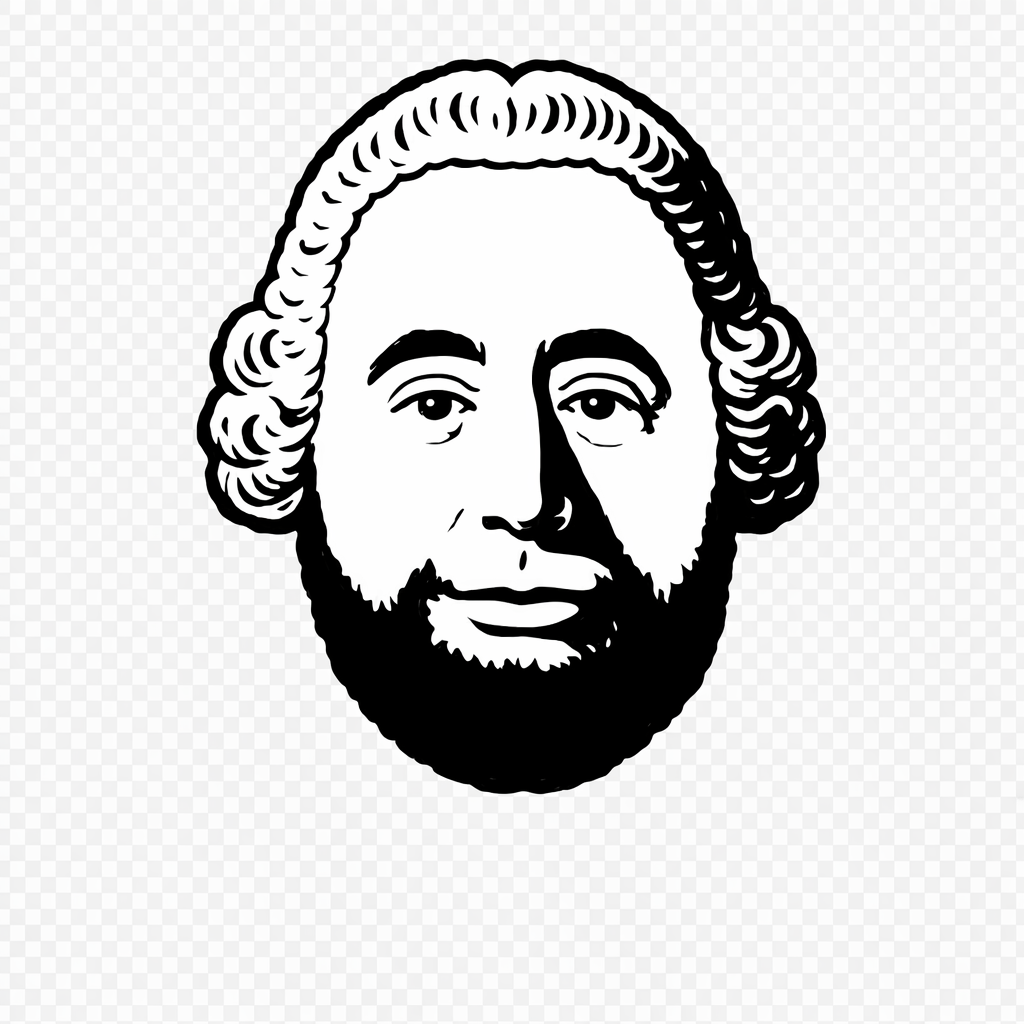
The face
The background
- Nationality:
- Scottish
- Schools:
- Scottish Enlightenment, Humeanism, naturalism, Skepticism, Empiricism, Irreligion, Foundationalism, Newtonianism, Conceptualism, Indirect Realism, Correspondence theory of truth, Moral sentimentalism
- Branchs:
- Epistemology, Ethics, Metaphysics, Philosophy of mind, Philosophy of religion, Political philosophy, Aesthetics, Economics
- Period:
- Enlightenment
The synopsis
David Hume (1711–1776) was a Scottish philosopher, historian, economist, and essayist who made significant contributions to empiricism, skepticism, and naturalism. He argued that human knowledge derives solely from experience, challenging the rationalist emphasis on reason. Hume's analysis of causality and induction questioned the empirical justification for assuming future events will resemble past ones, attributing these beliefs to habit. He proposed that passions, rather than reason, drive human behavior and that ethics are grounded in emotion and sentiment. Hume's work on personal identity suggested the self is merely a bundle of perceptions, and his philosophy of religion, including critiques of miracles and the argument from design, was highly controversial. His influential ideas impacted utilitarianism, logical positivism, analytic philosophy, and cognitive science, notably inspiring Immanuel Kant. Hume also achieved fame as a historian with his bestseller 'The History of England', which shaped historical interpretation for decades.
The works
A Treatise of Human Nature
An Enquiry Concerning Human Understanding
An Enquiry Concerning the Principles of Morals
Essays, Moral, Political, and Literary
Four Dissertations
The History of England
Dialogues Concerning Natural Religion
The quotes
That the sun will not rise tomorrow is no less intelligible a proposition, and implies no more contradiction, than the affirmation, that it will rise.
Eloquence, at its highest pitch, leaves little room for reason or reflection, but addresses itself entirely to the desires and affections, captivating the willing hearers, and subduing their understanding.
The Christian religion not only was at first attended with miracles, but even at this day cannot be believed by any reasonable person without one.
It is not reason which is the guide of life, but custom.
The chief benefit, which results from philosophy, arises in an indirect manner, and proceeds more from its secret, insensible influence, than from its immediate application.
Beauty, whether moral or natural, is felt, more properly than perceived.
Philosophy would render us entirely Pyrrhonian, were not nature too strong for it.
There is not to be found, in all history, any miracle attested by a sufficient number of men, of such unquestioned good sense, education and learning, as to secure us against all delusion in themselves.
Generally speaking, the errors in religion are dangerous; those in philosophy only ridiculous.
It is a just political maxim, that every man must be supposed a knave.
There is a very remarkable inclination in human nature to bestow on external objects the same emotions which it observes in itself, and to find every where those ideas which are most present to it.
Any person seasoned with a just sense of the imperfections of natural reason, will fly to revealed truth with the greatest avidity.
Avarice, the spur of industry.
Belief is nothing but a more vivid, lively, forcible, firm, steady conception of an object, than what the imagination alone is ever able to attain.
Be a philosopher but, amid all your philosophy be still a man.
It is not contrary to reason to prefer the destruction of the whole world to the scratching of my finger.
It is seldom that liberty of any kind is lost all at once.
Reason is, and ought only to be the slave of the passions, and can never pretend to any other office than to serve and obey them.
To hate, to love, to think, to feel, to see; all this is nothing but to perceive.
No testimony is sufficient to establish a miracle, unless the testimony be of such a kind, that its falsehood would be more miraculous than the fact which it endeavors to establish.
It's when we start working together that the real healing takes place... it's when we start spilling our sweat, and not our blood.
Accuracy is, in every case, advantageous to beauty, and just reasoning to delicate sentiment. In vain would we exalt the one by depreciating the other.
And what is the greatest number? Number one.
I have written on all sorts of subjects... yet I have no enemies; except indeed all the Whigs, all the Tories, and all the Christians.
This avidity alone, of acquiring goods and possessions for ourselves and our nearest friends, is insatiable, perpetual, universal, and directly destructive of society.
The advantages found in history seem to be of three kinds, as it amuses the fancy, as it improves the understanding, and as it strengthens virtue.
The corruption of the best things gives rise to the worst.
Human Nature is the only science of man; and yet has been hitherto the most neglected.
Heaven and hell suppose two distinct species of men, the good and the bad. But the greatest part of mankind float betwixt vice and virtue.
Custom is the great guide to human life.
Every wise, just, and mild government, by rendering the condition of its subjects easy and secure, will always abound most in people, as well as in commodities and riches.
A man acquainted with history may, in some respect, be said to have lived from the beginning of the world, and to have been making continual additions to his stock of knowledge in every century.
Men are much oftener thrown on their knees by the melancholy than by the agreeable passions.
A purpose, an intention, a design, strikes everywhere even the careless, the most stupid thinker.
To be a philosophical sceptic is, in a man of letters, the first and most essential to being a sound, believing Christian.