The Philosopher
Chrysippus
The face
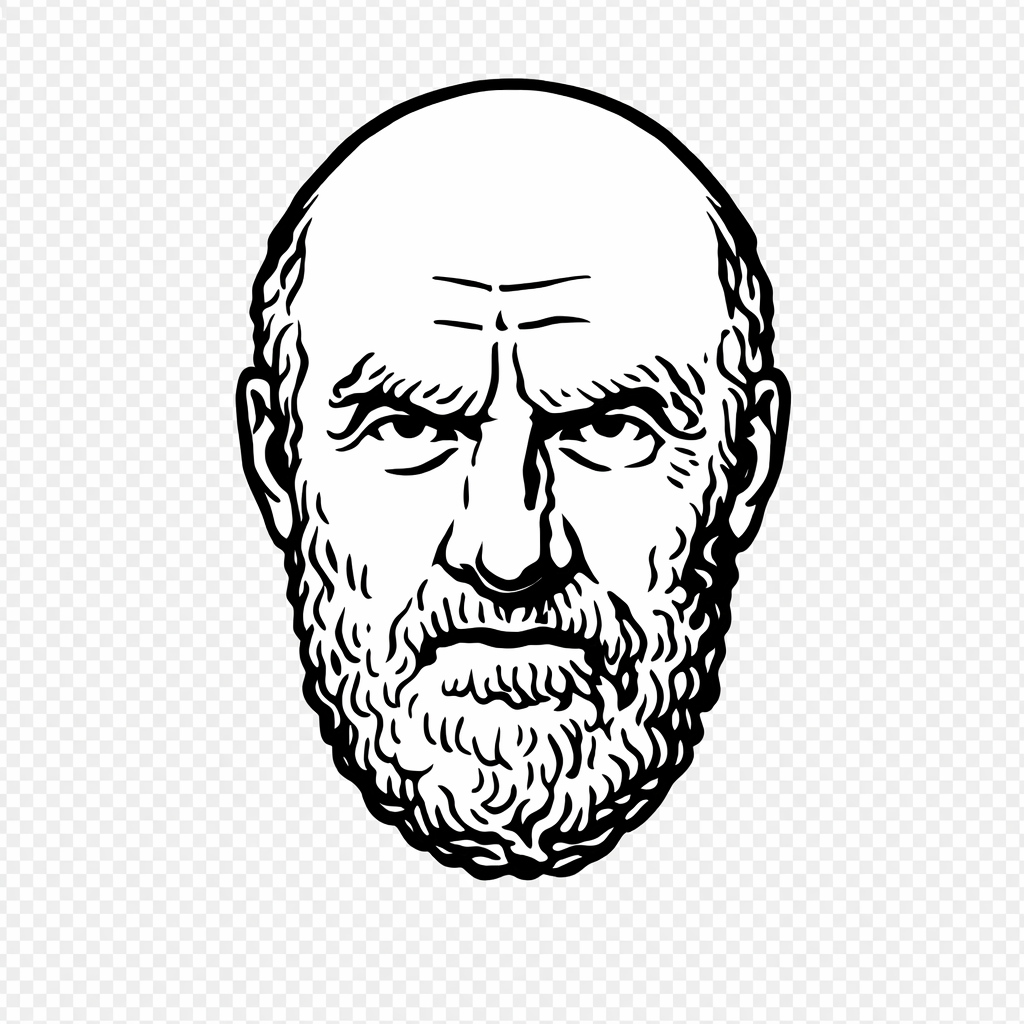
The background
- Nationality:
- Greek
- Schools:
- Stoicism
- Branchs:
- Logic, Theory of knowledge, Ethics, Physics
- Period:
- Hellenistic philosophy
The synopsis
Chrysippus of Soli (c. 279 – c. 206 BC) was a Greek Stoic philosopher. He was a native of Soli, Cilicia, but moved to Athens as a young man, where he became a pupil of the Stoic philosopher Cleanthes. When Cleanthes died, around 230 BC, Chrysippus became the third head of the Stoic school. A prolific writer, Chrysippus expanded the fundamental doctrines of Cleanthes' mentor Zeno of Citium, the founder and first head of the school, which earned him the title of the Second Founder of Stoicism. Chrysippus excelled in logic, the theory of knowledge, ethics, and physics. He created an original system of propositional logic in order to better understand the workings of the universe and role of humanity within it. He adhered to a fatalistic view of fate, but nevertheless sought a role for personal agency in thought and action. Ethics, he thought, depended on understanding the nature of the universe, and he taught a therapy of extirpating the unruly passions which depress and crush the soul. He initiated the success of Stoicism as one of the most influential philosophical movements for centuries in the Greek and Roman world. The linguistic orientation of Chrysippus' work made it difficult for its students even within the Stoic school.
The works
Logical Questions
On Providence
The quotes
Death is the separation of soul from body.
Every animal is related to its own constitution and the consciousness of it.
The anchovy which is found in the sea at Athens, men despise on account of its abundance and say that it is a poor man's fish; but in other cities, they prize it above everything, even where it is far inferior to the Attic anchovy.
If something were brought about without an antecedent cause, it would be untrue that all things come about through fate. But if it is plausible that all events have an antecedent cause, what ground can be offered for not conceding that all things come about through fate?
Vice, by comparison with terrible accidents, has its own peculiar explanation. For, in a way, it does occur in accordance with the rationale of nature, and its occurrence is not, so to speak, useless in relation to the whole world. For otherwise, the good would not exist, either.
Of causes, some are complete and primary, others auxiliary and proximate. Hence, when we say that all things come about through fate by antecedent causes, we do not mean this to be understood as 'by complete and primary causes,' but 'by auxiliary and proximate causes.'
Fate is a sempiternal and unchangeable series and chain of things, rolling and unraveling itself through eternal sequences of cause and effect, of which it is composed and compounded.
If I had followed the multitude, I should not have studied philosophy.
I myself think that the wise man meddles little or not at all in affairs and does his own things.
There is a certain head, and that head you have not. Now this being so, there is a head which you have not; therefore, you are without a head.
The soul is joined to and is separated from the body. Therefore, the soul is corporeal.
Although it is true that by fate all things are forced and linked by a necessary and dominant reason, nevertheless the character of our minds is subject to fate in a manner corresponding to their nature and quality.
Vice cannot be removed completely, nor is it right that it should be removed.
When through the power of sight we see white, that which comes about in the soul through the act of seeing is a modification. And on the basis of this modification, we are able to say that the white which is affecting us exists.
If our minds were originally formed by nature in a sound and useful manner, then they pass on all the forces of fate, which imposes on us from outside in a relatively unobjectionable and more acceptable way.