The Philosopher
Chou Tun-Yi
The face
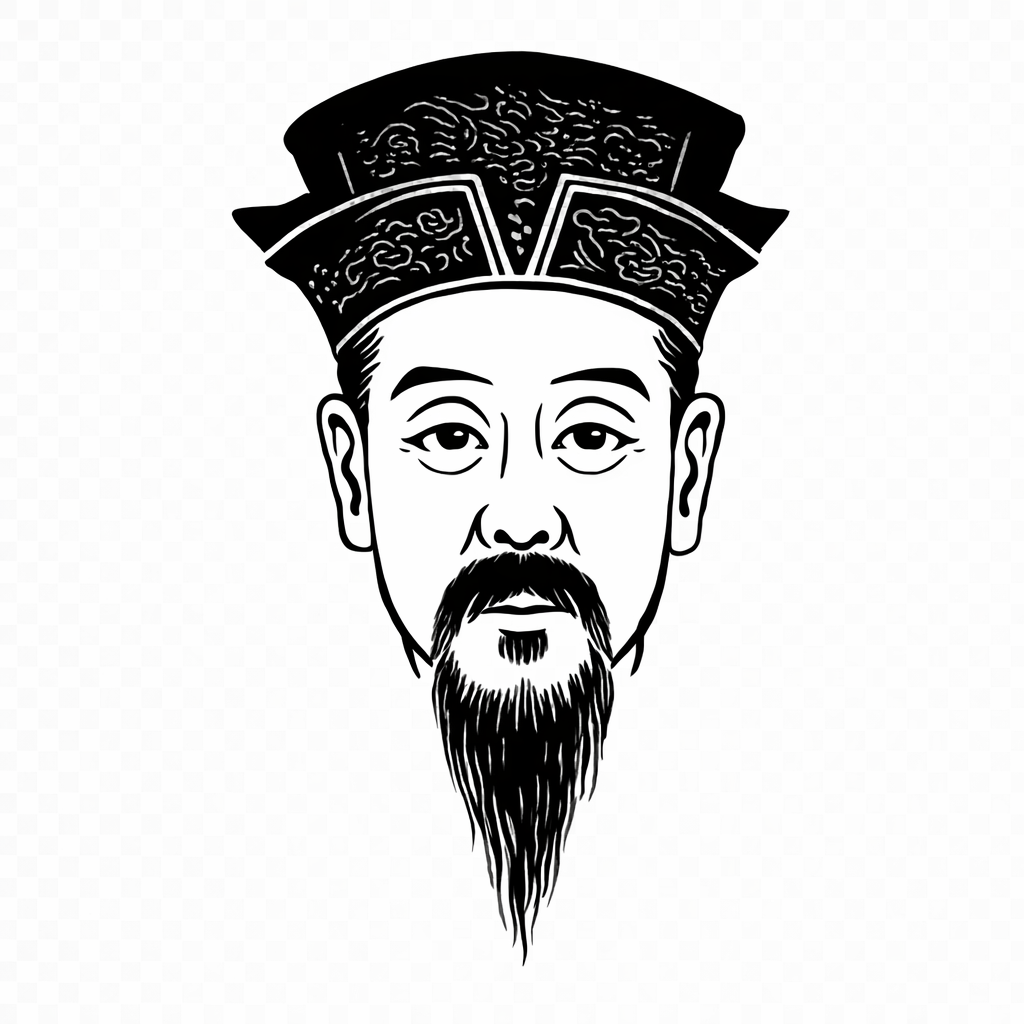
The background
- Nationality:
- Chinese
- Schools:
- Neo-Confucianism
- Period:
- Song dynasty
The synopsis
Zhou Dunyi (1017–1073) was a prominent Chinese cosmologist, philosopher, and writer during the Song dynasty. He is credited with developing the Neo-Confucian cosmology, which sought to reconcile Confucian ethics with Daoist and Buddhist metaphysical concepts. Dunyi's most famous works, the *Taiji Tu Shuo* (Explanations of the Diagram of the Supreme Ultimate) and the *Tong Shu* (The All-Embracing Book), laid the groundwork for later Neo-Confucian thought. In the *Taiji Tu Shuo*, he explained the generation of the universe from the interplay of *wuji* (limitless potential) and *taiji* (supreme polarity), leading to the development of yin and yang and the five elements. He posited that humans, possessing these forces in excellence, are uniquely capable of understanding the moral principles associated with them. The *Tong Shu* further elaborated on Confucian ethics, emphasizing sincerity, humanity, righteousness, and propriety as paths to sagehood. Dunyi's philosophy stressed the unity of metaphysics and ethics, and his emphasis on the Way of Heaven influenced subsequent generations of Chinese thinkers.
The works
Taiji Tu Shuo
Tong Shu