The Philosopher
Choi Je-u
The face
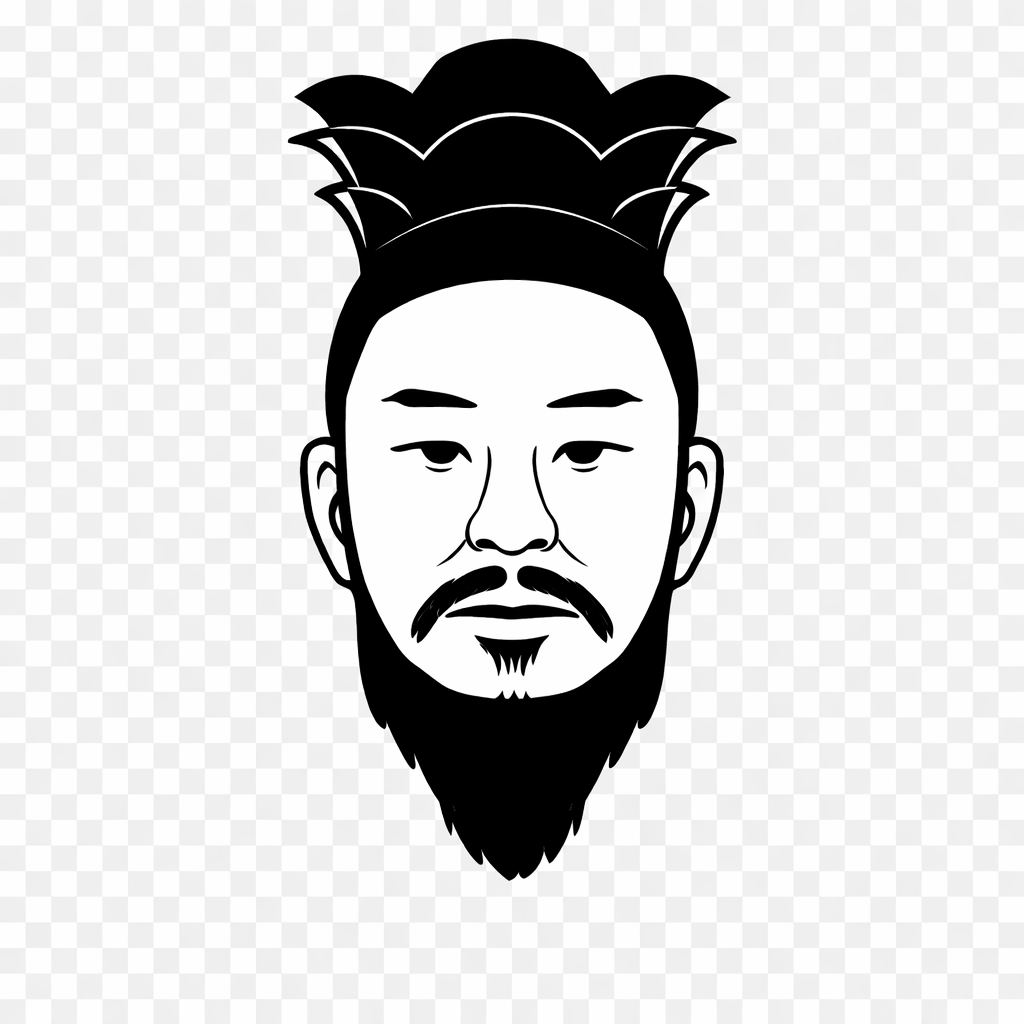
The background
- Nationality:
- Korean
- Schools:
- Donghak
- Branchs:
- Korean shamanism, Daoism, Buddhism, Neo-Confucianism
- Period:
- 19th century
The synopsis
Ch'oe Cheu, also known by his art name Suun, was a pivotal figure in 19th-century Korean religious history. Born in 1824 into an aristocratic family, his life was marked by intellectual curiosity and spiritual seeking, despite social disadvantages due to his mother's remarriage. He founded Donghak, a syncretic religious movement that blended elements of Korean shamanism, Daoism, Buddhism, and Neo-Confucianism. Donghak aimed to provide an alternative to orthodox Neo-Confucianism and empathized with the struggles of the marginalized Korean populace (minjung). It also stood in opposition to Catholicism and its perceived association with Western imperialism.
Suun experienced a profound revelation in 1860, which guided his mission to spread his teachings. He utilized vernacular Korean in his writings, making his philosophy accessible to commoners. His doctrine, "Eastern Learning" (Donghak), was intended to distinguish it from "Western Learning" (Seohak), the term for Catholicism. Despite his efforts to differentiate Donghak, Joseon authorities conflated his movement with Catholicism, viewing both as threats to the established social and political order. Consequently, Suun was arrested, tried, and executed in 1864 for allegedly spreading heretical and dangerous ideas.
His legacy includes the foundational texts of Donghak and the continuation of the movement by his successors. Although the Donghak Peasant Revolution in 1894 led to harsh suppression, the movement evolved into Cheondogyo and played a role in Korean nationalist movements, particularly during the Japanese colonial period.
The works
Bible of the Donghak Doctrine (Donggyeong Daejeon)
The Hymns of Dragon Lake (Yongdam Yusa)