The Philosopher
Charles Bernard Renouvier
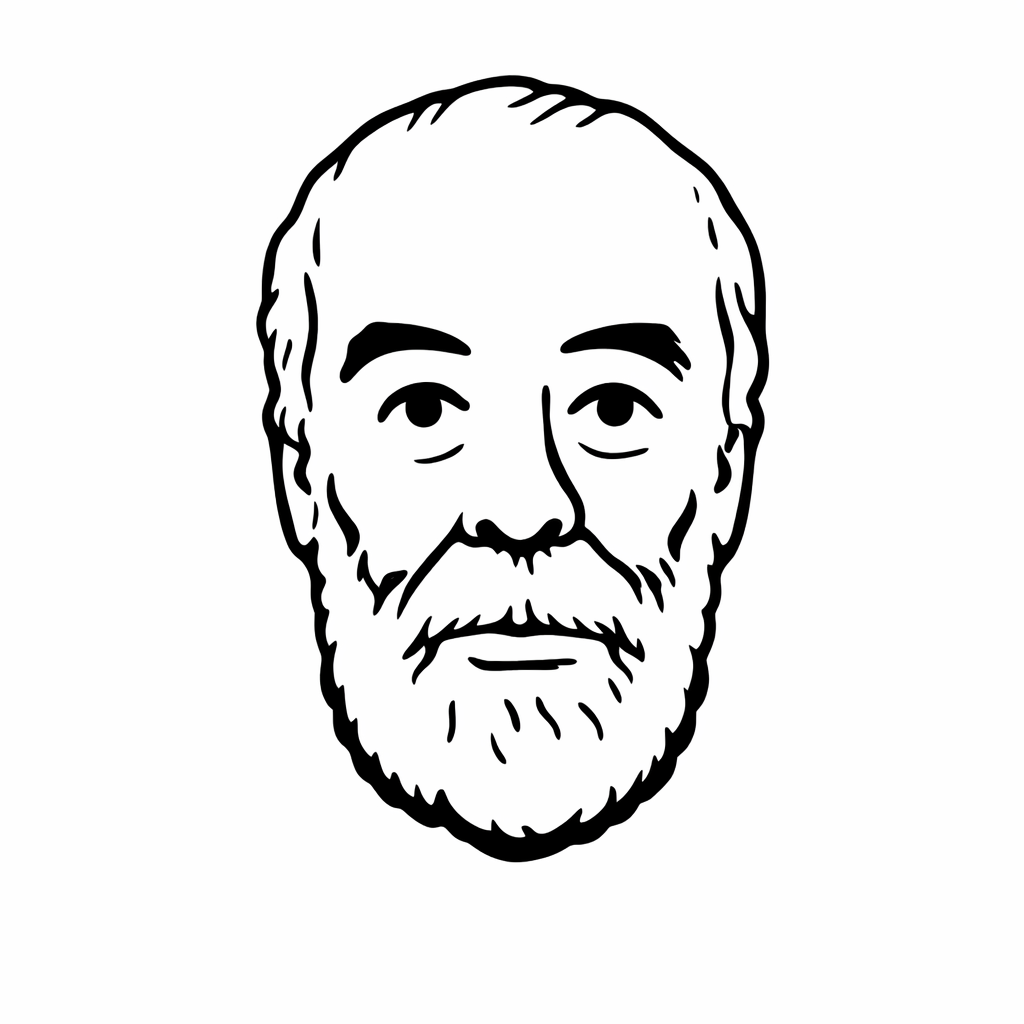
The face
The background
- Nationality:
- French
- Schools:
- Critical philosophy
- Branchs:
- Metaphysics, Epistemology
- Period:
- 19th-century philosophy
The synopsis
Charles Bernard Renouvier (1 January 1815 – 1 September 1903) was a French philosopher. He considered himself a "Swedenborg of history" who sought to update the philosophy of Kantian liberalism and individualism for the socio-economic realities of the late nineteenth century. He influenced the sociological method of Émile Durkheim. Renouvier was the first French philosopher after Nicolas Malebranche to formulate a complete idealistic system. His system is based on Immanuel Kant's, as his chosen term **neocriticism** indicates; but it is a transformation rather than a continuation of Kantianism. Two leading ideas are the dislike of the "unknowable" and a reliance on the validity of personal experience. This leads to his acceptance of Kant's phenomenalism, combined with rejection of the *thing-in-itself*. He maintained that nothing exists except presentations, which have an objective aspect no less than a subjective. For explaining the formal organization of our experience, Renouvier adopts a modified version of the Kantian categories. The insistence on the validity of personal experience leads Renouvier to a yet more important divergence from Kant in his treatment of volition. Liberty, he says, in a much wider sense than Kant, is man's fundamental characteristic. Human freedom acts in the phenomenal, not in an imaginary noumenal sphere. Belief is not merely intellectual, but is determined by an act of will affirming what we hold to be morally good. Renouvier's dislike of the unknowable also led him to take up arms against the notion of an actual infinite. He believed that an infinite sum must be a name for something incomplete. Infinity is a project, never a fact, in the neocritical view. Renouvier became an important influence upon the thought of American psychologist and philosopher William James. In his religious views, Renouvier makes a considerable approximation to Gottfried Leibniz. He holds that we are rationally justified in affirming human immortality and the existence of a finite God who is to be a constitutional ruler, but not a despot, over the souls of people. He nevertheless regards atheism as preferable to a belief in an infinite Deity. Renouvier rejected absolute idealism, Spinozism and classical Christian theology finding its views on an infinite, omniscient and omnipotent God to be deterministic. Instead he posited a finite personal God that was good but limited in knowledge and power. His theology preserved human free will and absolved God from evil that humans commit. He described God as the "permanent personality in the world".
The works
Essais de critique générale
Science de la morale
Uchronie
Comment je suis arrivé à cette conclusion
Esquisse d'une classification systématique des doctrines philosophiques
Philosophie analytique de l'histoire
La Nouvelle Monadologie
Histoire et solution des problèmes métaphysiques
Victor Hugo: Le Poète
Victor Hugo: Le Philosophe
Les Dilemmes de la métaphysique pure
Le Personnalisme
Critique de la doctrine de Kant